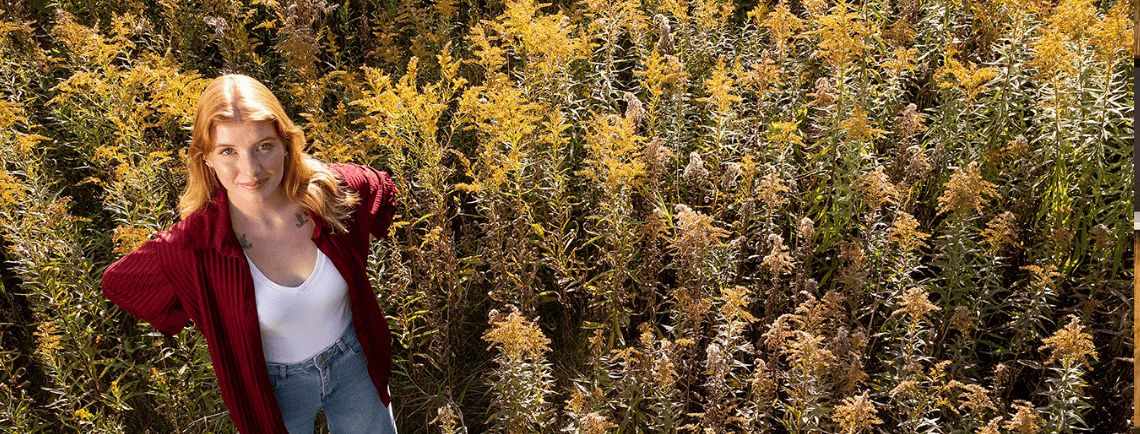
Guelph Grad Story: Indigenous Environmental Science Advocate, Ava Augustine
Taking a Two-Eyed Seeing Approach to Learning Environmental Science
OAC Grad Ava Augustine’s Inspiring Experience in the Bachelor of Indigenous Environmental Science and Practice Program.
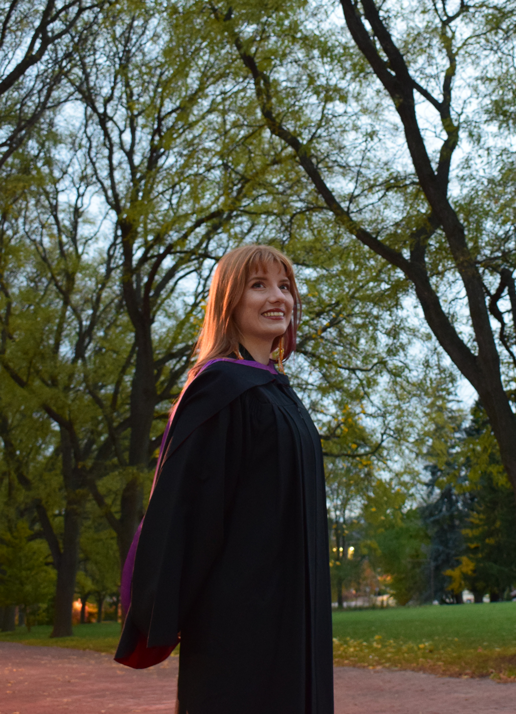
As Ava Augustine anticipates her graduation ceremony this June from U of G, she reflects on an academic journey shaped by curiosity, community, and learning from the land. As part of the first graduating cohort of the Bachelor of Indigenous Environmental Science and Practice (BIESP) program, Ava was drawn to the program’s approach that braids together Indigenous knowledge systems and Western science – also known as two-eyed seeing. Ava explored how the environment is deeply interconnected with people, place, and responsibility.


Choosing the Bachelor of Indigenous Environmental Science and Practice program
Originally from Kingsville, Ontario, Ava’s passion for environmental science grew through hands-on, land-based courses which saw her connect and build relationships with faculty, Elders, and peers, ultimately shaping her path as a future environmental leader, and advocate for Indigenous communities.
Drawn to science, math, and understanding how systems work, Ava was initially interested in environmental engineering. Finding the BIESP program shifted her perspective.
“The program is academically challenging, but grounded in hands-on, land-based learning that makes complex concepts meaningful,” says Ava.
Experiences, including the Killarney and Garden River Ketegaunseebee capstone courses and field courses in Sweden and Costa Rica expanded her perspective and showed how science can benefit communities.

“Travelling with amazing friends and teachers was an immense privilege that inspired me to reflect deeply on my learning. These experiences enriched my perception of the unique gifts we all share that can support one another and the Earth”
Ava describes the program as a close-knit community of supportive faculty and engaged students, ideal for those seeking a welcoming, people-centred approach to learning about the environment.
“The students in the BIESP are truly a family. I had the honour of starting the Indigenous Environmental Science Student Council in my last year of studies. It’s inspiring to see the other students come together to grow and uplift one another. ”
Beyond the lecture hall
Through field courses, including a second-year course in Killarney, Ava learned directly on the land, studying field medicines in the bush, entomology in Costa Rica and applying her knowledge in real world applications, going beyond the classroom. Living, camping, and cooking together during these courses created space for learning to happen through experience, observation, and relationship-building while being immersed in nature.
“Learning with the environment has re-ignited childhood passions of creativity and hope for future generations. This has inspired me to continue advocating for the environment, spend time with the land, and aspire to build relationships with community.”