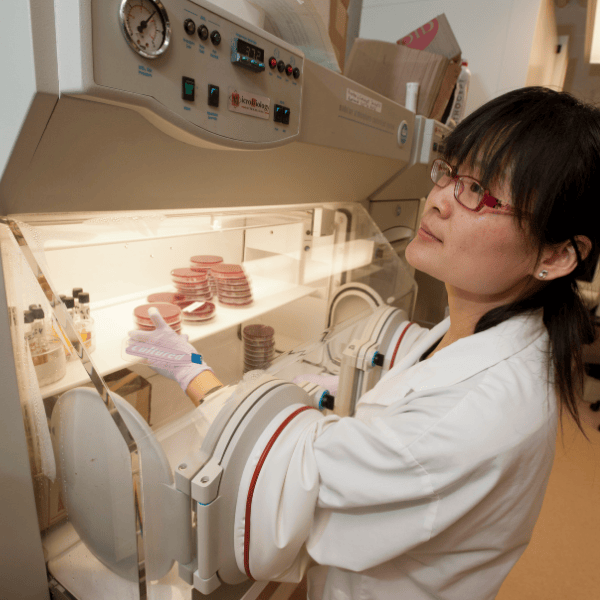
Pathobiology: GDip
Degree
- GDip (Type 3) (Graduate Diploma)
Program Type
- Coursework
Delivery
- On-campus
Entry Terms & Application Deadlines
Domestic:
- Fall (September): July 1
- Winter (January): November 1
- Summer (May): March 1
International:
- Fall (September): March 1
- Winter (January): July 1
- Summer (May): November 1
Research in the Department of Pathobiology addresses such diverse areas as pathogens of animals and how they interact with their hosts, emerging and zoonotic pathogens, antimicrobial resistance, immunologic and genetic bases of resistance to infectious disease, development and progression of cancer, and immunemediated and inflammatory diseases. We work on diseases of farm animals, laboratory animals, fish, wildlife, zoo and companion animals, from the molecular level to that of the population.
- Fields
- Comparative PathologyImmunologyVeterinary Infectious DiseasesVeterinary Pathology
- Are you interested in
- Infectious diseases of animalsImmunologyCancer development and treatmentVeterinary pathology diagnostics and researchZoo medicine and wildlifeOne Health
- Career Opportunities
- Biomedical researchAnimal health research and developmentDiagnostic activities in private and public sector laboratoriesAcademia
Program Overview and Admission Requirements
The Master of Science (MSc) program is a thesis-based program completed in approximately 6 semesters (2 years). The MSc program requires the successful completion and defence of a research-based thesis. The PhD program in Pathobiology is a thesis-based program completed in approximately 12 semesters (4 years). The PhD program requires the successful completion of a qualifying exam and the completion and defence of a research-based thesis. The Graduate Diploma in Pathobiology (GDip) is a course-based program completed in approximately 3 semesters (1 year).
Admission Requirements
In the Pathobiology department, the minimum admission requirements are:
■ MSc: an honours undergraduate degree in a relevant field with a minimum average of 73% (B)
■ PhD: an approved Master’s degree with a minimum average of 77% (B+)
■ GDip: a Doctor of Veterinary Medicine degree (or its equivalent) with an acceptable academic standing
Applicants must also confirm a faculty advisor before they apply. Please direct any questions regarding admission requirements to the Graduate and Research Programs team.
Application Deadlines:
Ongoing- see website for details
Entry- Fall, Winter, Spring
Collaborative Specializations
Collaborative Specializations allow students to enhance their degrees with multidisciplinary research. The Department of Pathobiology participates in the following Collaborative Specializations: Additional information can be found in the Graduate Calendar. Collaborative Specializations in Neuroscience, Regenerative Medicine and Toxicology may also be available; please consult with your prospective advisor.


Contact Us
OVC Graduate Research and Programs Team:
ovc.pathgrad@uoguelph.ca
Graduate Program Coordinators:
Dr. Janet Beeler-Marfisi
jbeelerm@uoguelph.ca
Dr. Jeff Caswell
jcaswell@uoguelph.ca