
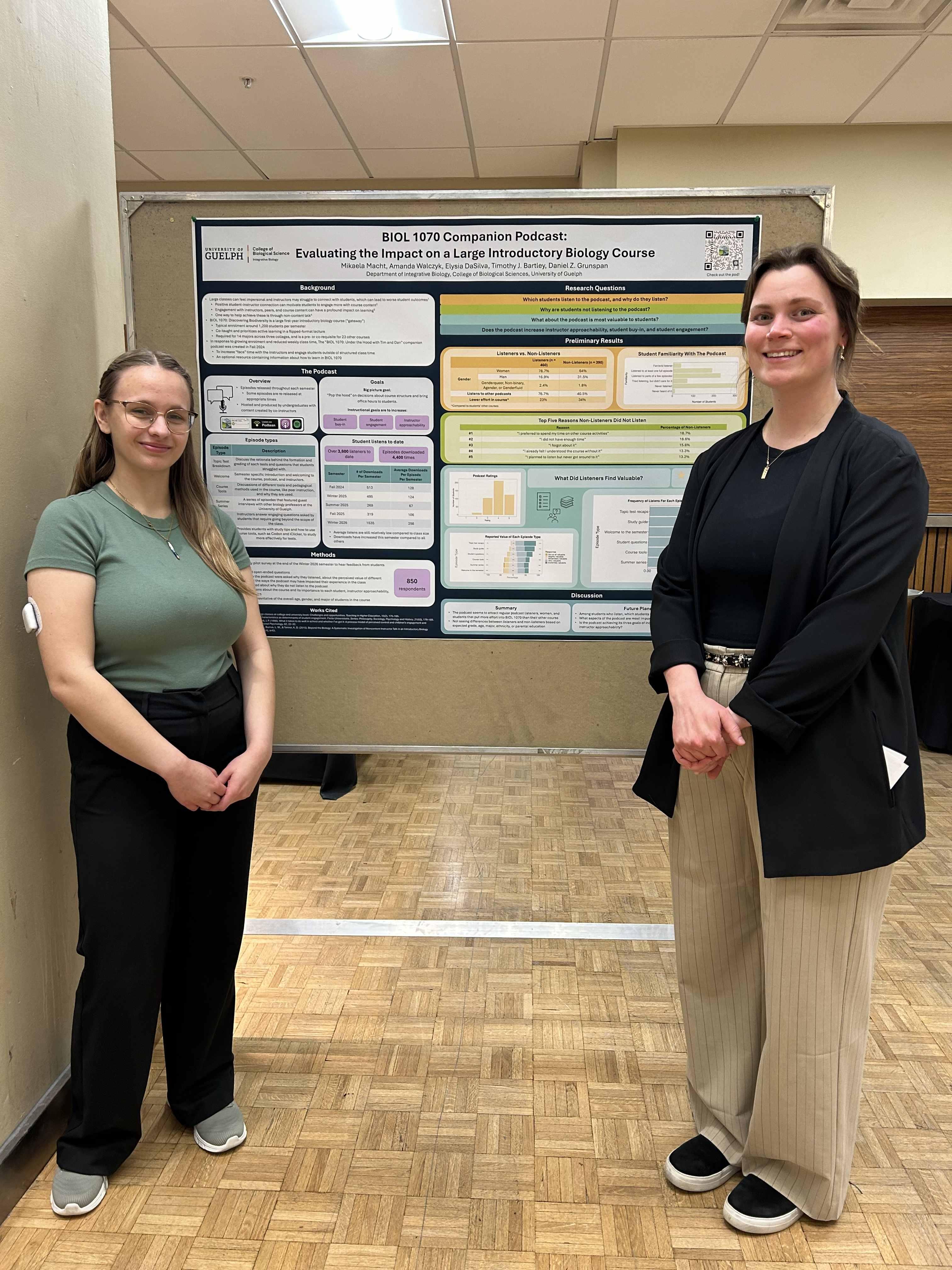
As a third-year Bachelor of Indigenous Environmental Science and Practice (BIESP) student, Mikaela Macht is spending her summer as an Undergraduate Research Assistant working in Dr. Dan Grunspan’s lab analyzing survey results. While her prior statistics and ecology courses gave her foundational knowledge, she never imagined she would be involved with a project of this scale or that her path at U of G would be so unique.
Bridging Performing Arts and Research
Mikaela’s journey to environmental science wasn’t linear and is a great example of how the BIESP program welcomes students from all walks of life. Prior to enrolling at the University of Guelph, she completed a three-year performing arts diploma and worked in Vancouver’s theatre industry.
That background in media made her a natural fit for her current research project: analyzing student engagement with the podcast : “BIOL1070: Under the hood with Tim and Dan”. Created by instructors Tim Bartley and Dan Grunspan for BIOL 1070: Exploring Biodiversity, the podcast breaks down course content and highlights helpful resources for students.
“I was excited to flex my creative muscles again and I thought it would be a great opportunity to learn how to bridge the gap between the skills that I have and modern science communication.”
Last summer, Mikaela reached out to Tim and Dan to ask about volunteering with the podcast. What started as a simple inquiry evolved into managing the podcast and analyzing survey results from an exploratory survey sent out to students who took the course during the Winter 2026 semester.
“It's cool to work in a Western science space with the perspectives from our Indigenous science courses because I feel like I can approach the work in a unique way,” says Mikaela. She notes that the project has given her transferable research skills and renewed excitement for her upcoming third year.
A Program for Everyone
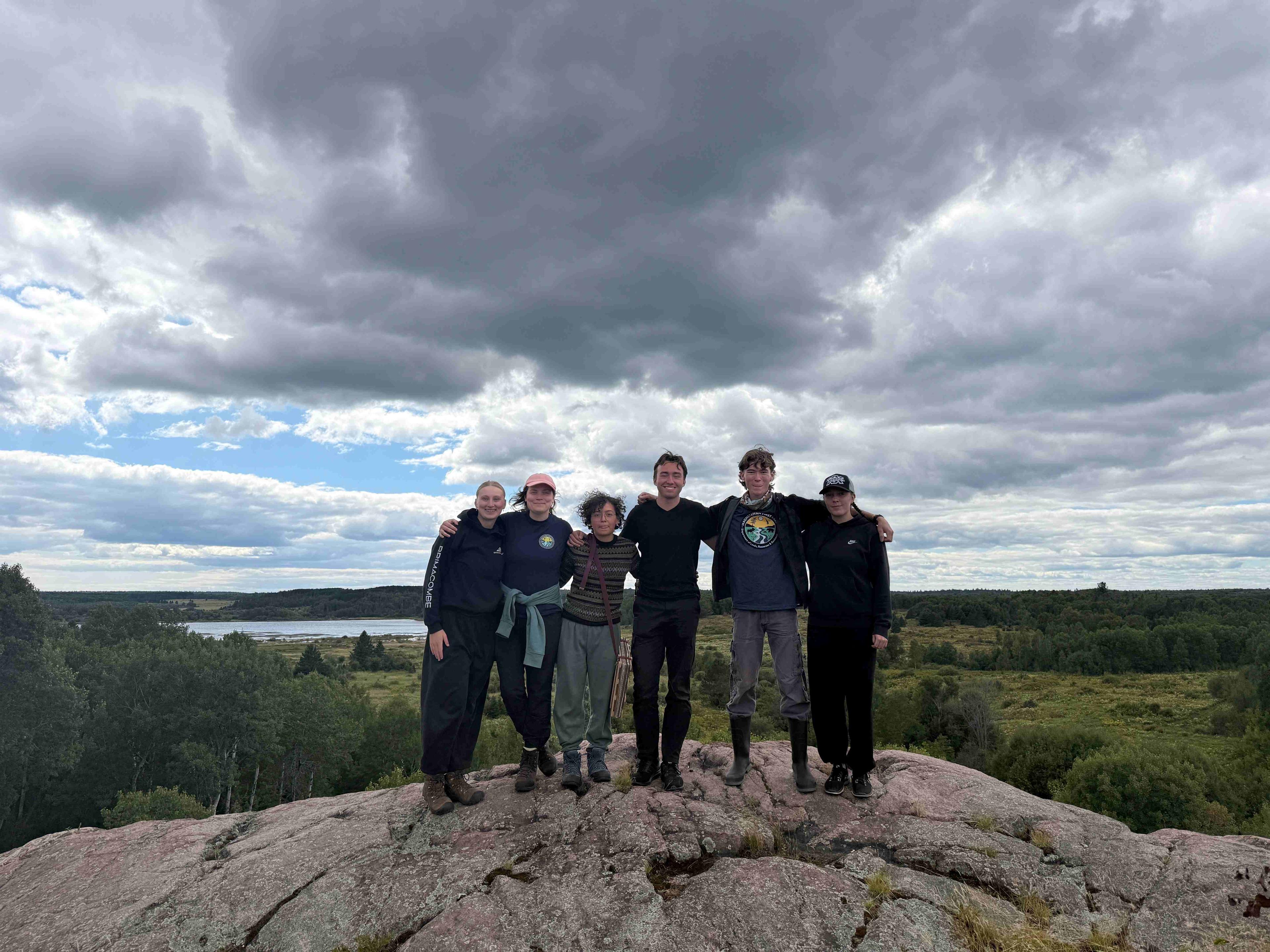
A common misconception Mikaela frequently encounters is that BIESP students must be Indigenous or already possess extensive knowledge of Indigenous perspectives. While the program centers Indigenous ways of knowing, no prior background knowledge is required- only an open mind and an eagerness to protect Planet Earth.
“The program has such a wide range of pathways for post graduation. I think it is really worthwhile, while you're at UofG, to take advantage of the different opportunities available to you.”
For current students looking to learn more about BIESP, Mikaela encourages students to get involved with the Indigenous Environmental Science Student Council (IESSC). As an executive member of the council, she highlights that all students are welcome to attend council events or apply for executive roles.
Beyond the Lab
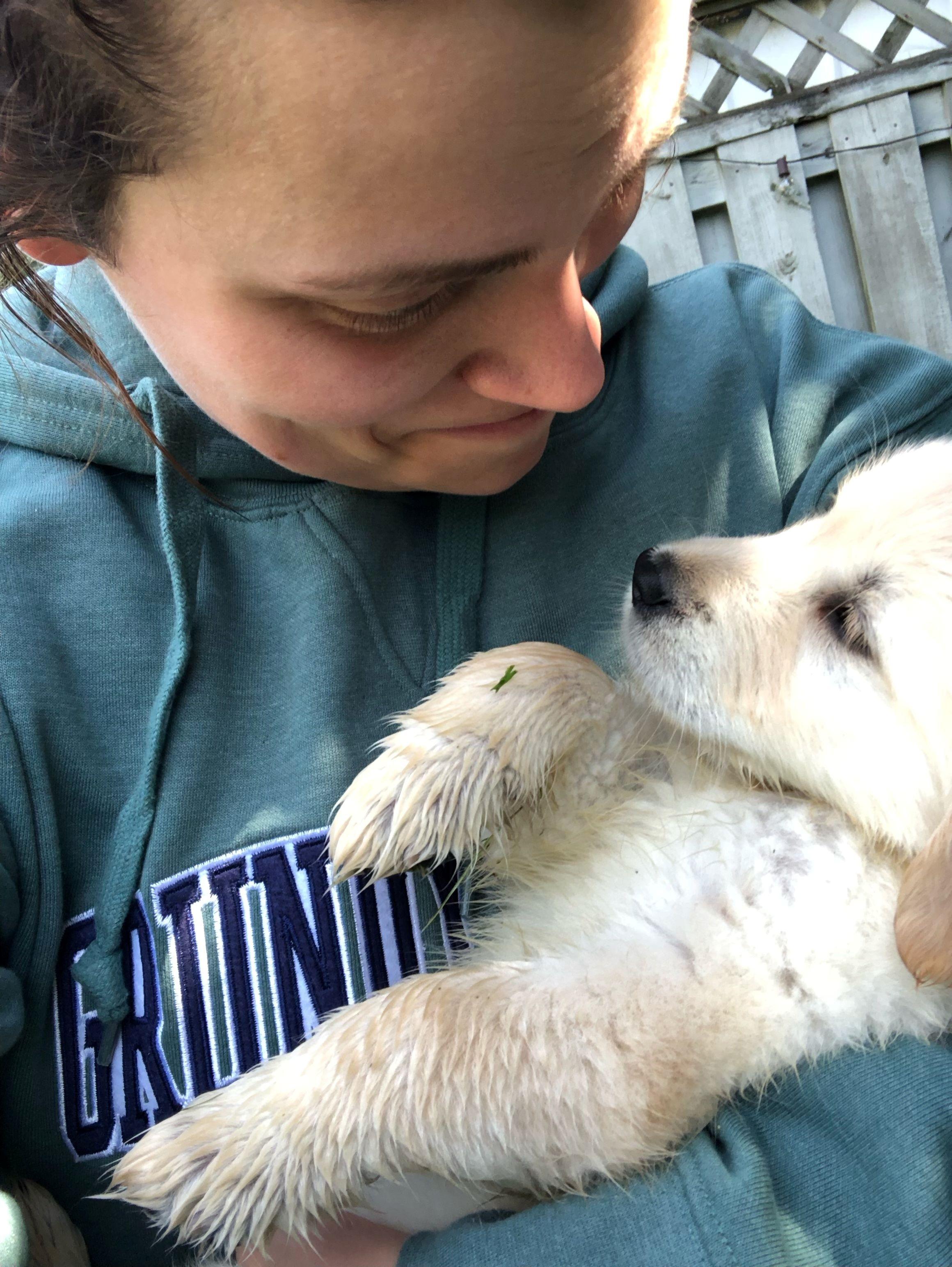
Earlier in the summer, Mikaela attended the Turtle Island Indigenous Science Conference at the University of Waterloo, which offered a great opportunity to hear from a wide range of Indigenous scientists and teachers. When she isn’t in the lab analyzing data or exploring campus, she's spending her summer downtime with her golden retriever puppy, Ellie.
Her biggest piece of advice for fellow and prospective students is simple: embrace the unfamiliar.
“Taking small steps outside your comfort zone can lead to something much bigger,” she says.
For BIESP students in particular, she encourages making the most of the program’s small class sizes, connecting with professors, and exploring university resources without setting limits on what is possible.
To connect with the IESSC you can follow them on Instagram