OAC’s Regenerative Agriculture and Indigenous Land Based Learning (RAILL) course gives students a hands-on look at sustainable land stewardship through two weekend long camping field trips at Eden Mills. Unlike in a large lecture, the small class size allows students to build strong, meaningful connections with one another. The course is graciously supported by CEWIL (Cooperative Education and Work Integrated Learning Canada).
In this Q&A feature, third-year environmental science student Grace Crunican shares her experience in the course and what she learned:
What originally drew you to sign up for this course?
"After hearing great things from past students, this course was already on my radar. Once my academic advisor shared the course details, I jumped at the opportunity to sign up. I was particularly drawn to the hands-on nature of the curriculum and eager to learn more about regenerative agriculture—plus, getting to go on a camping trip for a credit was a huge bonus!"
Before you started, what were you most excited or curious to learn?
"I wanted to gain a deeper understanding of regenerative agriculture and its practical, everyday applications. Given my farming background, it felt like the perfect opportunity to bridge my environmental science studies with my agricultural foundation. Additionally, learning about Eden Mills' local push toward carbon neutrality was a strong draw—I was eager to see how such an ambitious environmental benchmark translates into real-world action."

What’s one big takeaway you’ll carry forward into the rest of your degree?
"Unlike in a large lecture, the small class size allowed us to build strong, meaningful connections with one another. Everyone brought an incredible level of energy, enthusiasm, and genuine passion for learning to every part of the experience.
Academically, my biggest takeaway is the framework of Two-Eyed Seeing. Learning to incorporate both Indigenous and Western perspectives has reshaped my understanding of knowledge systems and how knowledge can be shared. I look forward to weaving this inclusive approach into my future coursework and academic projects."
If you had to highlight one specific moment or hands-on activity that stuck with you, what would it be?
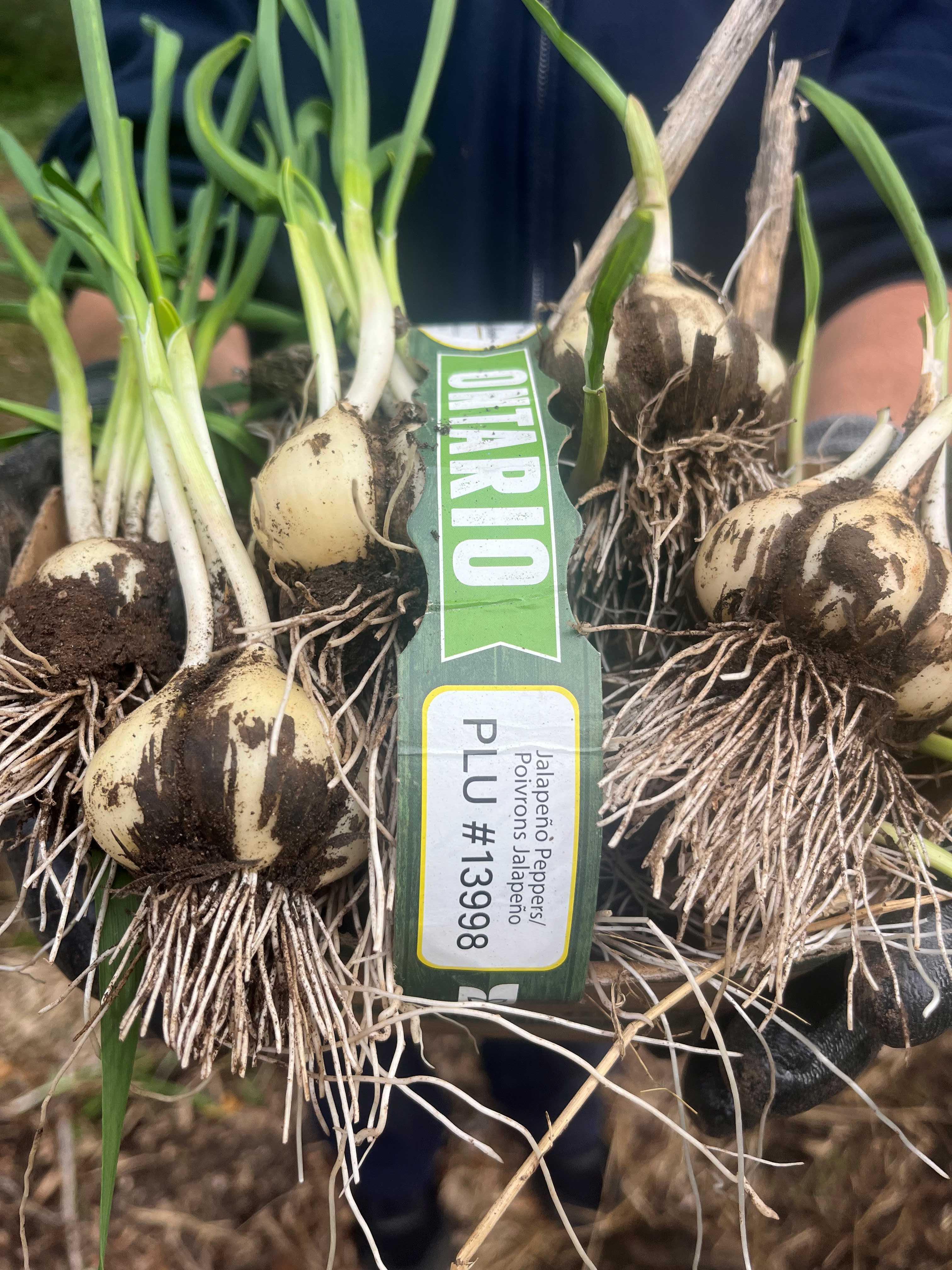
"My highlight was harvesting potatoes and building a permaculture bed during the second weekend. The potato plot was cleverly set on a hilly section of land that wouldn’t suit large traditional crops, highlighting how every corner of the farm was used efficiently and followed with the natural topography of the landscape.
The plot itself was tucked between the forest and grassland, making the harvest feel like a hidden treasure hunt—and our class quickly turned finding the potatoes into a friendly competition.
We also had the opportunity to build a permaculture bed which got chaotic as all 30 of the students in the course were throwing sticks, compost, and soil into the pile. It was interesting to see the layers being built up in real time and very rewarding to give back to the land for next year's planting season."
How was learning out in the field different from sitting in a traditional classroom or lecture hall?
"In a traditional classroom setting, it can often feel like the primary goal is simply memorizing information. This experience allowed us to take away something far deeper and see concepts frequently discussed in lectures put into real-world practice. For example, while I had previously studied vertical farming in my controlled environment systems courses, this experience allowed me to see a home vertical farm firsthand and grow microgreens that our class actually ate during our second weekend.
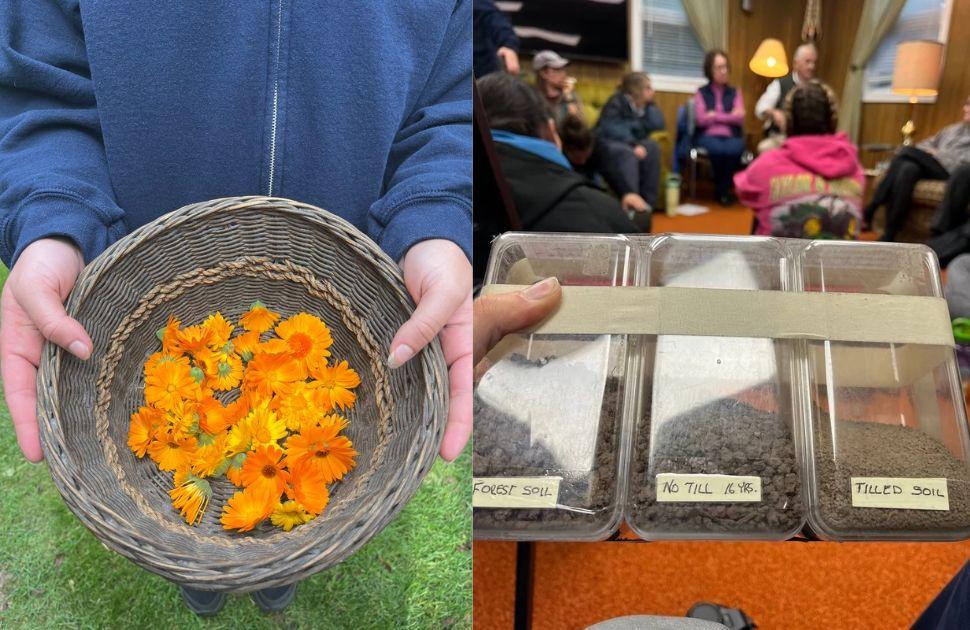
Similarly, my soil science class heavily emphasized restoring soil quality through organic matter inputs and no-till practices. Through this hands-on course, we were able to deepen our understanding of nutrient management while analyzing soil samples from both tilled and no-till systems. Because the farm uses permaculture beds that are rich in compost, we saw how healthy soil can eliminate the need for synthetic fertilizers.
We also had the opportunity to learn about Indigenous culture directly through the food we shared—such as rainbow trout, bison, and wild rice—while developing our connection to the land through practical activities like braiding sweetgrass and participating in a drum circle. Unlike traditional courses that discuss environmental issues affecting Indigenous communities with little focus on actual practices, this course grounded our learning in authentic cultural traditions and land-based knowledge."
How did working directly with environmental tools/ecosystems change your perspective on environmental issues?
"Before this weekend, it was easy to fall into the mindset that small, individual choices are just a drop in the ocean when faced with the overwhelming scale of climate change. Working directly with environmental tools and ecosystems transformed that perspective completely. Hands-on experience with practices like cultivating food, supporting local suppliers, and actively caring for soil health showed me that these actions aren't just isolated habits—they are fundamental building blocks of environmental resilience. Experiencing this firsthand made me realize that sustainable lifestyle shifts, when multiplied across a community, can drive tangible and lasting change."