What makes a farmer adopt new, cutting-edge agricultural technology? How do consumers decide which food products to buy? And what kind of information influences people's decisions?
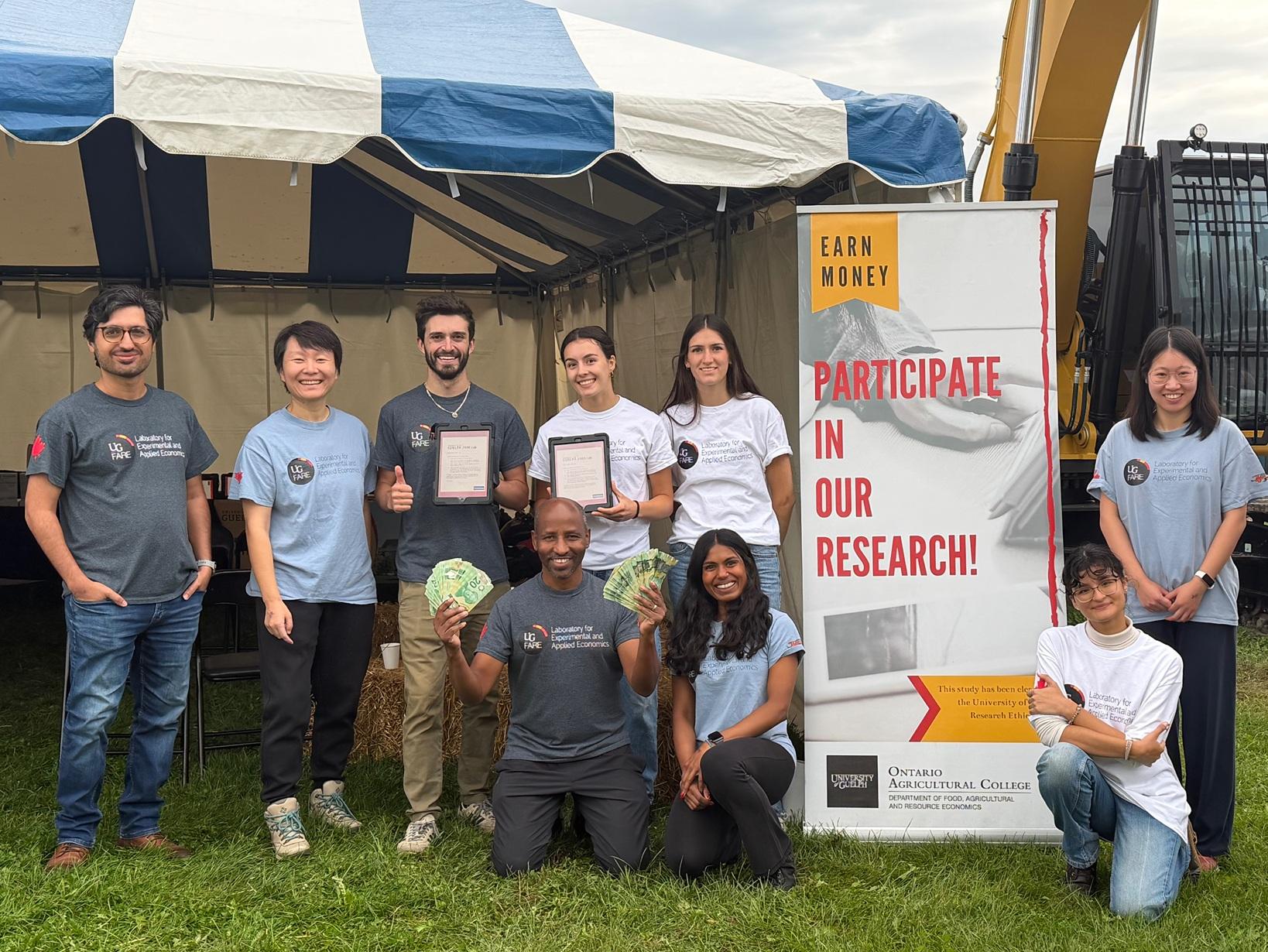
Led by Dr. Tongzhe Li, professor in the Department of Food, Agricultural and Resource Economics and the Arrell Family Chair in Behavioural and Experimental Economics, U of G’s FARE Lab explores these questions through hands-on laboratory and field experiments that connect economic theory with real-world decision-making.
“By testing what works in practice, we aim to generate evidence that can help improve the full spectrum of Canada's agri-food system,” says Li.
The Lab examines how farmers, consumers, and policymakers respond to prompts under different conditions, generating valuable data that can help inform producers and businesses across Canada’s environment and agri-food sectors.
"We study the human side of the agri-food system, including how people make decisions and how these choices can be influenced by the way information is communicated and incentives are designed,” says Li.
Bringing agricultural research into the community
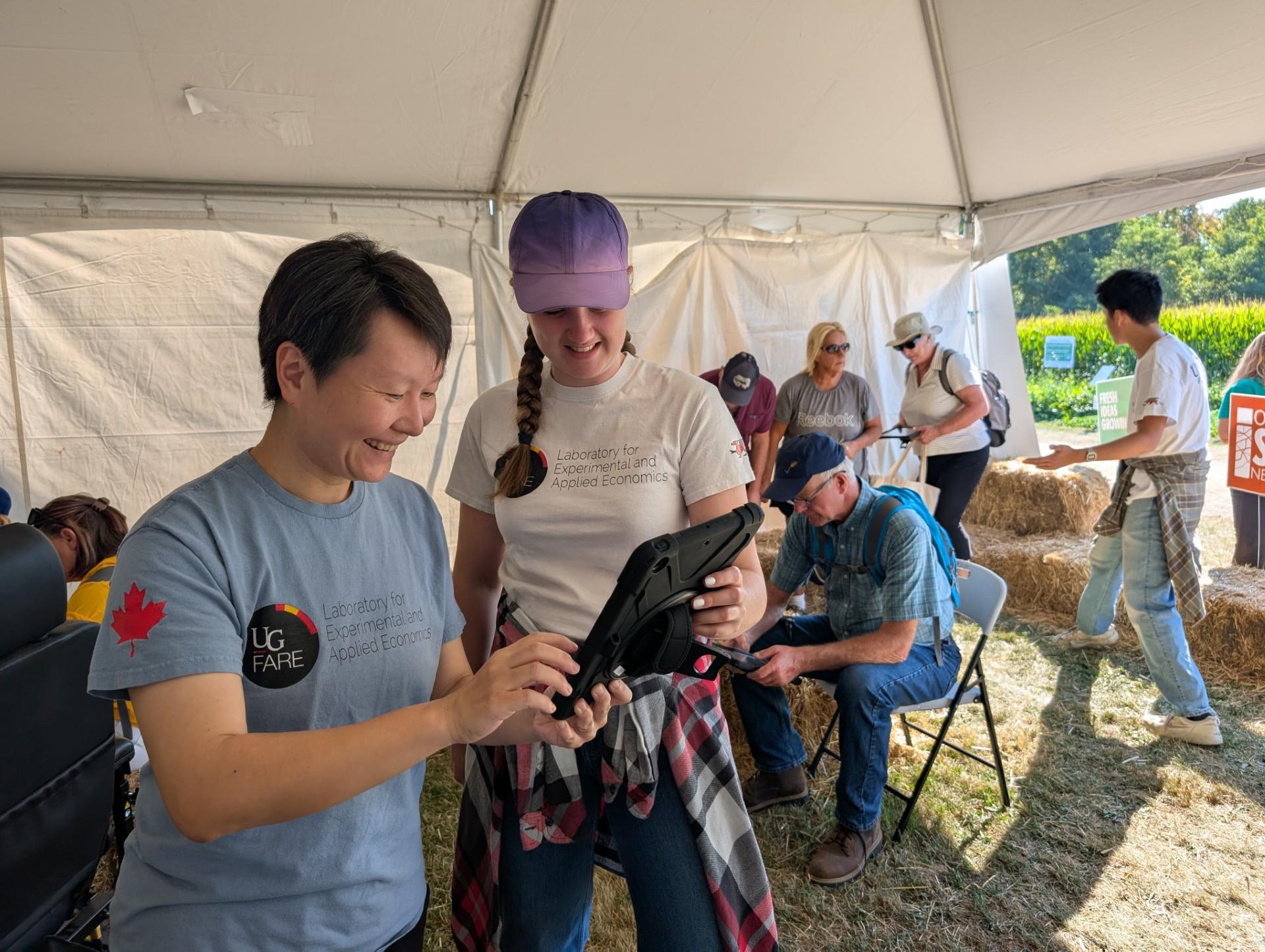
FARE Lab takes research beyond the university by conducting experiments in real-world settings. These opportunities allow the Lab’s research team to engage directly with farmers and consumers alike.
The Lab’s experiments use interactive activities and experimental decision-making tasks to examine how individuals respond to different scenarios. Equipped with tablets, researchers can conduct controlled experiments in the laboratory or out in the public, making it possible to test theory with real-world applications.
"We examine what people would actually do when faced with a meaningful decision, rather than relying on what they say they would do in a survey,” says Li. “Whether real decisions and hypothetical responses align under various contexts can itself be exciting to study methodology-wise.”
By varying the information participants receive and comparing their responses under different conditions, Li’s team can investigate how different messages, information sources, and incentives influence their decisions.

Understanding consumers in emerging food systems
FARE Lab also explores how consumers evaluate food products and emerging production technologies, like controlled environment agriculture.
In a recent study, Li’s and her co-author (and former student) Emily Gibson examined how production methods and local food labels influenced consumers’ willingness to pay for lettuce. Study participants evaluated labels of lettuce grown in fields, greenhouses, and vertical farms. The researchers found that consumers were willing to pay a premium for locally labelled lettuce regardless of its production method.
“Local labelling was a particularly important driver of consumers’ willingness to pay, suggesting that where food is produced can matter more to purchasing decisions than whether it is grown in a field, greenhouse or vertical farm,” says Li.
Turning findings into impact
Over a four-year span, Li’s team tested how farmers change their spending decisions related to profitability and environmental impacts of beneficial management practices like cover crops, fertilizer management and soil testing depending on who delivers the message and how it is worded.
"We found that while the right messenger can lower the amount of subsidy money needed to get farmers on board, appealing to a farm's profitability is still what matters most to producers," says Li.
These findings highlight how the source of information can shape farmers’ responses, even when the underlying information remains the same. For agricultural organizations, researchers and policymakers, understanding these differences can help inform outreach strategies and the way information about new practices is communicated.
“Understanding behaviour is a starting point rather than the endpoint,” says Li. “Research must also translate into practical solutions that reflect the needs and priorities of the people it is intended to serve.”
OAC's NextGen Newsletter
Highlighting the people and innovation making an impact across the agri-food sector.