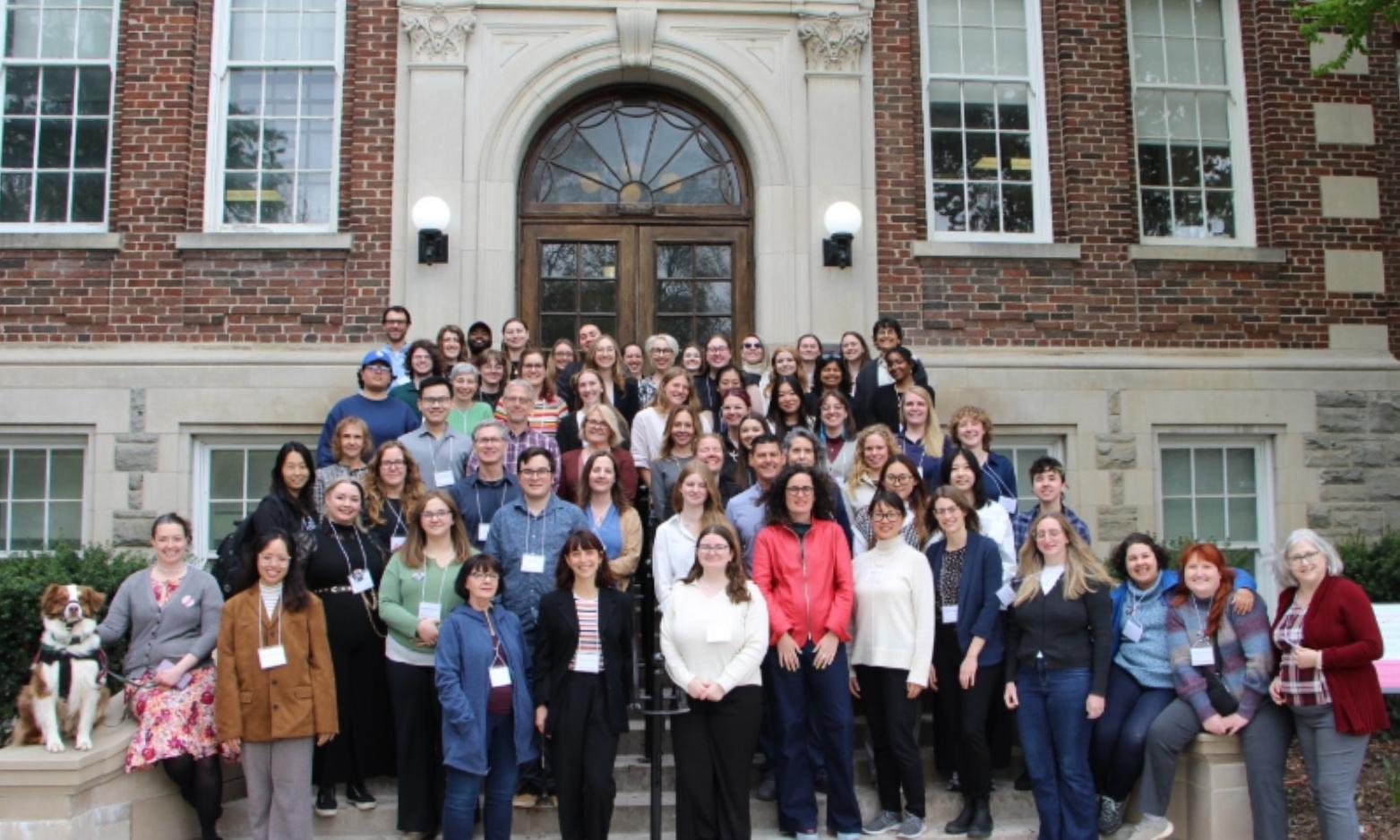
The Campbell Centre for the Study of Animal Welfare (CCSAW), based at the Ontario Veterinary College, hosted its 16th Annual CCSAW Research Day on Wednesday, May 13, 2026.
This annual event brought together students, postdoctoral researchers, faculty and members of the animal welfare research community for a full day of presentations, posters, discussion, networking and prize-giving.
This year’s program featured research across a wide range of species and welfare topics, including dairy cattle, laying hens, rabbits, horses, goats, pigs, sheep, mice, community cats and urban pigeons. Presentations explored issues such as animal behaviour, environmental enrichment, pain mitigation, housing systems, access to veterinary care and the ways animals experience and respond to their environments.
“CCSAW Research Day is our annual celebration of the great work that our graduate students and faculty are doing, studying animal welfare - while at the same time is a welcome event to the many undergraduate students who we have hired to work as summer research assistants,” says Dr. Derek Haley, director of CCSAW.
Keynote Explores Emotional States in Dairy Animals

This year’s keynote speaker was Dr. Heather Neave, professor of Applied Ethology and Animal Welfare in the Department of Animal Sciences at Purdue University. Her keynote presentation, “Measuring Minds in Dairy Animals: Current Approaches and Future Directions for Assessing Emotional States On-Farm,” focused on methods to assess the mental states of dairy animals, with an emphasis on cognitive approaches and future practical applications.
Neave’s research program has explored cow-calf management systems, weaning methods and personality traits in dairy cattle, with a focus on understanding how dairy animals experience different management systems and practices.
Presentations Highlight the Breadth of Animal Welfare Research
Throughout the day, researchers presented work examining animal welfare from multiple perspectives, including animal behavior, management practices, environmental conditions, health and human-animal relationships.
The morning sessions included presentations on topics such as male mouse attractiveness and housing conditions, Community Animal Health Worker programs, feather pecking in laying hens, equine behavior education for riding students, rabbit welfare during COVID-19 and Rabbit Hemorrhagic Disease Virus 2 and dairy cow adaptation to automated milking systems.
Afternoon presentations explored fear during puberty in farmed animals, pain control during the tail–docking of lambs, needle-free injection in nursing piglets, lighting and aggression in turkey breeder hens, locomotor learning in pullets, flight-maneuver training, pecking blocks for laying hens and social facilitation in hens’ use of edible enrichments.
Poster Session Creates Space for Research Discussion
In addition to oral presentations, the event included poster presentations from students and researchers studying a range of animal welfare topics. Poster topics included community cat health, laying hen enrichment, Standardbred racehorse stress and cardiac arrhythmia, feral cat colonies in Toronto, indoor cat welfare, flight training in pullets, meat goat lying behaviour, urban pigeon welfare and goat disbudding and pain mitigation.

The poster sessions gave attendees an opportunity to speak directly with presenters about their research questions, methods, early findings and potential applications to improve animal welfare.
Celebrating Research Excellence

The day concluded with a CCSAW update on future plans, prizes and closing remarks. The top presenters/posters from this year’s CCSAW Research Day included:
Oral Presentation Award Winner
Caleigh Copelin: University of Guelph
Project: Is the barn the most effective classroom? Impacts of educational and reflective interventions on riding students and lesson horses
Reflection: “CCSAW Research Day is always such a wonderful experience. While we all study different species, we always find common themes connecting our work. This was an especially meaningful place to present our project as it was funded through a bequest from the Estate of Brigitte Jager, which was facilitated through CCSAW. I was honoured to receive the award for Best Oral Presentation.”
Poster Presentation Award Winner
Ava Trivanovic: Michigan State University
Project: What are goat farmers doing for disbudding and pain mitigation? Preliminary findings from a mixed-methods study to characterize attitudes and practices in Canada and the US.
Reflection: “CCSAW Research Day was a great opportunity to hear how researchers across different species and disciplines are approaching animal welfare challenges in unique ways. Thank you to CCSAW for extending the invitation to Michigan State University and for creating such a welcoming and collaborative environment to learn from one another.”
Building Connections Across the Animal Welfare Community

CCSAW Research Day continues to provide an important opportunity for the University of Guelph and OVC animal welfare community to come together, share research and support emerging scholars
The event also encourages discussion across disciplines, species and research areas, reflecting CCSAW’s ongoing commitment to advancing animal welfare through evidence-based research, education and collaboration.
To learn more about CCSAW and how to get involved, visit: https://ccsaw.uoguelph.ca/