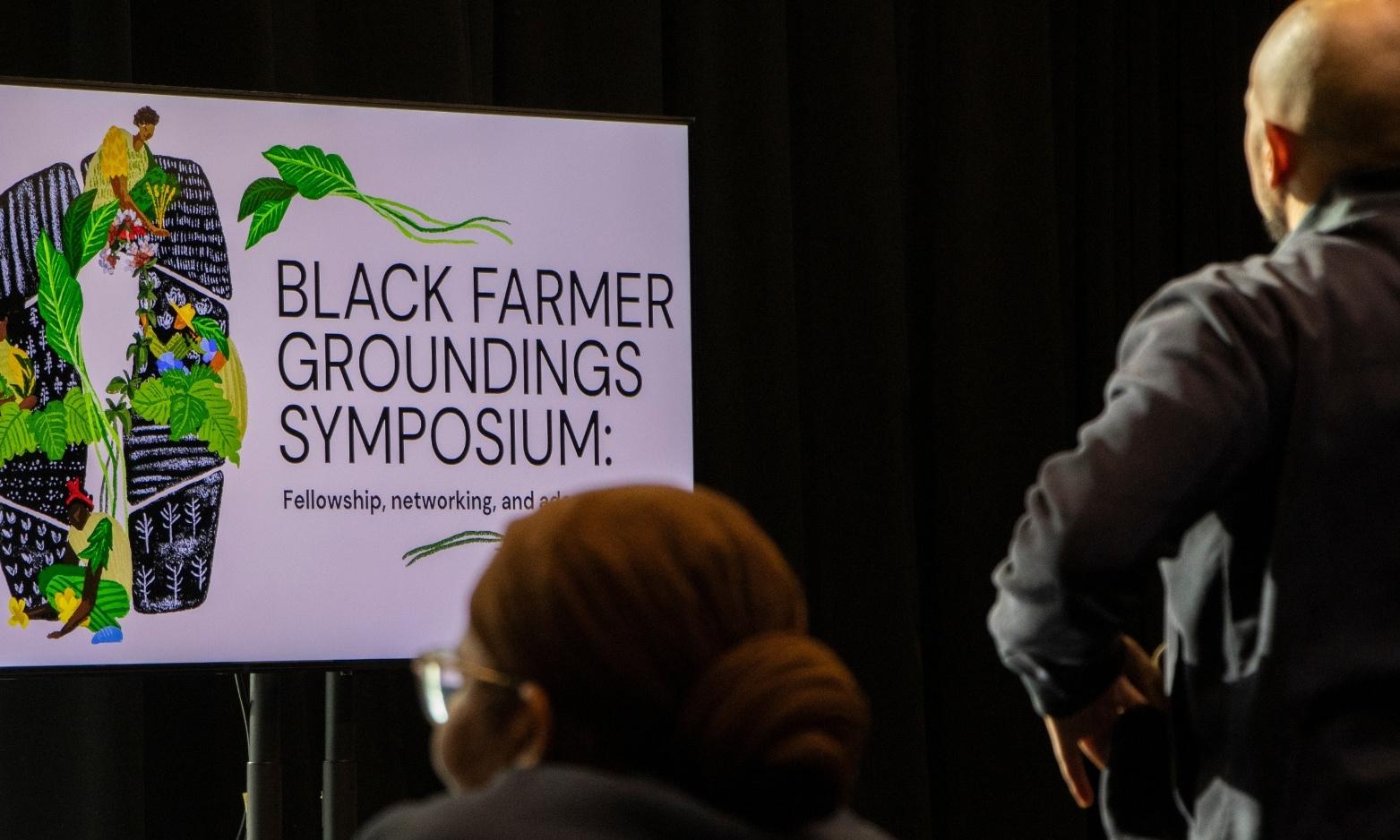
Black farmers in Canada have long described patterns of extractive research: academics arrive, gather knowledge, and leave without returning findings or building lasting relationships with community. When Dr. Andria Jones and Dr. Marsha Myrie Obi began studying the mental health impacts of climate change on Black farmers, they encountered this history immediately. Farmers were willing to participate, but only if the research relationship shifted.
“They wanted access to a synthesis of their collective contributions, direct engagement with the institution doing the research, and opportunities to build networks with other Black farmers,” says Dr. Jones, professor of epidemiology in the Ontario Veterinary College.

These expectations aligned with the researchers’ commitment to community engaged scholarship, research justice, and values in Equity, Diversity, and Inclusion.
In response, they created the Black Farmer Grounding Symposium, a day‑long gathering designed to return knowledge to the community and facilitate direct dialogue between Black farmers, researchers, institutional, industry, and government partners. Supported by the Arrell Food Institute, CMHA – Agriculture Wellness Ontario, and multiple colleges at the University of Guelph, the event brought together Black farmers from Ottawa, Nova Scotia, British Columbia, and across Ontario. Participants ranged from multi‑generational farmers to urban growers and nonprofit leaders working to reconnect Black youth with land‑based practices.
“We wanted to create a forum where Black farmers and researchers could convene, share knowledge back to the community, and build real connections,” notes Dr. Obi, adjunct professor and former Activist in Residence at U of G.
The Grounding featured respected leaders in Black food sovereignty, including elders, farmers, Black farm business innovators, Black Agri-researchers, youth interested in Black farming, Elder Anan Lololi, Peachtree, Kadeem Adamson, Carlton Adamson, Nicole Sinclair, Chris Prince, Toyin Kayo‑Ajayi, and Elder Jacqueline Dwyer. Their contributions provided historical grounding and community‑specific frameworks for understanding land, food, climate resilience, and farming sustainability and success.
A dedicated Conversations session enabled Black farmers to speak directly with policymakers and agricultural organizations, including representatives from OMAFA, CMHA Ontario - Agriculture Wellness Ontario, the National Farmers Union, the Ontario Federation of Agriculture, and senior leadership from the University of Guelph.

“This structure counters the gatekeeping that too often shapes institutional engagement” Jones explains. “At the same time, the composition of the panel experts also highlighted lack of representation in the leadership spaces.”
Panels throughout the day explored Black food sovereignty, land justice, and the links between climate change and colonialism. Farmers also presented their own research on belonging, wellness, and intergenerational knowledge transmission—highlighting the intellectual labour embedded in Black agricultural practice.
The Grounding included a Caribbean farm-to-table lunch, curated by Chefs Layne and Monika from PJ’s at Lang – the student-run restaurant within the School of Hospitality, Food & Tourism Management at the Gordon S. Lang School of Business and Economics.
For Myrie Obi, The Grounding affirmed the necessity of community‑responsible research. With additional data collection underway and plans for future gatherings, The Grounding offers a model for reciprocal, accountable, community‑driven research that supports more equitable agricultural futures in Canada.
Jones’s team is also presently conducting similar research with members of diverse farming communities. More details can be found at: www.ajresearch.ca.