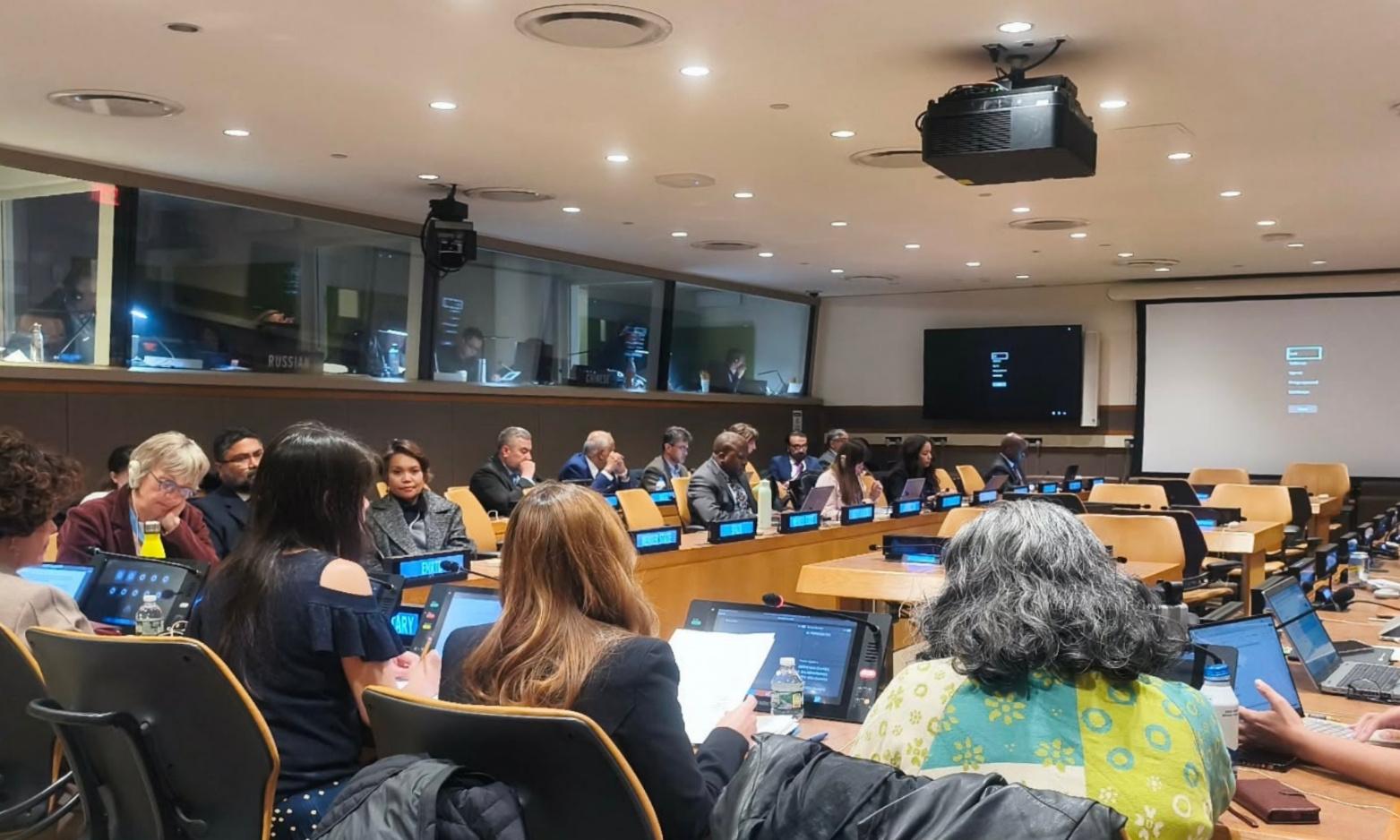
OVC’s Dr. Melissa Perreault recently addressed the 13th session of the Expert Mechanism on the Right to Development, at the United Nations (UN) headquarters in New York City. Perreault spoke on behalf of the International Brain Initiative (IBI), and delivered a powerful statement about the gaps in governance and Indigenous rights in AI, neurotechnologies and neuroscience.

Perreault began her statement by introducing the concept of technological colonialism. “It’s the extension of colonial power through data extraction, algorithmic design, and the imposition of external frameworks of knowledge often without the consent, participation or benefit of Indigenous Peoples,” she says. she says.
In her statement, she emphasized the potential dangers that AI models pose to Indigenous communities, particularly when used in the context of mental health. She asked delegates to consider who will define key concepts such as brain health, wellness, disability and neurodiversity and how this could impact Indigenous peoples’ experience of AI models.
Perreault concluded that the risk of AI lies in how the data are used, as well as the absence of Indigenous cultures, languages and understandings of health from the data used to train AI models. She left the assembly with considerations to make around data governance in AI suggesting that data governance must be a collaboration in which Indigenous Peoples can co-define AI model development, and question how their data are used.

Perreault emphasizes that if left in the wrong hands, AI tools pose a great risk of perpetuating harm to Indigenous well-being. “If there is no data, or very limited data, then there is a risk of further colonial entrenchment,” she says. The tools must be decolonialized, she asserts, noting that this can’t be done without identifying the data gaps and filling them. “The best way to do that is to acknowledge the diversity of Indigenous Peoples, cultures and experiences. It's not a small undertaking, but that doesn’t make it any less worthwhile,” she adds.
Perreault has long been involved in Indigenous initiatives and student support at the University of Guelph. More recently, she has integrated her lived experience as a citizen of the Métis Nation, as well as her passion for Indigenous rights into her neuroscience and neuroethics research. In doing so, she has become a leader in the Canadian neuroscience research landscape, gaining the attention of research institutes, frontline health organizations, and neuroscience organizations worldwide. OVC is proud to celebrate Perreault’s leading-edge research and commitment to advocating for Indigenous rights.