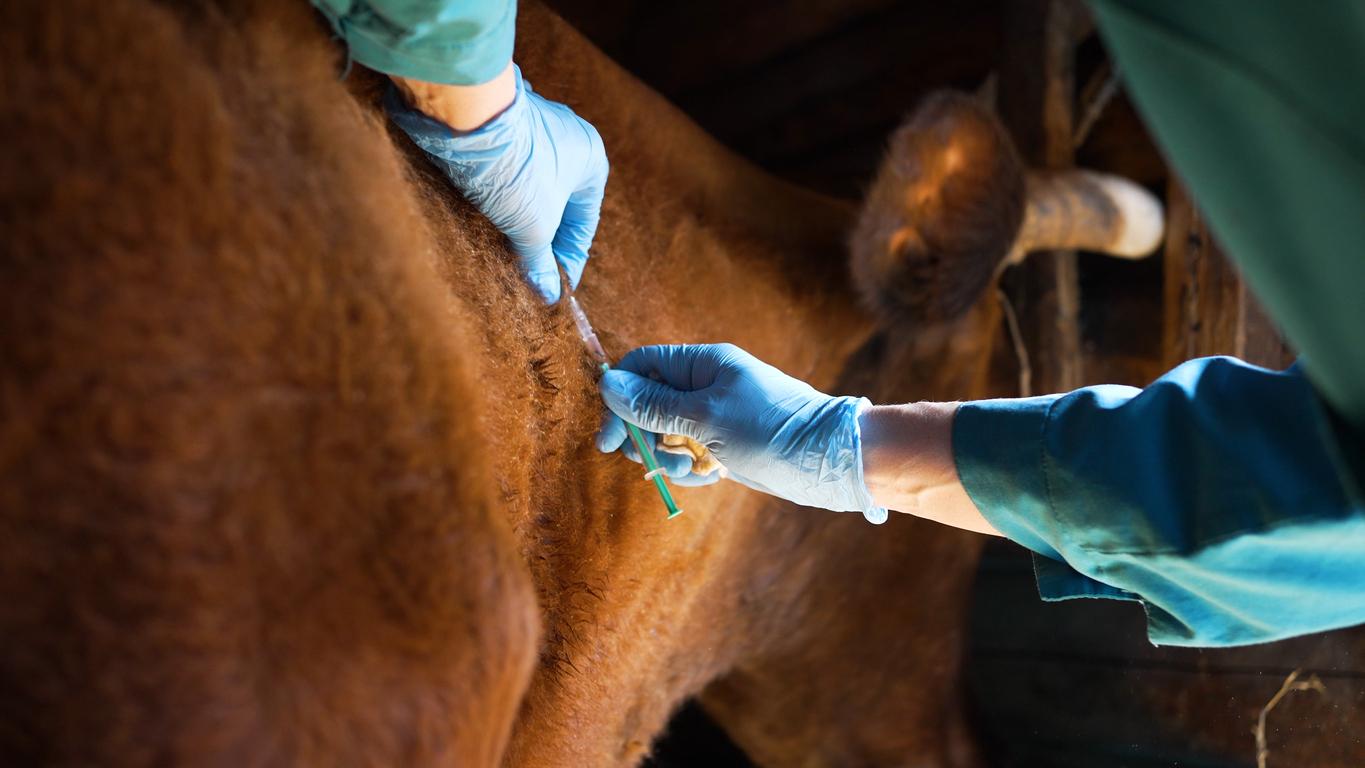
Dr. Scott Weese has spent much of his career working at the intersection of animal health, human health and infectious disease — a place where some of the world’s most urgent health challenges increasingly overlap.
A professor in the Ontario Veterinary College’s Department of Pathobiology, infectious diseases veterinarian and chief of infection control at the OVC Health Sciences Centre, Weese is helping shape national and international conversations about antimicrobial resistance (AMR). His work focuses on how veterinarians, physicians, public health leaders and policymakers can better coordinate their efforts to protect the effectiveness of antibiotics for both animals and people.

That leadership was recently reflected on the global stage. As part of the World Health Assembly held in Geneva last May, Weese co-organized a side event titled “Feeding the world while curbing antimicrobial resistance,” which focused on the links between AMR in animals and human health.
“Too often, discussions about mitigating the effects of antimicrobial resistance focus solely on human or on animal health,” says Weese.
“We organized this meeting to foster discussion with advocates for human health about antimicrobial resistance in animals. A key aspect of that is realizing that while we focus on antimicrobial resistance, we need to address the problem by improving health in both humans and animals. Improved animal health can improve human health through various mechanisms.”
Antibiotics have transformed modern medicine since the discovery of penicillin nearly a century ago. They have made once-deadly infections treatable and enabled advances in surgery, cancer care, intensive care and food animal production. Yet the effectiveness of these drugs is increasingly threatened by AMR, which causes more than one million deaths each year and creates significant economic costs for every nation.
Globally, there is a deficiency addressing access to health care for both humans and animals. The equation is simple: improving animal health improves human health while reducing the need for antibiotics. Lower — and more judicious — use in both animals and people leads to lower antibiotic resistance.
“AMR is called a wicked problem,” Weese says. “It’s not easily defined, there are multiple stakeholders with competing interests, and we don’t have a timeline. It’s so complex, we can’t tell what’s going to work. What an individual farm or vet does won’t have an impact on AMR globally, but the collective effects of everyone that uses antimicrobials can.”
While AMR cannot be eliminated, Weese says its impact can be reduced. The challenge is that solutions vary widely between regions.
“In Canada, the main issues are multidrug-resistant bacteria transmission in hospitals, highly compromised patients and aggressive care that keeps patients alive yet fosters their chances of getting an infection,” Weese says. “In Sub-Saharan Africa, the main impact is in the community, especially in young children. The issues are availability of clean water, sanitation, vaccination, nutrition and access to health care. They’re completely different issues but they’re both killing people.”
The animal health side is equally complex. Food production, companion animal care, access to veterinary services and the need to feed a growing global population all shape how antibiotics are used. These challenges are made even more difficult by global inequities in resources, infrastructure and agricultural systems.
“But how do we do this sustainably?” Weese says. “In the West, we developed modern agriculture, in part, on the back of poor antibiotic use practices. Can we tell a low-income country that they have to do what we do now, not what we did while we were growing our economy?”
For Weese, the answer begins with prevention. Healthier animals need fewer antibiotics. Better housing, vaccination, nutrition, biosecurity, veterinary access and disease prevention can all reduce the need for antimicrobial use while supporting animal welfare and food security.
The same principle applies to companion animals. While most resistance in humans is attributable to human antibiotic use, and most resistance in animals comes from animal use, the overlap matters. Resistant bacteria can move between humans and animals in both directions.
“We’re seeing more of these infections in animals — mainly pets — and these resistant bacteria can move between humans and animals, in both directions,” Weese says. “If I see MRSA in a dog, a person is almost always the source. However, as resistant bacteria increase in pets, there’s more risk of them being passed back to people.”
A critical part of Weese’s global role is supporting decision-making by veterinarians through guidelines, evidence synthesis and risk assessments that inform clinical antimicrobial use decisions. He also chaired the World Health Organization Advisory Group that created the most recent revision of the WHO’s list of medically important antimicrobials, a tool that helps guide more judicious antimicrobial use in both human and animal health contexts.
For OVC, Weese’s work reflects the college’s broader commitment to One Health — the recognition that the health of animals, people and the environment are deeply connected. AMR is not only a medical challenge, but also a veterinary, agricultural, economic and policy challenge. It requires collaboration across disciplines and borders.
As global organizations continue to strengthen their response to antimicrobial resistance, Weese’s message remains clear: protecting antibiotics for future generations depends not only on using them wisely, but also on reducing the need for them in the first place.
“How do we increase food production while simultaneously improving animal health?” Weese says. “There’s not a simple answer, but we need to raise animals better. We need healthier animals just like we need healthier people.”