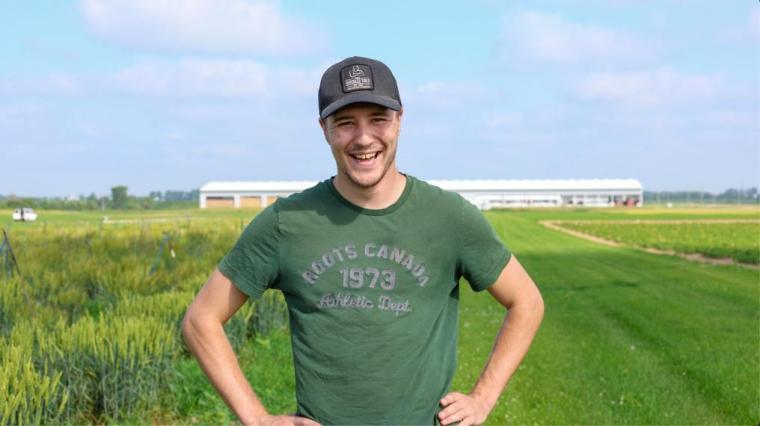
A University of Guelph Ontario Agricultural College (OAC) PhD candidate is helping farmers protect one of Canada's most important crops using artificial intelligence.
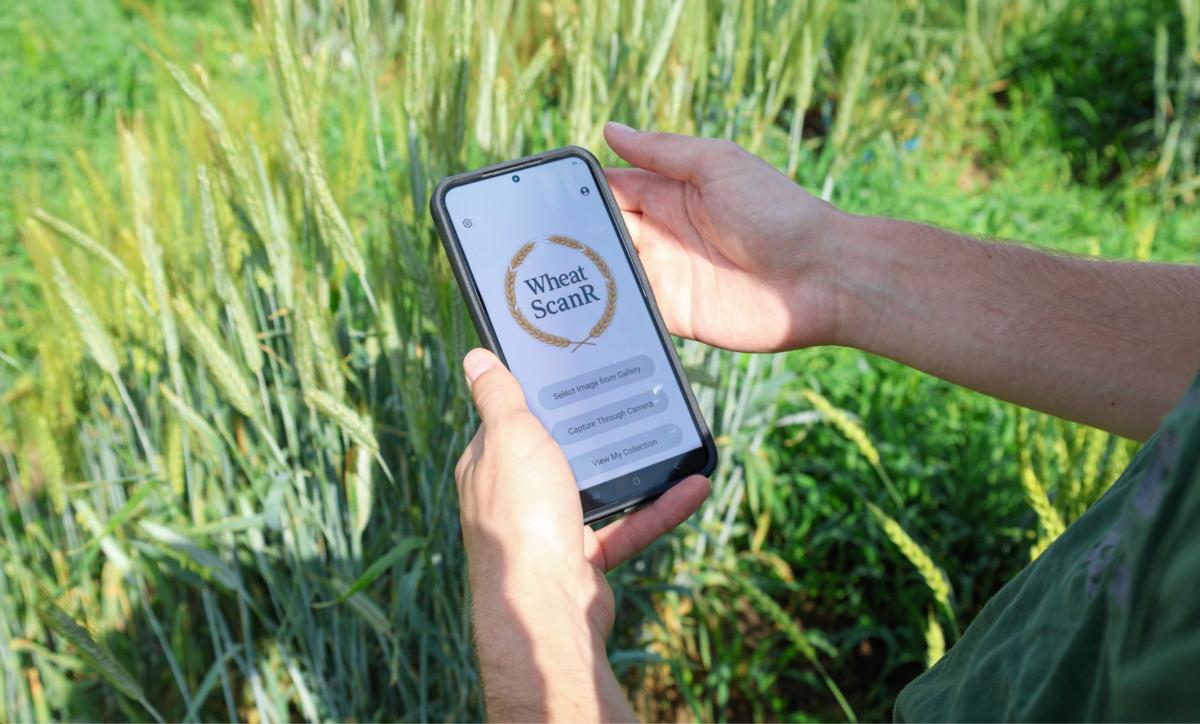
Riley McConachie (PhD in Plant Agriculture [1]) has developed WheatScanR [2], a free mobile app that allows users to take a photo of a wheat field with their smartphone and receive a near-instant assessment of Fusarium head blight (FHB), one of the most destructive diseases affecting wheat production.
The app, created as part of McConachie's master's research and now being advanced through his PhD, combines artificial intelligence and deep learning to identify wheat heads, estimate crop density for yield predictions and detect signs of disease.
"Assessing Fusarium head blight has traditionally required growers and researchers to manually inspect hundreds of wheat heads, making the process time-consuming and subjective," says McConachie. "Our goal was to create a tool that makes disease assessment faster, more consistent and accessible to anyone with a smartphone."
FHB is caused by a fungal pathogen that can significantly reduce wheat yields and contaminate grain with harmful mycotoxins. Ontario's warm, humid growing conditions can create an ideal environment for the disease, making early detection an important part of crop management.
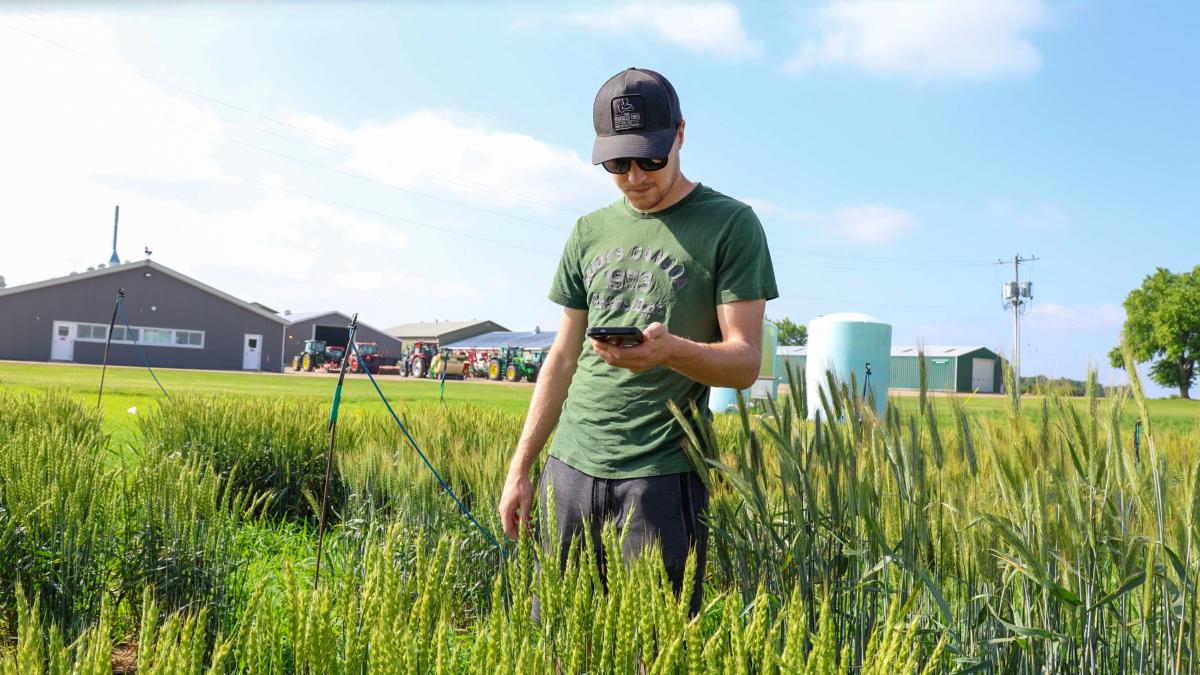 Developed with support from McConachie's supervisors, Dr. Helen Booker [3] and Dr. John Sulik, WheatScanR uses custom AI models trained on thousands of wheat images collected through years of field research. The technology can distinguish healthy and infected plant tissue within seconds, giving farmers and researchers valuable information to support management decisions.
The research is conducted at the Ontario Crops Research Centre in Elora, which is owned by Agricultural Research and Innovation Ontario, an agency of the Government of Ontario, and managed by the University of Guelph through the Ontario Agri-Food Innovation Alliance [4]. The centre serves as a hub where students, faculty and industry partners work together to develop new technologies that strengthen Ontario's agri-food sector.
“Beyond helping farmers monitor disease, the app also counts wheat heads to support yield estimates, offering another practical tool for crop management,” adds McConachie.
WheatScanR is available free for both iOS and Android devices and will continue to evolve as McConachie's doctoral research advances.
McConachie's work demonstrates how OAC students are transforming cutting-edge research into practical solutions that help farmers improve productivity, strengthen food security and build a more resilient agri-food system. By combining agriculture with artificial intelligence, the next generation of researchers is helping ensure Ontario remains a leader in agricultural innovation.
Download WheatScanR (Apple [5]and Google Play) [2]