Master of Science in Biophysics
Why choose a Master of Science (M.Sc.) in Biophysics?
Study life through the lens of physics.
Are you interested in how proteins take shape, how cells communicate, how the body moves or how computational models can explain biological systems? The University of Guelph’s M.Sc. in Biophysics brings together the life and physical sciences to investigate biological processes from molecular structure to human biology.
Students in Biophysics become part of the Biophysics Interdepartmental Group (BIG) at the University of Guelph, which offers unique graduate programs to further our understanding of biological processes through the application of the concepts and techniques of the physical sciences. You will conduct original research using experimental or computational approaches while developing skills in data analysis, scientific communication and advanced research methods. Experimental research conducted by our students spans the entire breadth of the life sciences spectrum, including biochemistry, molecular biology, microbiology and human biology.
Collaborative research between faculty members with complementary research interests is actively encouraged, and several graduate students are co-supervised by two research groups. All of our students are guided by an interdepartmental advisory committee.
Explore biological questions from a new perspective
Our Biophysics program emphasizes basic discovery research in the sciences.
Work across scientific disciplines
Build a research program drawing on expertise in biology, physics, chemistry, engineering, mathematics and computer science.
Access advanced research facilities
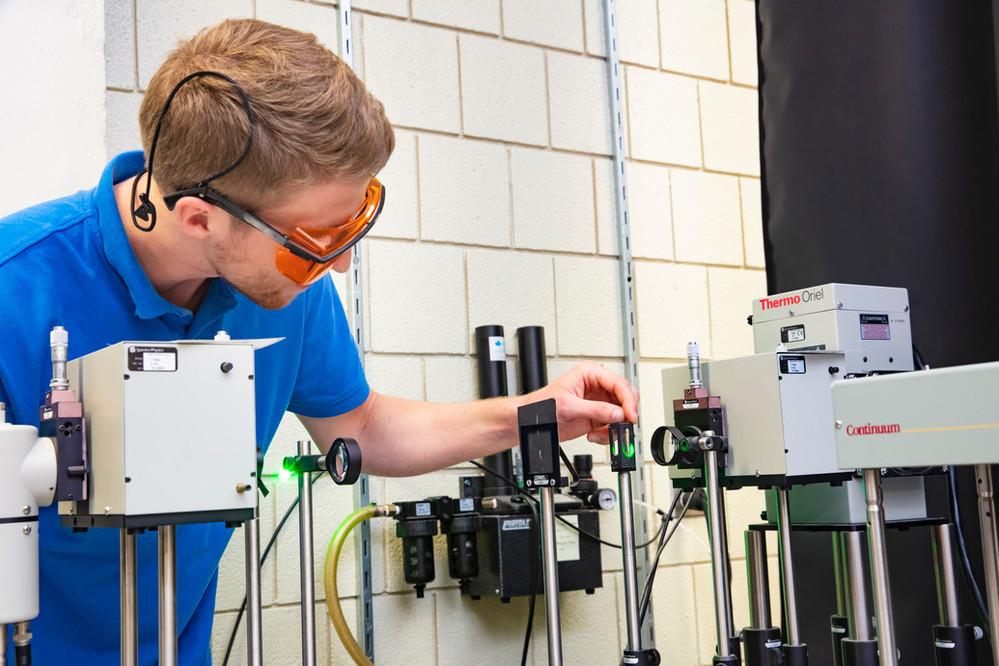
Use tools such as NMR spectroscopy, cryo-electron microscopy, protein crystallography, motion capture and high-performance computing.
What can you do with an M.Sc. Chemistry?
The M.Sc. in Biophysics prepares you for diverse careers in science by developing advanced research, analytical, and problem-solving skills.
- Laboratory researcher
- Clinical research scientist
- Biomedical research writer
- Biotechnology or pharmaceutical researcher
- Industrial researcher or instrument specialist
- Medical Student
What you can learn – sample courses
M.Sc. students must complete 1.50 graduate credits, normally including BIOP6000, as well as BIOP6010 and an original research thesis. Course selection may include offerings from the life, physical, computational and engineering sciences, with approval from the student’s advisory committee.
Explore current research at the intersection of the life and physical sciences through influential journal publications in this team-taught course with dynamic course with content that changes from year to year.
Present your research and engage with biophysics research being conducted by other graduate students.
Study a specialized area of contemporary biophysics under the guidance of a faculty member with related expertise.
Program Information and Requirements
Students may be admitted to the MSc program in biophysics from a range of undergraduate programs, including physics, biology, biochemistry, microbiology, chemistry, mathematics, engineering, or computing science. To be considered for admission, applicants should meet the minimum requirements of a four-year honours degree with a 73 per cent (B) average during the final two years of study. Applicants should briefly indicate their research interests and, if possible, their preferred advisors.
Complete application submission instructions may also be found on the Office of Graduate Studies webpage or in the Graduate Calendar.
Entry points for the M.Sc. in Biophysics are Fall (September), Winter (January), and Summer (May). The application deadline is August 31 (domestic) and June 30 (international) for Fall; January 1 (domestic) and November 1 of the previous year (international) for Winter; March 31 (domestic and international) for Summer. International applicants are encouraged to apply at least nine months in advance of their start date, and all applicants are advised to apply as early as possible due to supervisor availability.
The M.Sc. in Biophysics is typically completed in two years of full-time study or four years of part-time study.
The Office of Graduate and Postdoctoral studies provides estimated annual full-time tuition, fees, and living expenses for graduate students at the University of Guelph: Tuition, Fees and Cost of Living.
Full funding is typically provided for full-time, thesis-based students (who do not receive external funding) through a combination of scholarships, teaching assistantships, and/or research assistantships. For more information about funding your graduate studies at Guelph, please visit Funding Graduate Studies.
Faculty and Facilities
The Biophysics Interdepartmental Graduate Program is a unique, standalone interdisciplinary program with faculty from several departments/schools in the College of Computational, Mathematical, and Physical Sciences; College of Biological Science; Ontario Agricultural College; and Ontario Veterinary College. In many cases, our students are co-advised by faculty from two different departments and all of our students are guided by an interdepartmental advisory committee.
The research labs of our graduate faculty members provide a wide range of facilities for research in biological, physical, and computational sciences. The following – non exhaustive – list describes the research facilities available in the labs of some of our graduate faculty members:
- Josef Ackerman's Physical Ecology Lab (SCIENCE COMPLEX 2407 and AQUALAB 163, Department of Integrative Biology) is equipped to examine small and large scale fluid dynamic processes in laboratory flow chambers and in the field. Acoustic Doppler Velocimeter, Constant Temperature Anemometer, Digital Particle Imaging Velocimeter, and Laser Induced Fluorometry can be used in a number of custom flow chambers. A Imaging Flow Cytometer can be used in the lab and/or in the field along with uSquid Eddy Covariance System, Acoustic Doppler Velocimeter, Ultrasonic Doppler Velocimeters, Acoustic Doppler Current Profiler, DO Loggers, Fluorometers, Weather station, Turbidity Loggers and a variety of other instruments. Computational Fluid Dynamic Modelling software (COMSOL, MATLAB) is run on a DELL Xenon workstation (16G Ram) and via ANSYS on a supercomputing facilities.
- Madhur Anand's Forest Ecology Laboratory (Bovey building 1233, School of Environmental Sciences) is equipped with electronic scales, grinders, data loggers, meteorological equipment, field equipment, computers and scanners for leaf area and tree ring measurements. Her computational lab (Bovey building 2102, School of Environmental Sciences) is equipped with 7 enhanced Apple MacPro computer workstations that are networked locally to create a local high performance computing facility. Specialized software in data management and processing, as well as for model development include MATLAB, Mplus, CORMAS, NETLOGO –agent-based modeling platforms, and R project.
- Leah Bent’s Neurophysiology Lab (Animal Science and Nutrition building, room 373, Department Human Health and Nutritional Science) studies the neural mechanisms of human movement from peripheral to central with focus on the cutaneous and vestibular systems. As such the lab is equipped with a microneurography facility to perform single nerve recordings including Cambridge electronic design (CED) interface (spike 2 version7 software), WPI amplifiers and a Grass stimulator(S88). We research sensory input, including vibration, using a mini shaker system (Bruel&Kjaer 4810) interfaced with vibration view software. The lab also looks at whole body postural control using a 3D optotrak system, AMTI forceplate, Bortec EMG system and can test the system using Galvanic Vestibular Stimulation (GVS) and Transcranial Magnetic Stimulation (TMS).
- Leonid Brown's Lab (MacNaughton 022(shared)/024/025, Dept. Physics) is equipped with advanced equipment for spectroscopic characterization of membrane proteins as well as with general purpose equipment for biological sample preparation. The spectroscopic equipment includes UV-Vis spectrophotometer, time-resolve laser spectrometer in the visible range, time-resolved FTIR spectrometer, and FT-Raman spectrometer. The biological sample preparation equipment includes temperature controlled shakers, numerous centrifuges, freezers, autoclave, thermal cycler, electrophoresis set-up, incubators, gel-imager, French press, and sonic dismembrator.
- Steve Brown’s Spine and Muscle Biomechanics Lab (ANNU 358/362, Dept Human Health & Nutritional Sciences) is equipped for both human and animal/tissue testing. The human lab is comprised of state of the art systems to record human movement (motion capture), forces (force plates and transducers), muscle activation (electromyography), and tissue images (ultrasound). The animal/tissue lab is comprised of systems to test the mechanical properties of muscle cells and other soft tissues, including the measurement of muscle sarcomere lengths via laser diffraction. Finally, computer software (Matlab, LabView) is used for computational modeling of biomechanical systems.
- David Chiu's involvement in the program is supported by the School of Computer Science by providing the following hardware and software support for research: 1) Virtual Machines to provide graduate students with a platform to perform research, 2) Software through the CCS software distribution site (being a student with SoCS as home department includes a subscription to Dreamspark Premium, which other departments may not offer), 3) Grad students also have access to our undergraduate lab facilities, including our computer labs, git server, svn server, database server, etc.
- John Dutcher's Soft Matter and Biological Physics Lab (MacNaughton 532/534/537/015/016/017/022, Dept. of Physics) is equipped with a large amount of research infrastructure for use by Dr. Dutcher's students in biological physics. The instrumentation includes four atomic force microscopes (Bruker, Agilent, Asylum and JPK); four optical microscopes (Olympus, Nikon; fluorescence, total internal reflection fluorescence); custom self-nulling ellipsometer; custom surface plasmon resonance imaging system; dynamic light scattering spectrometer (Brookhaven); attenuated total reflection FTIR spectrometer (Bruker); two UV-Vis-NIR spectrophotometers (Thermo Scientific, Ocean Optics); spin-coater (Headway); high pressure emulsifier (Bee International); ultrapure water facility (Millipore); -80 deg C freezer (Thermo Scientific); incubator/shakers (Thermo Scientific); autoclave (Tuttnauer); biological safety cabinet (Thermo Scientific); ultracentrifuge (Thermo Scientific); Langmuir trough (KSV); lyophilizer; ultrafiltration system (Pall).
- Hermann Eberl's Computational Biomathematics Lab (MacNaughton 501/505/506, Dept. Mathematics and Statistics) is equipped with several highend linux workstations for computational work. Research and development specific software include compilers (Intel, gnu, Portland Group, python), visualisation software (paraview, gnuplot), general purpose scientific software (R, Octave, Scilab, Matlab), and special purpose scientific software (AdinaFSI, OpenFOAM, DiDo).
- Steffen Graether’s Structural Biology Lab (SSC 2205, 2225, Department of Molecular and Cellular Biology) is equipped with all the equipment for the expression, purification and biochemical characterization of recombinant proteins. NMR data collection occurs at the University of Guelph NMR Centre, a world-class facility with several high field magnets (two 600 MHz, one 800 MHz and a 600 MHz with dynamic nuclear polarization capability). We perform structural and bioinformatical analysis on several systems with specialized software (TopSpin, nmrPipe, CCPN suite, CNS, MEME, HADDOCK) and in-house written software. Departmental equipment includes access to fluorescence and circular dichroism spectrometers with stop-flow capabilities.
- George Harauz's Primary Lab infrastructure (SCIE 3404 and associated support rooms in SCIE, Dept. Molecular and Cellular Biology) includes protein over-expression (E. coli) and purification (HPLC and FPLC), spectroscopy (fluorescence, CD, FTIR/ATR, simple solution EPR), isothermal titration calorimetry (ITC), differential scanning calorimetry (DSC), dynamic light scattering (DLS), and microscopy (immunofluorescence, multiphoton confocal, scanning probe, and electron). Our NMR Centre has dedicated Bruker Avance NMR spectrometers: 500, 600, and 800 MHz solid-state, and 600 MHz solution state with cryoprobe. A new DNP (dynamic nuclear polarization) NMR spectrometer provides significant enhancements in sensitivity of ssNMR measurements. Computational facilities for data analysis and molecular dynamics (MD) simulations are in-house (Linux workstations), with access to the SharcNet high-performance computing network.
- Cezar Khursigara’s Lab works closely with the UoG Molecular and Cellular Imaging Facility. The facility hosts a wide range of optical microscopes including a state of the art spinning-disk confocal/super-resoltuon imaging system (Quorum), a Leica SP5 confocal laser scanning microscope and an array of other fluorescence scopes dedicated to fixed and live cell imaging. The facility also boasts two transmission electron microscopes (FEI TF20 and CM10), which offer a wide range of imaging solutions for both material and biological sciences, including cryogenic specimens and tomography. A scanning electron microscope (FEI Quanta 250 FEG) rounds out the electron imaging capabilities of the lab.
- Vladimir Ladizhansky's Group uses the University of Guelph nuclear magnetic resonance centre, which is part of the Advanced Analysis Centre, located in the Science Complex and in the McNaughton building. His group uses an array of solid state NMR spectrometers operating at fields ranging from 500 MHz to 800 MHz, and the only in Canada Dynamic Nuclear Polarization NMR machine. Research equipment available to his group also includes wet lab located in the Science Complex, as well as common sample preparation lab in the Department of Physics (shakers, freezers, centrifuges, etc).
- Alejandro Marangoni's Food and Soft Materials Laboratory (Food Science 223/229) is equipped with state of the art soft materials characterization instruments including powder X-ray diffraction, small deformation oscillatory rheology, large deformation mechanical testing, all forms of electron microscopy and cryogenic scanning electron microscopy, time-resolved pulsed NMR, refractometry, turbidimetry, differential scanning calorimetry, ultrasonic spectrometry and static dielectric spectrometry. The laboratory is managed by a permanent research associated in charge of developing and updating standard operating procedures, maintaining and updating equipment, and training all personnel. The laboratory also has access to confocal microscopes, transmission electron microscopes and synchrotron X-ray diffraction facilities.
- Michele Oliver’s Biomechanics Research Space (Thornbrough 1131/1311/1108, School of Engineering) is equipped with a variety of cutting edge equipment including a 6 degree of freedom hexapod robot dynamic heavy equipment/car simulator coupled with a 7 Bonita camera VICON motion capture system. Oliver is one of three faculty members which comprise the DRiVE Lab (Driving Research in Virtual Environments). The DRiVE lab is equipped with a full sized Pontiac G6 OKTAL static car simulator as well as a 12 T-160 camera VICON motion capture system. Both simulator laboratories incorporate visual as well as haptic feedback. The dynamic simulator includes a pair of haptic controls coupled with a virtual reality head mount display whereas the OKTAL simulator uses 6 high definition projectors to provide 300 degrees of coverage on the wrap around screens. Other general laboratory equipment include a servohydraulic Instron Materials testing machine housed in a level 2 biohazard laboratory, two Delsys and one Noraxon surface electromyography systems, and a Chatillon Force gauge.
- Lori Vallis' Gait Bomechanics Laboratory (Animal Science building Room 273; Dept. Human Health & Nutritional Science) is equipped with several high speed 3D cameras (Northern Digital, Inc) for capturing Kinematic data during human movement as well as a visual gaze monitoring system (ISCAN, Inc), a portable force plate (AMTI Accugait), a 7-meter long instrumented carpet for monitoring spatial temporal parameters of gait (GaitRite) as well as workstations for computational work. Research specific software include First Principles, Visual 3D, Labview and MatLab.
- Robert Wickham's Computational Soft Materials and Biophysics group in the Dept. of Physics uses the SHARCNET facility for computational work. Techniques include molecular dynamics, Monte Carlo, dynamical self-consistent field theory, and finite-difference approaches to field theory. These are applied to problems in biophysics and polymer physics.
- Ghandi’s Group uses the following equipment to study biophysical systems to address both basic science questions and applications such as medical devices, health and environmental applications:
1) In-house-made patented electro-oxidative equipment to provide a combination of electromagnetic fields and oxidative species and radiosensitizers to biomolecules and biological systems at controlled temperatures (including high-power electromagnetic fields but even at lower than room temperature.
2) In house made biosensor devices.
3) Particle accelerator-based techniques at several international labs in Europe, Canada and Japan.
4) University of Guelph Nuclear Magnetic Resonance Centre, which is part of the Advanced Analysis Centre, and is located in the Science Complex and in the McNaughton building.
5) High temperature and pressure systems, DSC, spectrometry, synthetic approaches, and electrochemistry in their lab. Some of the work is in collaboration with OVC.
In addition to being students in the Biophysics Interdepartmental Program, our students are also graduate student members of their home department. This is the department to which their advisor belongs.
Meet our Students and Faculty
Contact Us
Director and Graduate Program Coordinator
Hermann Eberl (MacNaughton 508, Ext. 62622)
heberl@uoguelph.ca
Graduate Program Assistant
Janice Ilic (MacNaughton 207, Ext. 58176)
big@uoguelph.ca
