PhD in Critical Studies in Improvisation
Transform Communities with a PhD in Critical Studies in Improvisation
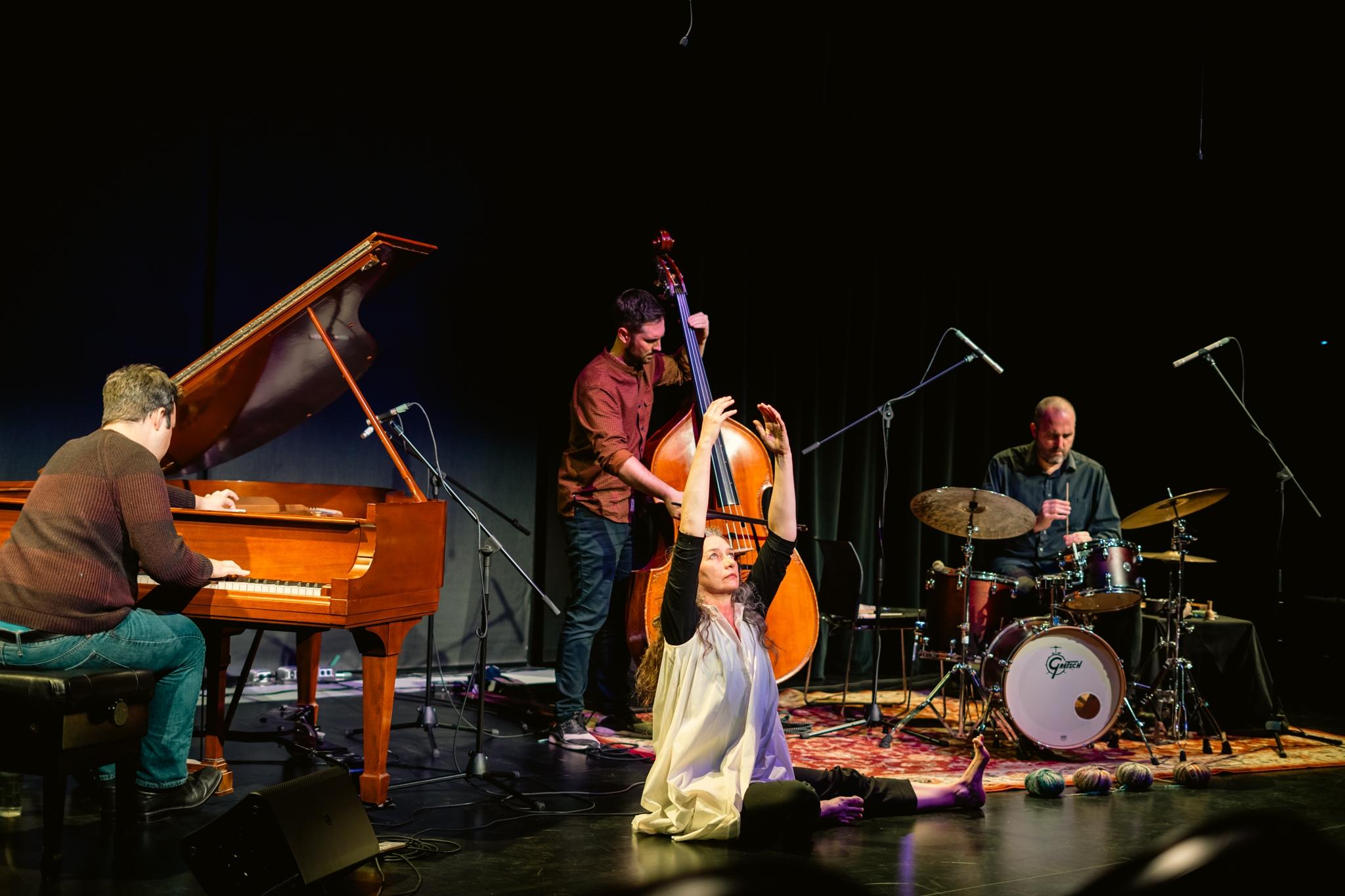
Are you passionate about using creativity to inspire social change? The PhD in Critical Studies in Improvisation at the University of Guelph is a unique cross-disciplinary program blending academic research, creative practice and community engagement. This four-year, in-person program rooted in the award-winning, arts-based research conducted by the International Institute for Critical Studies in Improvisation explores how improvisation can drive cultural, social and artistic innovation.
Designed for forward-thinkers eager to lead change, this program encourages investigation into how improvisation fosters collaboration, inclusivity and problem-solving across disciplines. Ideal candidates include creative practitioners and artists, academic researchers, social and community activists and educators who seek to explore improvisation’s role in cultural transformation, inclusive education and community engagement.
This program will inspire you to take on transformative projects and research and prepare you for professional and academic roles that require innovative thinking and active community involvement.
Program Overview
- Study Option: Course Work and Oral Qualifying Examination (Years 1 and 2), Dissertation Research and Defense (Years 3 and 4)
- Delivery: In-Person
- Duration & Start Terms: 4+ Years
- Admission Average: A Master's degree (or equivalent) with a minimum GPA of 75% in a related field. Applicants who hold a Bachelor's degree and can demonstrate substantive professional and artistic practice may also be considered for admission.
- Deadlines: January 15
Unlock Your Future: Careers with a PhD in Critical Studies in Improvisation
Program Structure
The PhD in Critical Studies in Improvisation is typically completed over four years of full-time study. During this time, you will engage in coursework, practice-based research, teaching development, and an original dissertation (thesis) project guided by expert faculty and advisors.
All students will have two areas of research:
- Primary Area of Focus: Critical Studies in Improvisation
- Secondary Area of Focus: Connecting improvisation to another discipline of interest.
Program Options
Course Requirements
In your first two years, you'll complete a range of graduate-level courses designed to deepen your understanding of improvisation's cultural, social and artistic significance. These courses will equip you with research skills needed to excel in both creative and theoretical research.
Sample courses you will take include:
- IMPR*6010: Core Concepts in Critical Studies in Improvisation
- IMPR*6020: Arts-Based Community Making
- IMPR*6030: Foundational Research Methods for CSI
- IMPR*6410: Pedagogy Lab
Pedagogy Lab
The pedagogy lab is a unique feature of the program, designed to prepare you for teaching and academic leadership roles. You'll gain experience in course design, instructional methods and syllabus development.
What you'll do:
- Course Development: Create undergraduate course syllabi in an area related to your research.
- Research Colloquium Presentation: Present your syllabus design to faculty and peers during the program's research colloquium.
- Mentorship and Feedback: Refine your teaching materials with feedback from your advisory committee.
Why it matters:
The pedagogy lab equips you with essential teaching skills, preparing you for a variety of pedagogical contexts related to your research focus and interests.
Oral Qualifying Examination (OQE)
Once you've completed the coursework, you'll move on to the Oral Qualifying Examination (OQE), which you must pass by the end of your fifth semester.
The OQE involves:
- Completion of Pedagogy Lab
- Colloquium Presentation: An Essay/Research Creation Project combined with a Public Colloquium Presentation
- Literature Review: A Literature Review and fully developed Research Proposal for the dissertation vetted by the advisory committee.
- Oral Presentation: The formal Qualifying Exam consists of an Oral Presentation to the Advisory Committee that includes both a new piece of writing/research creation not used in (2) and an overview of the Research Proposal.
To pass the OQE, you'll need to demonstrate mastery in the primary research area and proficiency in your secondary area of study, as assessed by your advisory committee.
Dissertation Research
Following the OQE, you'll dedicate the next two years to completing an in-depth original research project that advances the field of improvisation studies. Your dissertation will integrate theoretical research, creative practice, and community-based projects that make a meaningful contribution to the field of Critical Studies in Improvisation.
You'll be guided by an advisory committee of three faculty members, with one serving as your primary advisor. This committee will provide support and feedback as you refine your work.
Dissertation Defense
Once your dissertation is complete, you'll defend it in an oral examination. This process for submission, examination, and publication of your dissertation follows guidelines outlined by the University's Chapter IV PhD Degree Regulations.
The International Institute for Critical Studies in Improvisation brings together a dynamic international research team of 58 scholars from 30 academic institutions. The project team includes postdoctoral fellows, students, research associates, as well as over 40 community research partners.
Currently, there are eight formal research sites: University of Guelph; Carleton University; McGill University; Memorial University; Queen’s University Belfast; 17, Institute of Critical Studies; University of British Columbia; and University of Regina. View the full list of team members.
This program equips you with unique skills that blend creativity, critical thinking and collaborative leadership, positioning you to thrive in careers rooted in innovation and social engagement:
Academia, Teaching and Research: Become a university professor, lecturer or research fellow specializing in creative and cultural studies.
Arts and Cultural Management: Lead arts organizations, organize cultural events or curate festivals and residencies.
Community Development and Advocacy: Design and manage social initiatives that promote inclusion, cultural engagement and social justice.
Media and Creative Industries: Develop content focused on culture, arts and social change.
Policy and Consulting: Apply improvisational thinking in public policy, organizational leadership or nonprofit management to make a meaningful impact.
- A Top Comprehensive University in Canada
- Macleans, 2025
- 55% of world leaders
- are humanities and social sciences graduates (Universities Canada)
- Top 10 in Canada for Reputation
- Times Higher Education, 2025
Meet our Faculty
How To Apply
Students in our graduate programs work with an Advisory Committee usually made up of one main Advisor and one to three additional Advisory Committee members depending on the program. These Advisors are faculty members whose research is in an area related to your interests. They will guide you as you prepare your Major Research Project or Major Research Paper. It is a good idea to introduce yourself as early as possible to faculty members who you think might be interested in your work. You do not need to have an Advisory Committee in place before arriving.
Once you start your program, you will have plenty of opportunities to get to know the faculty members in your department or area. Faculty are well used to being sought out by students who might want to work with them. They will welcome hearing from you and can help you focus your ideas. Towards the end of your first semester, the Coordinator of your program will ask you who you think you would like to have on your committee and they will help you as necessary to get everything set up. You should have your committee formally established by the middle of your second semester at the latest so that they can work with and support you as you plan your project.
The deadline for receiving your complete application package for Fall admission is January 15.
Official transcripts from all previous secondary and post-secondary institutions.
Curriculum Vitae (CV) detailing your academic and educational background, professional achievements, and, where relevant, creative accomplishments, exhibitions, grants, residencies, or involvement in specialized communities, including any pertinent volunteer experience.
Two (2) letters of reference (you will be prompted to enter your referees' contact information, and a secure link will be sent to them directly). Please inform your referees that they are encouraged to email gradapps@uoguelph.ca if they experience difficulty or encounter issues with this process.
A detailed statement (1-3 pages, approximately 400-900 words) outlining your academic background, research interests, and reasons for pursuing graduate studies at the University of Guelph. The statement should describe your proposed research focus, its significance, and your ability to carry it out. If applicable, include specific fields of study, topics, or areas you wish to explore, and mention any faculty members or resources at Guelph you hope to engage with during your studies.
If your first language is not English, certification of English language proficiency must be included (e.g., TOEFL, IELTS, or MELAB test scores).
Note: The University of Guelph no longer accepts Duolingo test results.
PhD in Critical Studies in Improvisation Specific Documents
A sample of your scholarly writing. For doctoral students, this should be a portion of a major research paper or thesis or a paper written for a graduate course. Please note that papers will not be returned to applicants.
A portfolio showcasing creative, professional, community-engaged, and/or research work related to IMPR and the proposed area of study. The portfolio may feature music, artwork, digital files, or written materials that align with the applicant’s rationale for admission. Submissions are made through SlideRoom, where additional details and specific instructions are provided.
Disclaimers
Applicants from outside Canada whose educational background is not easily assessed may be asked to demonstrate their knowledge through alternate methods, such as the Graduate Record Examination (GRE).
Registration at one university for three degrees (BA, MA, PhD) is discouraged.
Our PhD in Critical Studies in Improvisation welcomes candidates from diverse academic, artistic and professional backgrounds. All application materials must be submitted by January 15 of your anticipated entrance year.
Applicants must have:
- A Master's degree (or equivalent) with a minimum GPA of 75% in a related field. Applicants who hold a Bachelor's degree and can demonstrate substantive professional and artistic practice may also be considered for admission.
Non-Traditional Applicants:
We also consider applicants with relevant professional or artistic experience who may lack traditional academic credentials. You may need to submit a portfolio, research proposal or other supporting materials and participate in an interview. Additional preparatory courses may be required. Please email imprgpc@uoguelph.ca if you have questions about eligibility.
Most Offers of Admission that we make for our graduate programs include an offer of funding. As part of your admission offer you will receive a detailed break-down of what that funding will include over the duration of your program. Most funding consists of a mix of a guaranteed offer of paid work for the University, usually as a Graduate Teaching Assistant, and scholarship income. Once you enroll in your program, you will be set up with an account with Student Financial Services; your funding will be paid into this account (every two weeks in the case of employment income) and you can pay your tuition and fees from this account and then move the rest into your own bank account.
If you are an International student, visit the University of Guelph International Student Experience website for information about pre-arrival resources, orientation programs (including START International) and counselling help.
Please visit the University of Guelph’s Guelph Graduate Tuition and Fees website to find tuition and fee information.
Have Questions?
Program Chair:
Andrew Bailey
519-824-4120 Ext 56637
artsadr@uoguelph.ca
Graduate Program Coordinator (Acting):
Eric Fillion
efillion@uoguelph.ca
Academic Program Assistant:
Marie Ann O'Neill
imprgpa@uoguelph.ca
Discover More Options
PhD in Literary Studies/Theatre Studies in English
The PhD in Literary Studies/Theatre Studies offers a unique focus on both disciplines, supported by a diverse faculty. Students can delve into areas like Canadian literatures, postcolonial studies, early modern studies, and performance theory, with a strong emphasis on interdisciplinary and innovative research.
PhD in History
The PhD in History at the University of Guelph provides a rigorous, four-year program that emphasizes advanced research and professional development. Students benefit from seminars, fieldwork, and thesis guidance, working with experts from Guelph, Wilfrid Laurier University, and the University of Waterloo.