Master of Arts in Performance and Creative Research
- Coming Soon!
- Fall 2027 Start
Advance your Performance Practice through Creative Research.
Are you interested in exploring how creative practice and performance can function as forms of research? The MA in Performance and Creative Research offers students the opportunity to combine scholarly inquiry with hands-on, practice-based performance work. Rooted in the evolving field of Theatre and Performance Studies, this program recognizes performance creation as a powerful mode of knowledge production and critical exploration.
Working alongside award-winning scholars, artists, and practitioner-researchers, students engage with performance through both theory and creative experimentation. Whether through acting, devising, designing, playwrighting, digital performance, or community-engaged digital performance, community-engaged work, or another area of performance, students develop projects that connect embodied artistic practice with critical reflection and research-creation methodologies.
This two-year thesis-based program emphasizes collaboration, experiential learning, and independent research. Students build strong foundations in performance studies while developing flexible, innovative research-creation projects that may extend beyond traditional written thesis formats. Graduates will be well positioned for careers across the arts and education sectors, or for further doctoral study in theatre and performance.
Program Overview
- Study Option: Thesis Creative Research Project
- Delivery: In-Person
- Duration & Start Terms: Typically 24 Months, starting in Fall
- Admission Average: a BA or BFA degree in a performance-related field from a recognized post-secondary institution with at least a 78% or higher in the last two years of study.
- Deadlines: January 15
School of Theatre, English and Creative Writing, located within the College of Arts.
Take a Closer Look at the MA, Performance and Creative Research
Program Structure
The program’s flexible, performance-based thesis structure gives students the time and support needed to fully develop ambitious creative projects while working closely with faculty, artists, and community collaborators.
Students will also have access to a range of creative and performance spaces within the Arts Research Centre, including the Black Box Theatre, Massey Hall, Isobel (Timmy) Laidlaw Theatre Design Studio, the Arts Auditorium, and additional rehearsal, studio, and collaborative spaces that support experimentation, creation, and performance-based research.
You will take courses such as;
THST*6XXX Approaches to Performance Studies
THST*6XXX Performance Research Methods
THST*6XXX Topics in Performance
IMPR*6410 Pedagogy Lab
For more information on courses, please visit the Academic Calendar (Coming soon).
The Arts Research Centre, known as the ARC, is the new home for College of Arts theatre studies and music students, as well as home to research associated with the International Institute for Critical Studies in Improvisation. It features updated and light-filled teaching and performance spaces, including a 140-seat music recital hall, a 120-seat performance theatre and a 130-seat improvisation space called ImprovLab.
Already, the ARC has become a Guelph community hub, hosting award shows, Guelph Jazz Festival colloquium events, music rehearsals and more, with the opportunity to host more than 50 public events a year.
Learn more about the ARC and it's impact on the Performing Arts at Guelph.
The School of Theatre, English, and Creative Writing, alongside our partners in Fine Art, Music, and Languages, is home to a dynamic cohort of faculty who are active researchers, industry professionals, and dedicated mentors. Comprising award-winning writers, visionary theatre practitioners, and esteemed scholars, our faculty is uniquely equipped to support a wide range of critical and creative projects, guiding your academic and professional journey in subject areas including:
Arts, Health, and Community Wellness: Exploring dance neuroscience, neurorehabilitation, and creative therapies.
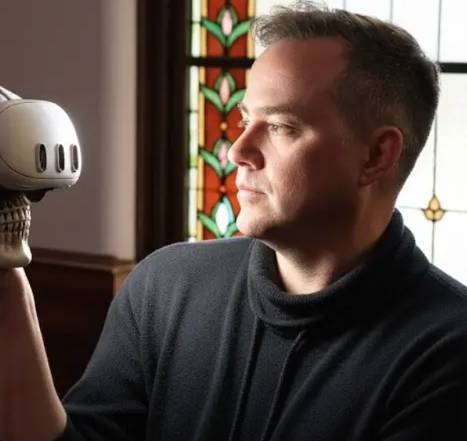
Digital Performance and Immersive Media: Investigating gaming, virtual reality (VR), augmented reality (AR), and mediated scenography.
Critical Theory, Activism, and Identity: Analyzing the intersections of queer theory, gender, race, and equity in education.
Narrative, Folklore, and Textual History: Examining fairy tales, satire, material culture, Shakespeare, and law in literature.
Critical Studies in Improvisation and Postcolonialism: Mapping cultural histories, festival studies, and archival practices.
The MA in Performance and Creative Research prepares you with in-demand skills in creative problem-solving, collaboration, performance research, and critical communication, positioning you for a wide range of opportunities across the arts, education, community programming, and creative industries. Whether you are interested in performance creation, arts leadership, teaching, community-engaged practice, or further doctoral study, this program equips you with the tools to connect theory and creative practice while developing innovative, research-driven artistic work.
- A Top Comprehensive University in Canada
- Macleans, 2025
- 55% of world leaders
- are humanities and social sciences graduates (Universities Canada)
- Top 10 in Canada for Reputation
- Times Higher Education, 2025
Meet our Faculty
How To Apply
Students in our graduate programs work with an Advisory Committee usually made up of one main Advisor and one to three additional Advisory Committee members depending on the program. These Advisors are faculty members whose research is in an area related to your interests. They will guide you as you prepare your Thesis Creative Research Project. It is a good idea to introduce yourself as early as possible to faculty members who you think might be interested in your work. You do not need to have an Advisory Committee in place before arriving.
Once you start your program, you will have plenty of opportunities to get to know the faculty members in your department or area. Faculty are well used to being sought out by students who might want to work with them. They will welcome hearing from you and can help you focus your ideas. Towards the end of your first semester, the Coordinator of your program will ask you who you think you would like to have on your committee and they will help you as necessary to get everything set up. You should have your committee formally established by the middle of your second semester at the latest so that they can work with and support you as you plan your project.
The deadline for receiving your complete application package for Fall admission is January 15.
Official transcripts from all previous secondary and post-secondary institutions.
Curriculum Vitae (CV) detailing your academic and educational background, professional achievements, and, where relevant, creative accomplishments, exhibitions, grants, residencies, or involvement in specialized communities, including any pertinent volunteer experience.
Two (2) letters of reference (you will be prompted to enter your referees' contact information, and a secure link will be sent to them directly). Please inform your referees that they are encouraged to email gradapps@uoguelph.ca if they experience difficulty or encounter issues with this process.
A detailed statement (1 page, approximately 400-500 words) outlining your academic background, research interests, and reasons for pursuing graduate studies at the University of Guelph. The statement should describe your proposed research focus, its significance, and your ability to carry it out. If applicable, include specific fields of study, topics, or areas you wish to explore, and mention any faculty members or resources at Guelph you hope to engage with during your studies.
A writing sample of approximately 2,500 words that demonstrates your research skills and analytical thinking abilities.
If your first language is not English, a certification of English language proficiency must also be included e.g., Test of English as a Foreign Language (TOEFL), International English Language Testing System (IELTS), Michigan English Language Assessment Battery (MELAB) test scores for applicants whose first language is not English.
Note: The University of Guelph no longer accepts Duolingo test results.
MA, Performance and Creative Research Specific Documents
Artistic portfolio, with examples of their creative and/or research practice
- a BA or BFA degree in a performance-related field from a recognized post-secondary institution with at least a 78% or higher in the last two years of study.
Most Offers of Admission that we make for our graduate programs include an offer of funding. As part of your admission offer you will receive a detailed break-down of what that funding will include over the duration of your program. Most funding consists of a mix of a guaranteed offer of paid work for the University, usually as a Graduate Teaching Assistant, and scholarship income. Once you enroll in your program, you will be set up with an account with Student Financial Services; your funding will be paid into this account (every two weeks in the case of employment income) and you can pay your tuition and fees from this account and then move the rest into your own bank account.
If you are an International student, visit the University of Guelph International Student Experience website for information about pre-arrival resources, orientation programs (including START International) and counselling help.
Please visit the University of Guelph’s Guelph Graduate Tuition and Fees website to find tuition and fee information.
Have Questions?
Graduate Program Coordinator:
Paul Barrett
barrettp@uoguelph.ca
Graduate Program Assistant:
Pam Keegan
sotecacademic@uoguelph.ca
Discover More Options
Master of Arts in History
The Master of Arts in History at the University of Guelph connects students with expertise from Guelph, Wilfrid Laurier, and Waterloo. It offers diverse study areas like Canadian, Indigenous, and European history, emphasizing independent research and analytical skills for academic and professional growth.
Master of Arts in Integrated Humanities
The Master of Arts in Integrated Humanities offers specializations in French, European, and Francophone Studies. Students explore interdisciplinary topics such as literature, culture, and identity, developing research skills in areas like French-Canadian and Caribbean literatures.