PhD in Biophysics
Degree
- PhD (Doctor of Philosophy)
Program Type
- Thesis
Delivery
- On-campus
Entry Terms & Deadlines
Domestic:
- Fall (September): August 31
- Winter (January): January 1
- Summer (May): March 31
International:
- Fall (September): June 30
- Winter (January): October 8, 2026
- Summer (May): March 31
Why choose a PhD in Biophysics?
Are you interested in… Biomechanical Biophysics, Cellular Biophysics, Computational Biophysics, Molecular Biophysics, or Structural Biophysics?
PhD students in Biophysics become part of the Biophysics Interdepartmental Group (BIG) at the University of Guelph, which offers unique graduate programs to further our understanding of biological processes through the application of the concepts and techniques of the physical sciences. You will conduct original research in molecular, cellular, structural, biomechanical and/or computational biophysics while developing the skills needed to contribute new knowledge to your field at a terminal level.
Collaborative research between faculty members with complementary research interests is actively encouraged, and several graduate students are co-supervised by two research groups. All of our students are guided by an interdepartmental advisory committee.
Advance your area of expertise
Conduct original research in molecular, cellular, structural, biomechanical or computational biophysics.
Build an interdisciplinary research program
Draw on expertise across the life, physical, computational and engineering sciences.
Use advanced tools to study biological systems
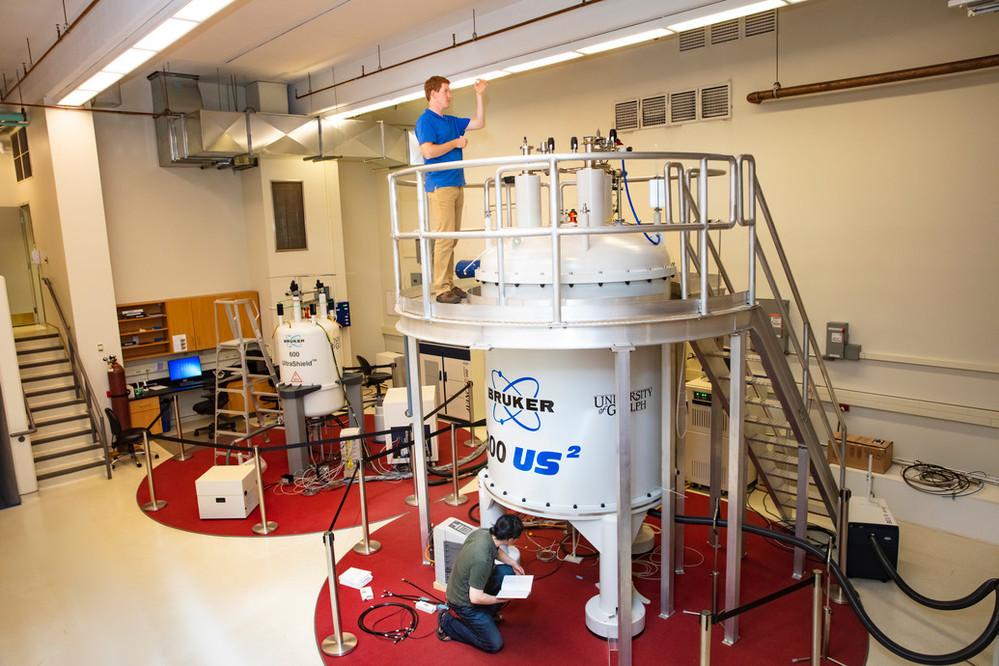
Access specialized facilities for imaging, spectroscopy, structural biology, biomechanics and high-performance computing.
What can you do with a PhD in Biophysics?
The PhD in Biophysics prepares you for diverse careers in science by developing advanced research, analytical, and problem-solving skills.
- University professor
- Academia
- Further professional school
- Laboratory manager
- Clinical research scientist
- Biomedical or biotechnology researcher
- Computational biology researcher
- Research and development leader
- Scientific writer
What you can learn – sample courses
PhD course requirements depend on the student’s previous degree. Students entering from another M.Sc. program complete 1.00 graduate credits, while direct-entry students from a bachelor’s degree complete 1.50 credits. All PhD students complete BIOP*6010, a qualifying examination and an original doctoral thesis. All PhD students complete BIOP*6010, a qualifying examination and an original doctoral thesis and BIOP*6000 Concepts in Biophysics. Explore current research at the intersection of the life and physical sciences through influential journal publications.
Program Information and Requirements
Faculty and Facilities
The Biophysics Interdepartmental Graduate Program is a unique, standalone interdisciplinary program with faculty from several departments/schools in the College of Computational, Mathematical, and Physical Sciences; College of Biological Science; Ontario Agricultural College; and Ontario Veterinary College. In many cases, our students are co-advised by faculty from two different departments and all of our students are guided by an interdepartmental advisory committee.
In addition to being students in the Biophysics Interdepartmental Program, our students are also graduate student members of their home department. This is the department to which their advisor belongs.
Meet our Students and Faculty

"I chose to study at the University of Guelph because the Department of Physics is highly active in research, with many dedicated faculty members who love what they do."

“We study light-activated membrane proteins important in bioenergetics and vision. In our research, we combine methods of modern biophysics with techniques of molecular biology and biochemistry."
Contact Us
Director and Graduate Program Coordinator
Hermann Eberl (MacNaughton 508, Ext. 62622)
heberl@uoguelph.ca
Graduate Program Assistant
Janice Ilic (MacNaughton 207, Ext. 58176)
big@uoguelph.ca