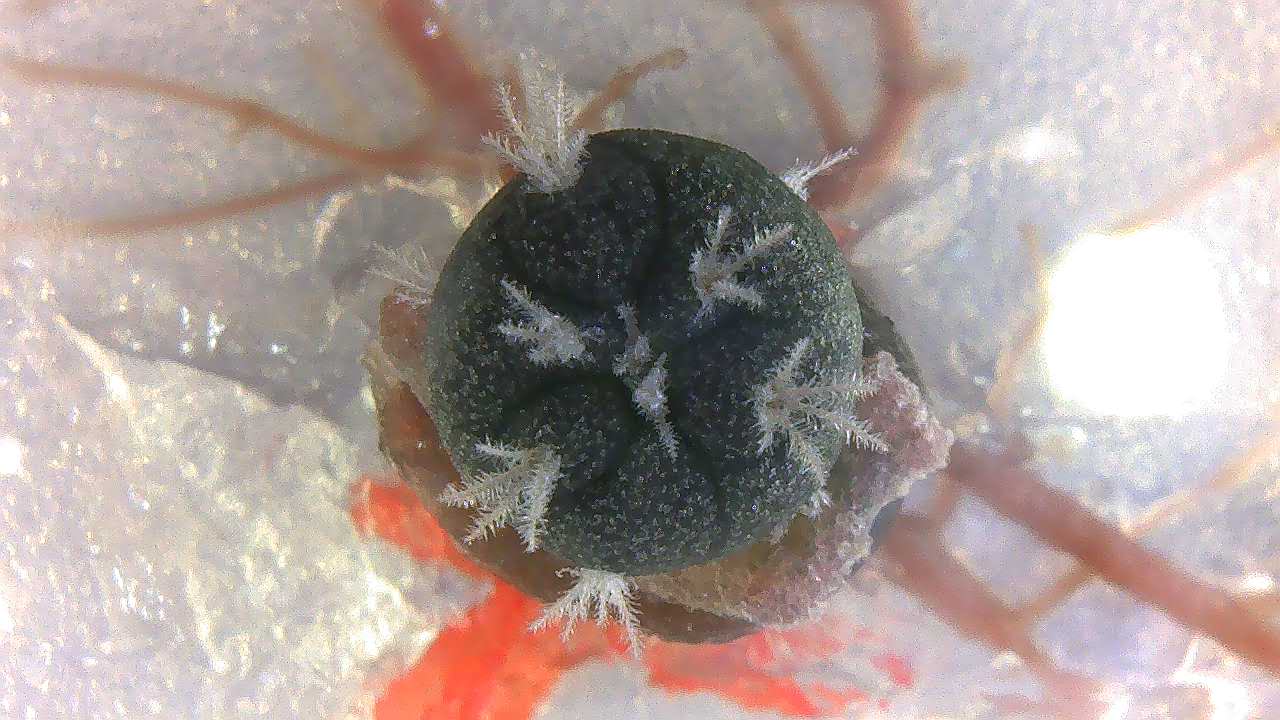
Peyote (Lophophora williamsii) is a species of cactus native to Mexico and Southern Texas. This slow growing cactus is sacred to many Indigenous Mexican cultures and is now threatened or endangered in many areas due to overharvesting by tourists that use collection methods that ultimately result in plant death. The photo depicts a previously harvested Peyote plant that has regenerated due to a sustainable harvesting protocol that is currently being developed at the University of Guelph. Once published, this sustainable harvesting protocol will serve as a guideline for Peyote collection practices, allowing for fast regeneration of the collected specimens. Ultimately, this research will help to facilitate the revitalization of native Peyote populations and support Indigenous cultures that have used Peyote for centuries.
- About the Office of Research
- Stategic Research Plan
- Vice-President, Research & Innovation
- Office of Research Units
- Research Centres and Institutes
- Partnership Opportunities
- Student Research Opportunities
- Community Involvement
- Researcher Tools and Resources
- Safeguarding Research
- Commercialization Policy and Framework
- Indigenization, Equity, Diversity and Inclusion in Research
- Research Alerts
- Funding
- Ethics and Regulatory Compliance
- Research Integrity and Conflict of Interest
- Patenting, Licensing, and Commercialization
- Honours and Awards
- Ontario Agri-Food Innovation Alliance
- Other Considerations and Resources
- Forms, Policies, Guidelines, and Procedures
- Interactive Support Sessions for Researchers
- Researcher Training and Development
- Research Administration Information Management System (RAIMS)