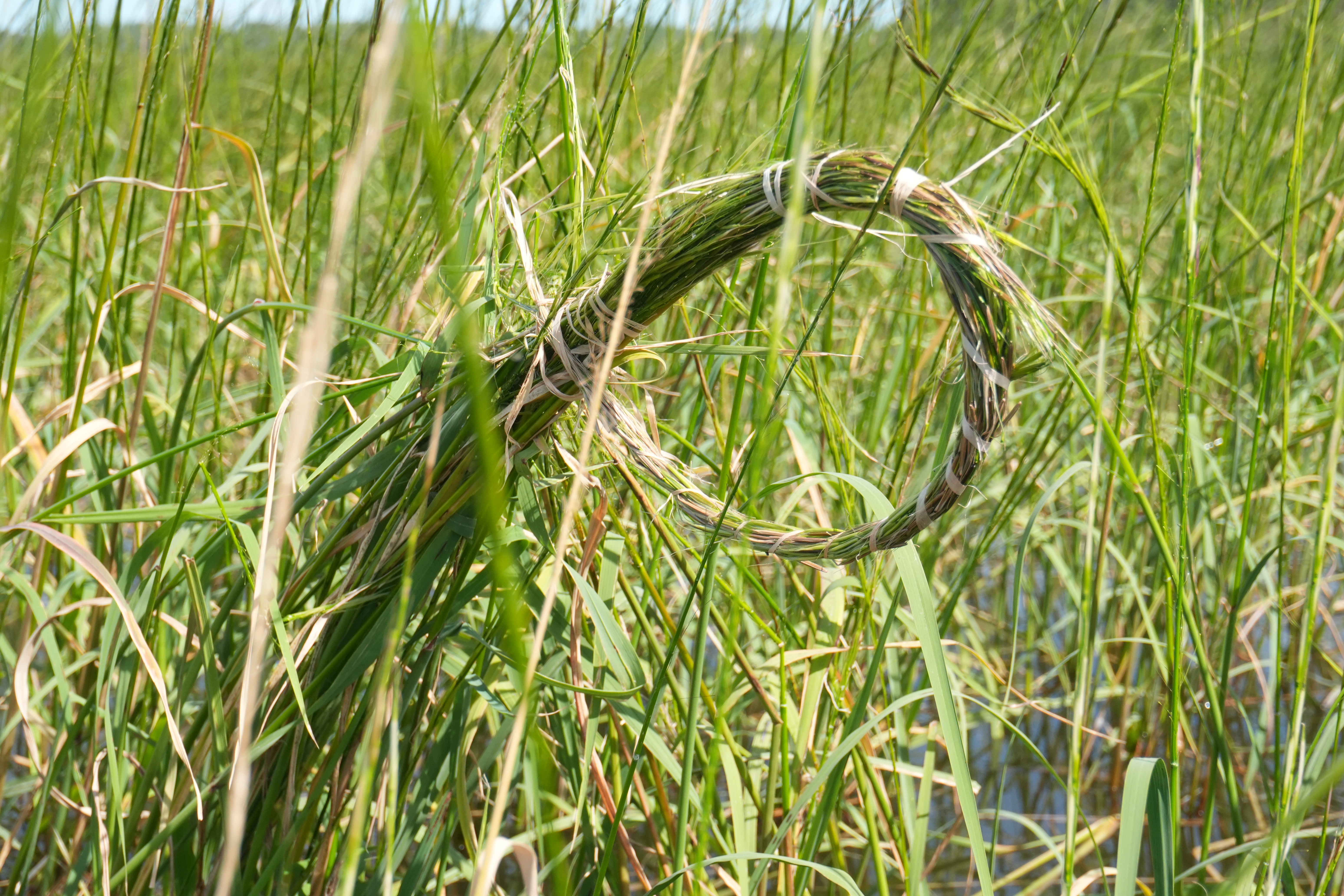
The image shows a tied section of Manoomin (wild rice) on Rice Lake. The practice of tying rice stalks protects ripe seeds from the wind - allowing for more harvest - and facilitates even ripening across individuals. The cultural importance of Manoomin is of community, self-reliance, and food sovereignty. All four elements work together for Manoomin as a food source - it is parched with fire, winnowed with wind, grown in earth and water. Manoomin is our relation, and by working with it we honour that generational responsibility.
- About the Office of Research
- Stategic Research Plan
- Vice-President, Research & Innovation
- Office of Research Units
- Research Centres and Institutes
- Partnership Opportunities
- Student Research Opportunities
- Community Involvement
- Researcher Tools and Resources
- Safeguarding Research
- Commercialization Policy and Framework
- Indigenization, Equity, Diversity and Inclusion in Research
- Research Alerts
- Funding
- Ethics and Regulatory Compliance
- Research Integrity and Conflict of Interest
- Patenting, Licensing, and Commercialization
- Honours and Awards
- Ontario Agri-Food Innovation Alliance
- Other Considerations and Resources
- Forms, Policies, Guidelines, and Procedures
- Interactive Support Sessions for Researchers
- Researcher Training and Development
- Research Administration Information Management System (RAIMS)