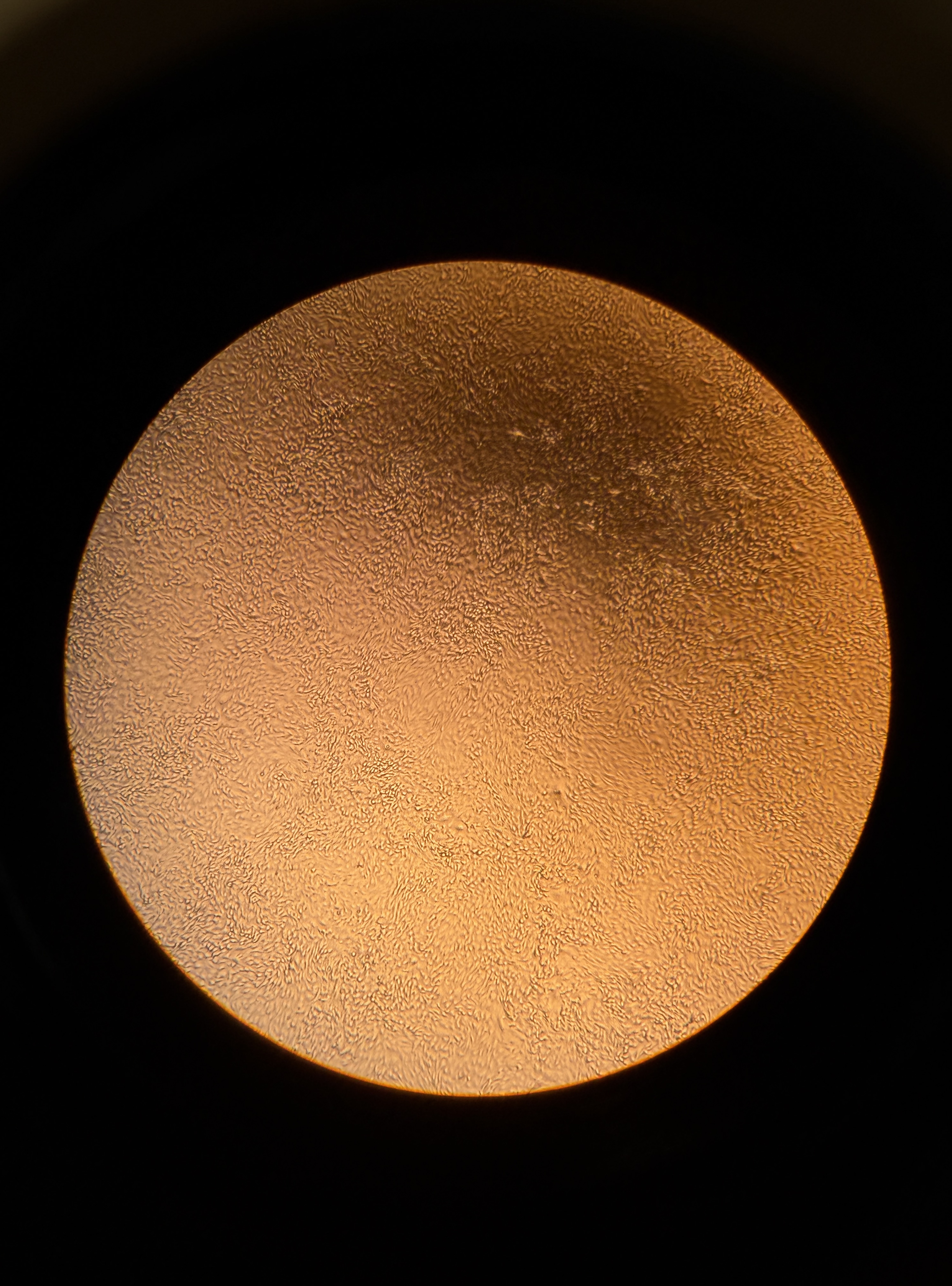
At first glance, this image resembles a distant planetary landscape, with mountain-like formations and mottled textures stretching across its surface. Yet this mysterious landscape lies not in space, but beneath a microscope. It reveals IPEC-J2 cells, a porcine intestinal epithelial cell line used to study the gut barrier. As these cells grow and differentiate, they provide a window into how intestinal cells respond to nutrients and environmental challenges. What looks like a distant world may help us better understand a much closer one: the microscopic environment of the gut, where animal health begins.
- About the Office of Research
- Stategic Research Plan
- Vice-President, Research & Innovation
- Office of Research Units
- Research Centres and Institutes
- Partnership Opportunities
- Student Research Opportunities
- Community Involvement
- Researcher Tools and Resources
- Safeguarding Research
- Commercialization Policy and Framework
- Indigenization, Equity, Diversity and Inclusion in Research
- Research Alerts
- Funding
- Ethics and Regulatory Compliance
- Research Integrity and Conflict of Interest
- Patenting, Licensing, and Commercialization
- Honours and Awards
- Ontario Agri-Food Innovation Alliance
- Other Considerations and Resources
- Forms, Policies, Guidelines, and Procedures
- Interactive Support Sessions for Researchers
- Researcher Training and Development
- Research Administration Information Management System (RAIMS)