Skip to main content
  • About the Office of Research
  • Stategic Research Plan
  • Vice-President, Research & Innovation
  • Office of Research Units
  • Research Centres and Institutes
  • Research News
  • Research Highlights
  • Research By The Numbers
  • Research Chairs
  • Honours and Awards
  • Partnership Opportunities
  • Student Research Opportunities
  • Community Involvement
  • Researcher Tools and Resources
  • Safeguarding Research
  • Commercialization Policy and Framework
  • Indigenization, Equity, Diversity and Inclusion in Research
  • Research Alerts
  • Funding
  • Ethics and Regulatory Compliance
  • Research Integrity and Conflict of Interest
  • Patenting, Licensing, and Commercialization
  • Honours and Awards
  • Ontario Agri-Food Innovation Alliance
  • Other Considerations and Resources
  • Forms, Policies, Guidelines, and Procedures
  • Interactive Support Sessions for Researchers
  • Researcher Training and Development
  • Research Administration Information Management System (RAIMS)
  • Office of the Vice-President (Research & Innovation)
  • Research Services Office
  • Agri-Food Partnership staff
  • Research Innovation Office staff
  • Food from Thought staff
  • College Associate Deans Research and Research Managers
  • Research Financial Services

Trophallaxis in forager honeybees

At Honey Bee Research Centre, the summer of 2023 was the big time to investigate the foraging performance of honey bees treated by our protein diets to support immunity and fight against gut disease. More than 25,000 bees were painted on the thorax with different colours regarding the treatments. During observation, we can see a nectar forager (blue-marked bee) perform offering contacts to transfer the contents of her crop to a recipient nest-mate (green-marked bee) by the time she performs begging contacts. It is a part of trophallaxis behaviour performed among adult worker honeybees. Offering and begging contacts also involve the exchange of information on food resources. We expect that the performance of memory to the food source and returning home depends on the health of honey bees and can be enhanced by artificial protein diets.
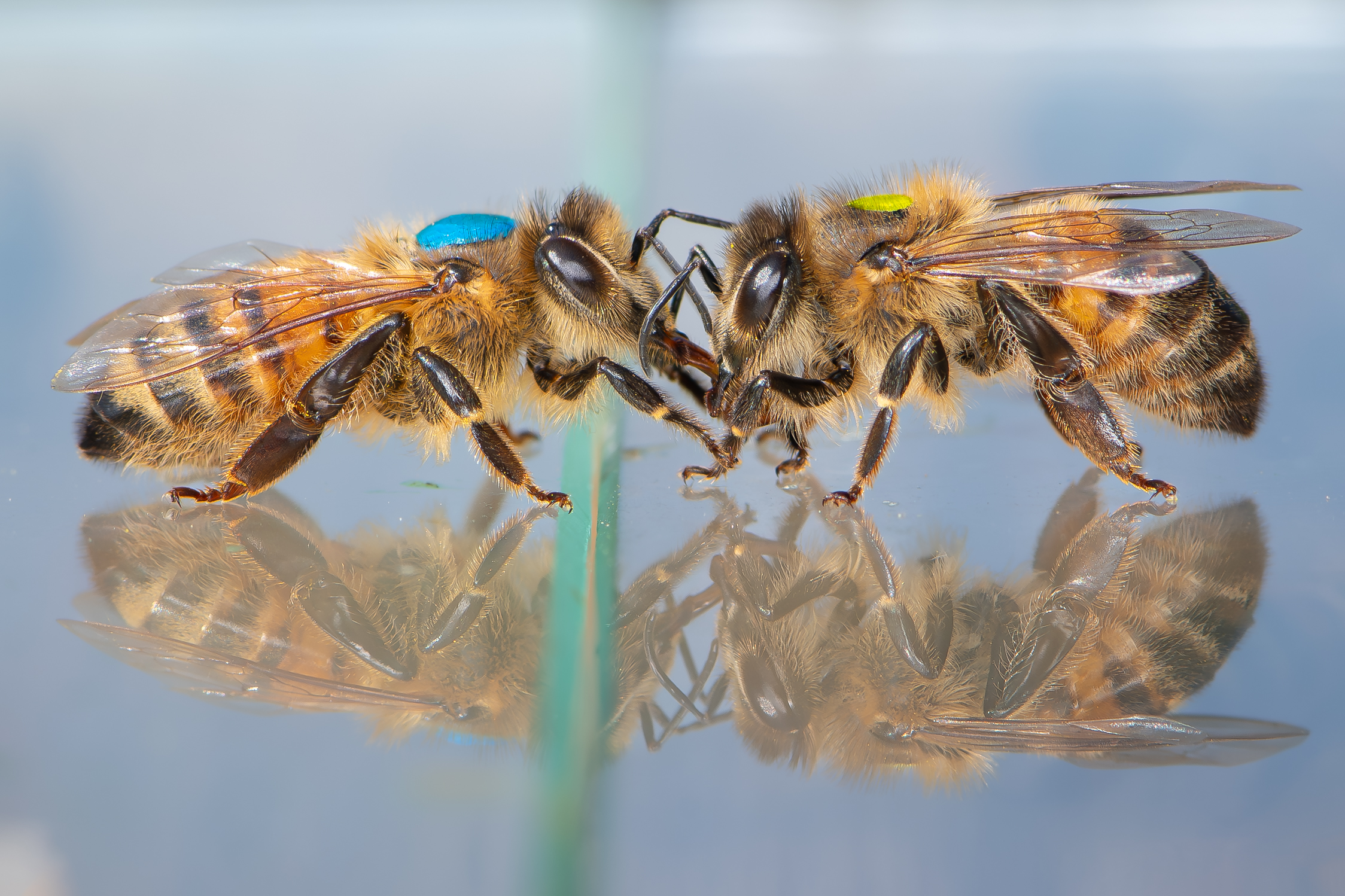

Two bees facing each other, one has blue paint on its back while the other has yellow paint on its back
Skip to main content

Quick Links

  • OR-5 form
  • Animal Utilization Protocol online system (eAUP)
  • Human Participants - Ethics Online System (EthOS)
  • Funding Opportunities list

  • Instagram

  • LinkedIn - Office of Research

  • X - Twitter

  • YouTube - YouTube