Industry Leaders Guide U of G Cybersecurity Curriculum

At the end of November, executives from Canada’s cyber industry, along with U of G computing faculty and students, came together to steer the future of cybersecurity education at the university’s modern cybersecurity learning facility. The event combined an Industry Advisory Board (IAB) meeting, a panel discussion on emerging risks and AI, and a networking session.
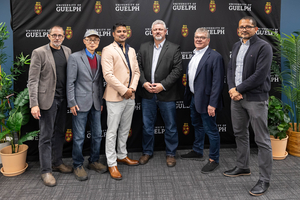
The twice-annual event reaffirmed the university’s commitment to aligning its graduate programs, including the Master of Cybersecurity and Threat Intelligence and the Master of Cybersecurity Leadership and Cyberpreneurship, with employer needs. The importance of these skills has been underscored by funding from the Canadian Foundation for Innovation into protecting critical Canadian infrastructure, which points to a growing demand for professionals who can safeguard essential systems (and evidence that the University of Guelph is training its students to meet this need).
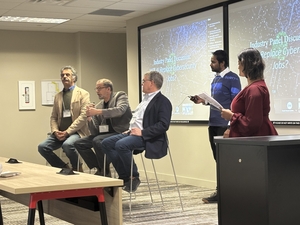
A panel at the event focused on AI and cybersecurity, reflecting on how artificial intelligence is reshaping threat detection, risk assessment and cyber defense practices. Panelists included Jay Haynes (President and COO, eSentire), Ben Davies (CIO, Vector Institute), Phil Umrysh (VP and CISO, Intact Financial) and Dr. Davar Rezania (Associate Professor, Gordon S. Lang School of Business and Economics). Discussion covered emerging threats, evolving employer expectations, AI’s role and career paths for graduates.

Two computing students moderated the panel: Nafis Ahmed Awsaf, Master of Cybersecurity and Threat Intelligence (MCTI), and Keerthana Madhavan, Computer Science M.Sc. + AI candidate.
“This dedicated panel on AI’s impact on cybersecurity allowed students to see firsthand how industry leaders update strategies to protect critical infrastructure, and how our curriculum is evolving to prepare them for those realities,” says Dr. Xiaodong Lin, MCTI and MCLC programs director.
“The inspiring discussions from the panel, moderated by two students, exemplify excellence in both technical and leadership skills and reflect the high quality of education our cybersecurity students receive.”

After the panel, participants engaged in networking with executives from organizations represented on the IAB, including Bell Canada, QNX (BlackBerry), Linamar, Vector Institute and 3Tenets, and others. This session gave students a chance to practice professional communication and industry needs. For the industry partners, it offered a way to connect with emerging talent, forge research collaborations and help shape curriculum direction.
In a 2024 University of Guelph survey, responding MCTI graduates reported a 100 per cent employment rate within six months of graduation Many have also been hired by industry partners and advisors.

The day concluded with the presentation of a $5,000 scholarship from IAB supporter Bruce Power, awarding Yaa Kusi-Fordjour, a recent MCTI graduate, in recognition of academic achievement.
As cyber threats become more sophisticated, especially with AI’s growing role, University of Guelph’s close alignment with industry ensures its cybersecurity education remains current, comprehensive and professionally relevant.