How AI Is Helping Coastal Communities Prepare for Hidden Health Risks
Many Canadians check the weather before stepping outside for the day. Increasingly, they also check the Air Quality Health Index (AQHI). But while real-time air quality readings are helpful, what could truly strengthen public health decision making is something more powerful: accurate prediction.
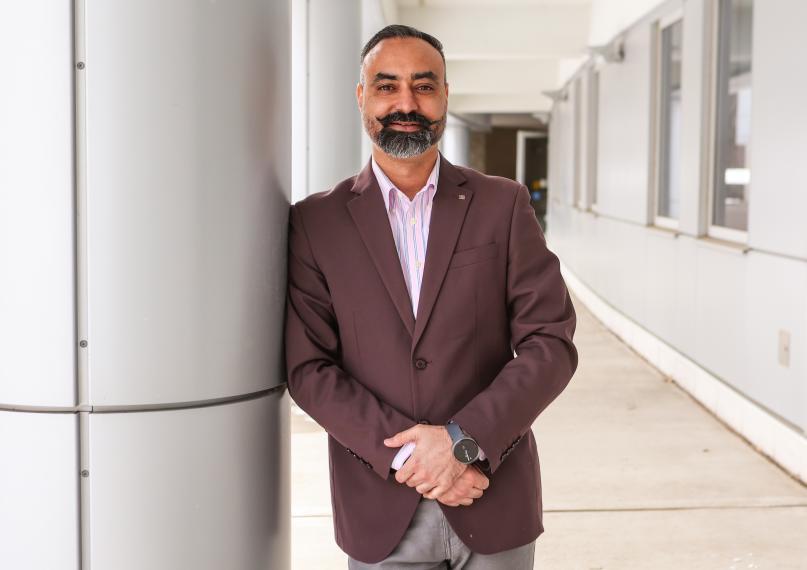
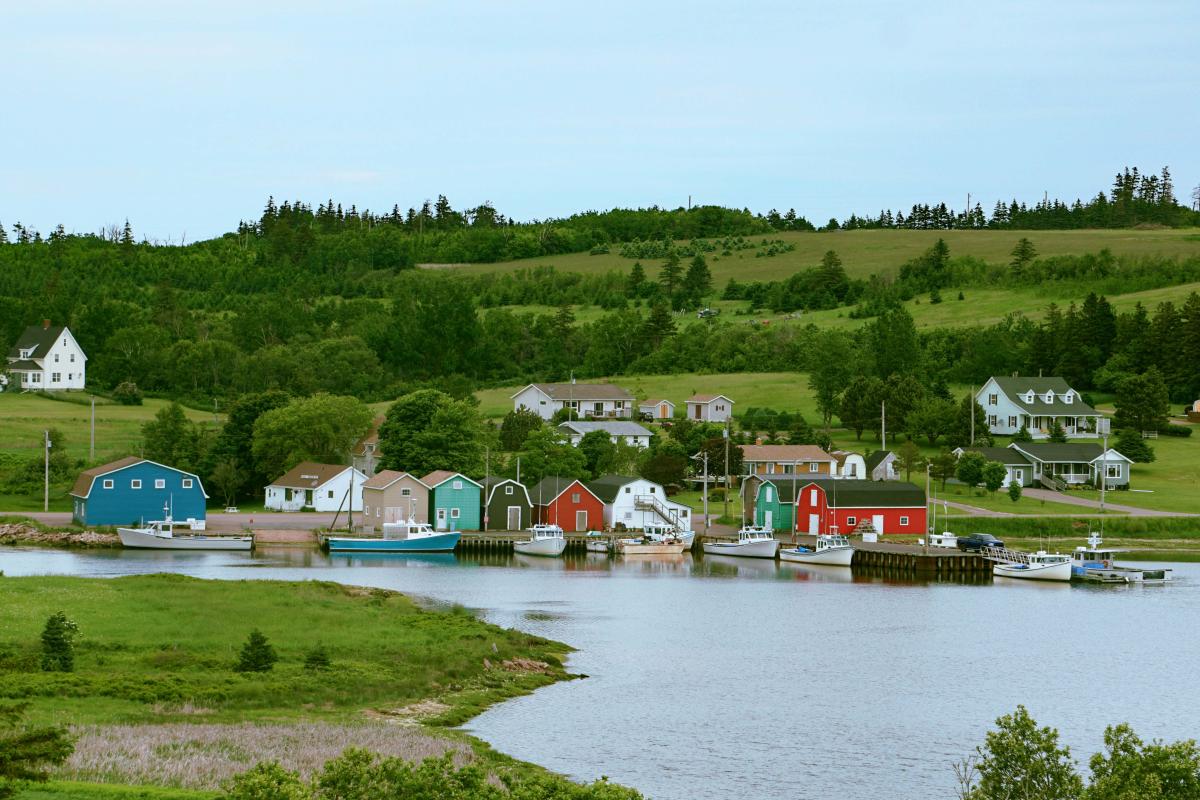
At the University of Guelph, Dr. Gurjit S. Randhawa is using artificial intelligence (AI) to improve how we forecast air quality, focused on coastal regions like Halifax, Charlottetown and St. John’s, where sudden sea breezes, temperature shifts and seasonal variability make predictions particularly challenging.
“Real-time data tells us what’s happening now,” Randhawa explains. “But if we can better predict conditions one or even three weeks in advance, people can make better decisions.”
Tackling Variability in Coastal Climates
The research began when Randhawa worked at the University of Prince Edward Island, where his research focused on applying AI to climate data in agriculture and robotics. That experience naturally expanded into environmental health forecasting.
Coastal regions, however, pose a unique problem. Traditional statistical and machine learning models often treat sudden fluctuations as “noise,.” Randhawa says. But in Atlantic Canada, variability is part of the system.
“If we simply filter out those variations,” he says, “we may be discarding meaningful patterns.”
To address this, his team developed a novel deep ensemble learning pipeline. Instead of feeding raw time series data directly into a single model, they first decompose it into short-term, medium-term and long-term components. Relevant time lags are then selected and processed through multiple deep learning models working in parallel.
The result is significantly improved accuracy. Compared to established models such as LSTM and gradient boosting, their approach reduced prediction error by up to 40 per cent across three provinces and consistently ranked highest in performance evaluations.
Why the Air Quality Health Index Matters
Rather than predicting individual pollutants like PM2.5 or nitrogen oxides, the study focused on forecasting AQHI itself.
“For public communication, clarity matters,” Randhawa says. “If science cannot be conveyed clearly and in a way that they understand, it cannot create impact.”
While policymakers and scientists may analyze specific pollutant concentrations, the AQHI provides a standardized, accessible measure of health risk. It helps families decide whether to exercise outdoors, whether children should play outside, or whether vulnerable individuals should limit exposure.
AI becomes not just a technical tool, but a bridge between complex environmental data and everyday decision-making. While AI has raised ethical questions, Randhawa emphasizes that trust begins with careful research design, handling missing data appropriately, managing bias and selecting models suited to the nature of time-series climate data.
Toward Healthier, More Resilient Cities
As climate variability intensifies, accurate environmental forecasting becomes increasingly important. In regions like Atlantic Canada, where healthcare systems already face strain, preventive awareness can reduce exposure and ease pressure on emergency services.
“If we can be precautionary instead of reactive,” Randhawa says, “we improve both personal health and community resilience.”
In the future, AI-driven environmental forecasting may become as essential as checking the weather, quietly guiding decisions that help us breathe a little easier.
References
Jamei, M., Randhawa, G. S., Ali, M., Karbasi, M., Olumegbon, I., Cheema, S. J., Esau, T. J., Zaman, Q. U., & Farooque, A. A. (2026). A reliable deep ensemble hybrid model for urban air quality health index forecasting in maritime Canada. Environmental Modelling & Software, 197, 106837. https://doi.org/10.1016/j.envsoft.2025.106837
Funding
This research was supported by the Natural Sciences and Engineering Research Council of Canada (NSERC).
This story was written by Adya Dash as part of the Science Communicators: Research @ CCMPS initiative.