CCMPS Researchers are Uncovering the Hidden Dynamics of a Mitochondrial Protein
Inside every cell in our body, tiny structures called mitochondria work continuously to produce the energy that keeps us alive. Often described as the “powerhouse of the cell,” mitochondria operate in an intense and highly reactive environment. As they generate energy, they also produce reactive oxygen species, unstable molecules that can damage proteins, lipids and DNA. Over time, this oxidative stress can cause proteins inside mitochondria to misfold or malfunction.
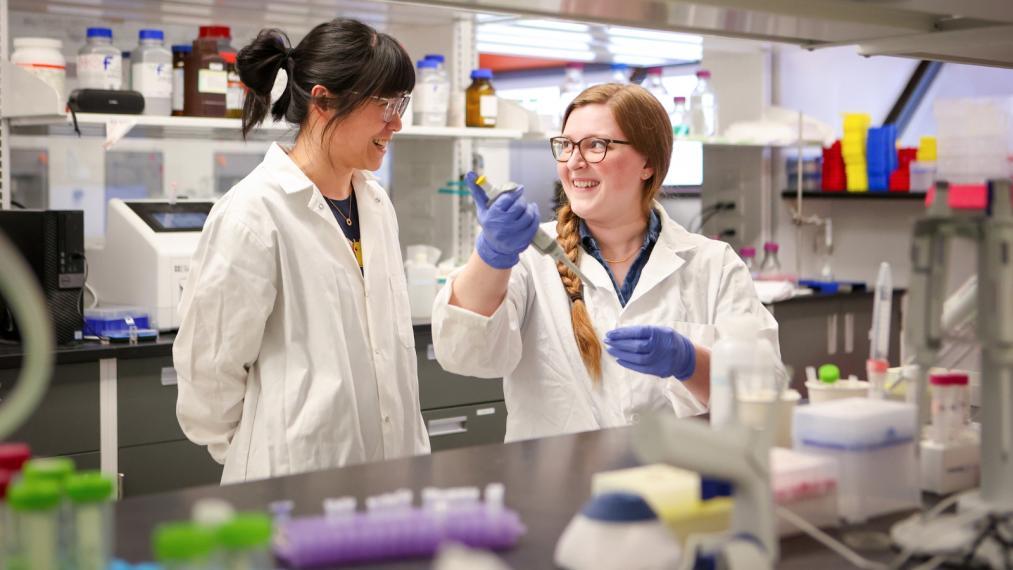
At the University of Guelph, PhD candidate Megan Black and Dr. Rui Huang in the Department of Chemistry, along with collaborators in Chemistry and the Department of Cellular and Molecular Biology, are studying how cells prevent mitochondrial damage from escalating into serious dysfunction. Black’s research focuses on a protein called YME1L, an enzyme that monitors and removes damaged proteins before they interfere with energy production or trigger cellular stress responses.
“If mitochondria shut down, the consequences are severe,” Black explains. “Cells can’t produce energy efficiently. Over time, that can contribute to neurodegenerative diseases, metabolic disorders, or even support cancer progression.”
“YME1L is there to help maintain balance and prevent that breakdown.”
A Protein That Protects the Powerhouse
YME1L belongs to a family of ATP-dependent proteases, enzymes that use ATP, the cell’s energy currency, to power their function. Its primary role is quality control: identifying and degrading damaged proteins inside mitochondria so they can be recycled.
In the oxidative environment of the mitochondria, proteins are particularly vulnerable. Without proper cleanup, damaged proteins accumulate, disrupt energy production, and contribute to disease.
Neurodegenerative disorders have been linked to dysfunctional mitochondrial quality control, where damaged proteins accumulate and impair energy production. Cancer cells, on the other hand, often produce excess YME1L to help them survive rapid growth and stressful conditions. This dual role makes YME1L both biologically fascinating and medically significant.
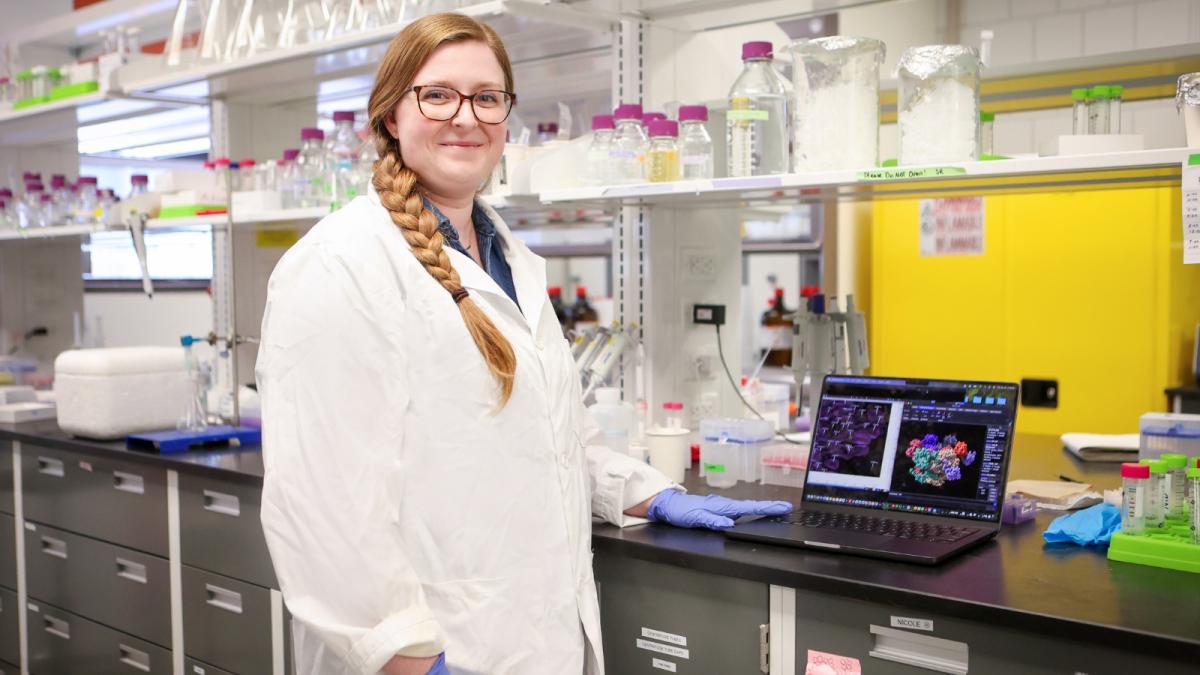
“If we don’t understand how this protein works,” Black says, “we can’t understand how to regulate it, whether that means restoring its function in degenerative diseases or inhibiting it in cancer.”
Discovering Hidden Communication Within the Protein
What makes YME1L especially intriguing is something called allostery, a form of internal communication within a protein.
Although different regions of YME1L are physically distant from one another, they appear to “talk” across the structure. One domain binds and hydrolyzes ATP, while another performs the actual protein degradation. Black identified two small but critical amino acid residues that act as a bridge between these domains, enabling coordinated function.
“This discovery highlights how even subtle structural changes can dramatically influence protein activity,” says Huang.
“Understanding this communication pathway provides insight into how the protein operates as a single, coordinated machine rather than as disconnected parts.”
Working with a Challenging Protein
While some proteins behave predictably in laboratory conditions. YME1L does not.
Using advanced structural techniques such as Nuclear Magnetic Resonance (NMR) spectroscopy and hydrogen-deuterium exchange mass spectrometry (HDX-MS), Black investigates how ATP binding and zinc influence the protein’s structure and function. But the protein’s size and instability make it difficult to produce and analyze.
The team adapted and broke the protein into individual domains to examine specific regions independently, assembling pieces of the puzzle step by step.
Black says it is like taking pieces of a story and putting them together.
Toward Future Therapeutic Targets
Understanding the structural plasticity and regulatory mechanisms of YME1L may eventually inform therapeutic strategies.
Cancer cells often overproduce mitochondrial quality-control proteins to survive under stress. By identifying what makes YME1L unique compared to similar enzymes, researchers can design targeted approaches that avoid unintended side effects to cancer treatments. Currently, Black and the Huang lab are partnering with experts in medicinal chemistry and cancer biology to develop novel small-molecule YME1L inhibitors, paving the way for new cancer therapeutics.
As structural biology continues to reveal how proteins move, communicate, and adapt, research like this provides foundational knowledge that could one day contribute to new diagnostics or treatments.
Reference
Black, M. K., Kim, A., Chen, C. Y., Goncalves, M. M., Waseem, S., Vahidi, S., & Huang, R. (2026). Characterization of conformational dynamics and structural plasticity of the catalytic domain of human mitochondrial YME1L protease. Biochemistry, 65, 732–747. https://doi.org/10.1021/acs.biochem.5c00535
Funding
This research was supported by the Natural Sciences and Engineering Research Council of Canada (NSERC). Additional support was provided through a Canada Foundation for Innovation (CFI) grant held by Professor Rui Huang.