Project Stream - Diploma Category

First Place: I've Got Me A Shovel
Isabel Schryer, Equine Care and Management
The Miniature Tower Grower is a compact, electricity‑free vertical hydroponic system designed for users with limited space. Built to fit within a one‑foot‑cubed footprint, the project offers an affordable and space‑efficient alternative to traditional tower growers, making vertical growing accessible for dorm rooms, small apartments, and office environments.
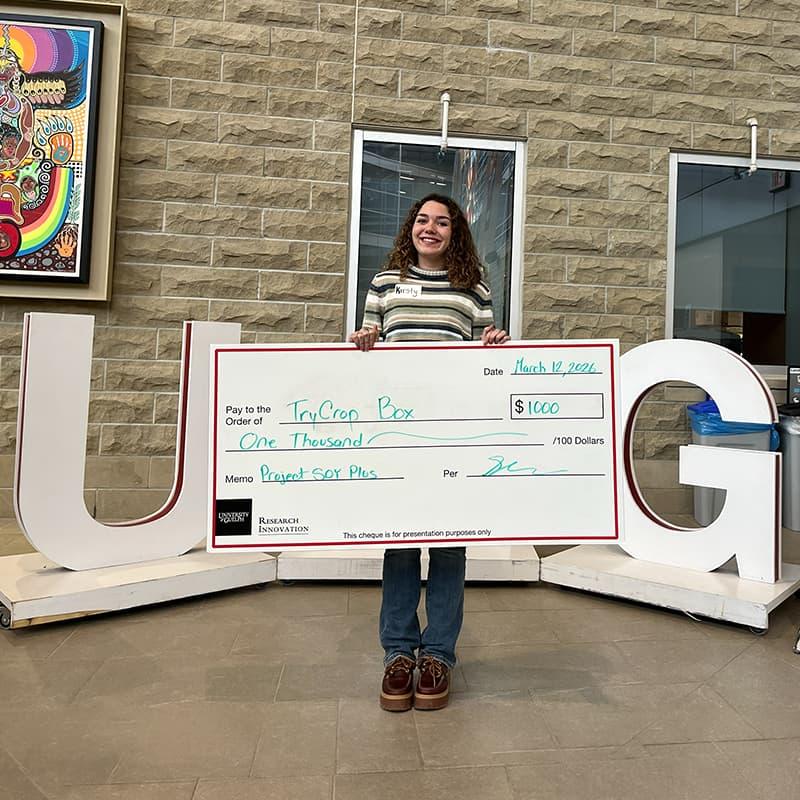
Second Place: The TryCrop Box
Kirsty Yates, Agriculture Co-Op
TryCrop is a biodiversity‑focused agricultural initiative that supports smallholder farmers in transitioning away from climate‑vulnerable maize monocropping. Through its pilot program in Guatemala, the project introduces the TryCrop Box, a regionally co‑developed toolkit featuring locally sourced seeds, transition guides, soil health resources and access to agricultural extension support. By promoting drought‑tolerant, nutrient‑dense crops, TryCrop looks to advance climate resilience, improved soil health and better nutritional outcomes.
Project Stream - Undergraduate Category

First Place: Brewed Beauty
Daniel Grygorachyk (Management and Economics Finance) and Luca Ghizzardi (Marketing Management)
Brewed Beauty is a circular‑economy skincare brand that transforms spent coffee grounds into premium, sustainable personal care products. By collecting used grounds from local cafés, including those contributing to the more than 25,000 cups brewed daily on campus, the brand repurposes organic waste into small‑batch exfoliating scrubs, lip balms, soaps and complementary skincare items. Rooted in principles of circularity and resource efficiency, Brewed Beauty diverts waste from landfill while reducing reliance on conventional exfoliating inputs. Environmental impact is further minimized through thoughtful packaging design and the BrewBack Rewards jar‑return program, which encourages responsible reuse. Through markets, retail partnerships and digital outreach, the brand also promotes education around organic waste, environmental stewardship and biodiversity, demonstrating how sustainability and profitability can work together within the beauty industry.
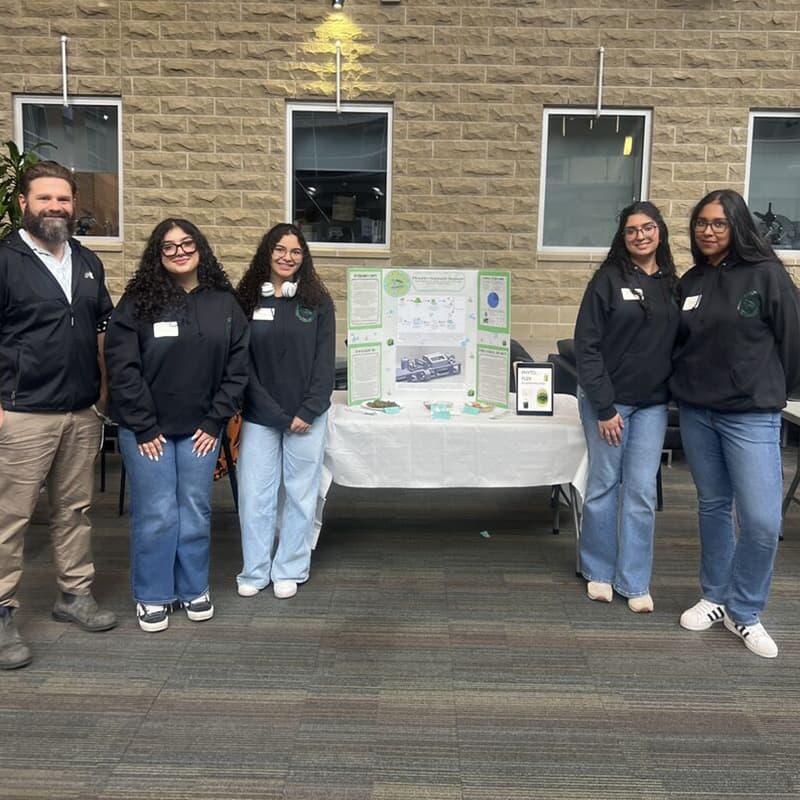
Second Place: PhytoFlex
Grace Ghotra (Biomedical Engineering), Keana Yazdanni (Biological Science), Naaz Chawla (Mathematical Science) and Tykara Blair (Chemistry)
PhytoFlex is an edible, marine‑compatible bioplastic film made from Ulva sp., a fast‑growing green macroalgae abundant in coastal environments. Designed to address plastic pollution in marine ecosystems, the material is biodegradable and non‑toxic if ingested by aquatic organisms, offering a safer alternative to conventional plastics. Unlike crop‑based bioplastics, Ulva grows in seawater without the need for freshwater, fertilizers or arable land, reducing environmental trade‑offs associated with traditional bioplastic production. By converting underutilized algal biomass into flexible, biodegradable films using ulvan, a natural polysaccharide found in Ulva, PhytoFlex supports circular bioeconomy principles while delivering strong potential for use in aquaculture and sustainable food systems.

Third Place: Bird-Safe Cat Starter Kit (Bio Diversiteam)
Aaron Gallichan (Biological Science), Annalene Bird (Biological Science) and Lilly Szlachetka (Biological Science)
The Bird‑Safe Cat Starter Kit is a community‑distributed resource designed to reduce urban bird mortality caused by free‑roaming domestic cats. Addressing a major but often unseen driver of avian biodiversity loss, the project supports responsible pet ownership while balancing animal welfare and conservation needs. The kit includes practical, non‑punitive tools such as a high‑visibility bird‑safe collar, indoor enrichment items, a step‑by‑step transition guide for supervised or indoor living and a window sticker that promotes visible social norms. Distributed through trusted community partners including veterinary clinics, shelters and pet stores, the initiative leverages ecological evidence showing that increased cat visibility reduces successful predation. Over time, the project aims to normalize bird‑safe practices, strengthen community collaboration, and benefit both wildlife and pet owners across Guelph.
Recognized Undergraduate Submissions
| Project | Students | Description |
|---|---|---|
| BlueBiome |
Drishni Mistry (Microbiology) | A probiotic capsule that uses bioengineered enzymes to break down ingested microplastics inside fish, offering a targeted, reversible solution to reduce microplastic accumulation in marine food systems. |
| Eco Bind Creatives | Lucy Kariuki (Marketing and Consumer Studies) Daniel Grygorachyk (Management and Economics Finance) | A materials innovation that converts unrecyclable micro‑plastic waste into durable, bio‑resin composite furniture, providing a sustainable alternative to timber‑based school furniture in deforestation‑impacted regions. |
| Natural Paint Mastery | Adam Carriere (Environmental Science) Kayla Bezkorow (Environmental Management) | Natural Paint Mastery is an educational manual that teaches the methods, materials and science of making eco‑friendly natural watercolour paints from kitchen scraps and invasive plants, empowering learners to reduce environmental impact while fostering creativity and sustainability awareness. |
| Redux | Caleb Vanderploeg (Management and Economics Finance) Kiyan Ladhani (Management) Matthew Gill (Management and Economics Finance) Mia Poplutz (Management and Economics Finance) | A circular waste‑diversion program that collects food scraps from local businesses and redirects them to farms as livestock feed, reducing landfill waste while lowering costs and emissions across the food system. |
| TerraTile | Jade Campbell (One Health) Jasper Campbell (One Health) Kiara Distin (One Health) | TerraTile™ is a self‑sustaining, low‑maintenance living tile that uses science‑driven plant communities, passive water delivery and sustainable materials to bring the ecological benefits of green roofs and living walls into an affordable, scalable format for everyday urban spaces. |
Project Stream - Graduate Category

First Place: ReedSycle
Emily Whitehead (MA - Environmental Science)
ReedSycle is a Canadian circular‑economy venture that transforms the invasive reed Phragmites australis into a sustainable source of commercial silica. By harvesting this biodiversity‑degrading species from wetlands and isolating its naturally high silica content through controlled combustion and purification, the project offers a biogenic alternative to environmentally destructive sand‑mining practices. Beyond material production, ReedSycle functions as a systems‑level solution by creating economic incentives for invasive species removal while addressing growing global demand for silica through regenerative resource recovery.
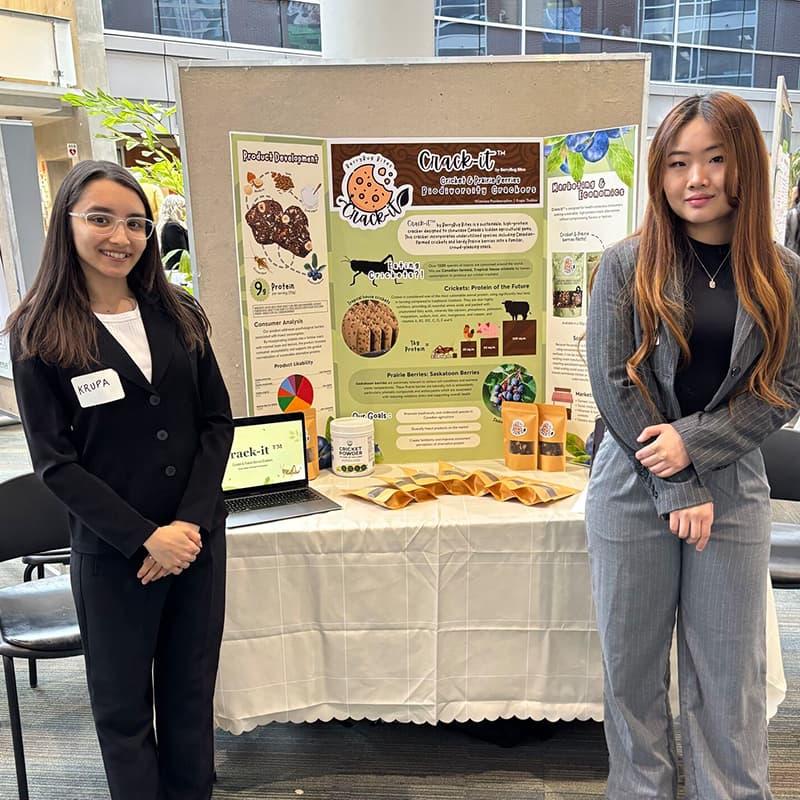
Second Place: BerryBug Bites' Crack-it (INSECTA)
Krupa Thakkar (MA - Food Science) and Wimwipa Prasitnaraphan (MA - Animal Biosciences)
BerryBug Bites’ Crack‑it crackers are a high‑protein, shelf‑stable snack that leverages underutilized ingredients, including insect protein and Prairie berries, to create a nutritionally dense and sustainable alternative to conventional crackers. Formulated with cricket protein as the primary protein source and complemented by seeds, nuts and dried Saskatoon berries, the product delivers a balanced sensory experience while providing meaningful protein, healthy fats and dietary fiber. By combining innovative protein sourcing with regionally relevant ingredients, Crack‑it crackers demonstrate strong potential to diversify sustainable food systems and expand consumer acceptance of alternative proteins.
In addition to the juried awards, we are excited to recognize BerryBug Bites' Crack-it (INSECTA) the People’s Choice Award recipient, selected through community voting during the 2026 Project SOY Plus showcase.
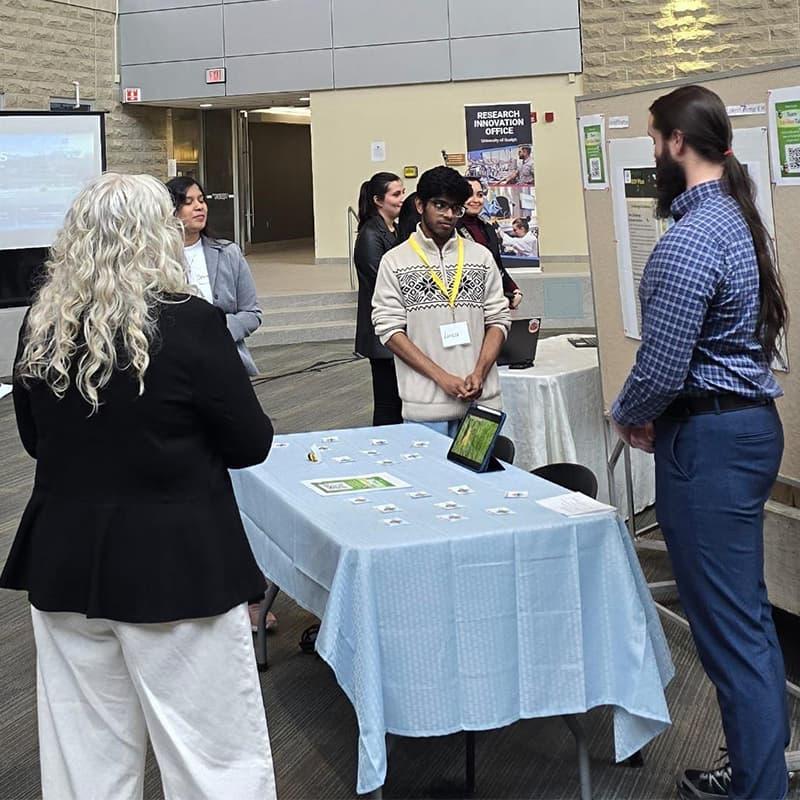
Third Place: BeeVision (Un-bee-table)
Jared Shaftoe (PhD Integrative Biology), Lokesh Kumar Karuppaiya Muthiah (MA Computer Science) and Spandanna Chereddy (PhD Computer Science)
BeeVision is an AI‑powered pollinator monitoring platform that enables real‑time, non‑invasive detection of key pollinator groups using everyday smartphones. Built on a deep‑learning object‑detection model trained to recognize visual features such as body structure and wing patterns, the system replaces traditional monitoring methods that are slow, costly and disruptive to ecosystems. By making pollinator data collection accessible to farmers, researchers, students and citizen scientists, BeeVision democratizes ecological monitoring and supports scalable biodiversity conservation aligned with the “Biodiversity by Design” theme.
Recognized Graduate Submissions
| Project | Students | Description |
|---|---|---|
| AgriCommons | Kobe Faust (MA - Management, Innovation, Commercialization and Entrepreneurship) Mark Okolo (MA - Management, Innovation, Commercialization and Entrepreneurship) Esther Akpatsu (MA - Management, Innovation, Commercialization and Entrepreneurship) | AgriCommons is a digital equipment‑sharing platform that helps small and medium‑sized farms access specialized machinery needed for regenerative and biodiversity‑friendly agricultural practices. |
| EcoPlate | Alina Ahmad (MA - Management, Innovation, Commercialization and Entrepreneurship) Jarin Tasnim (MA - Management, Innovation, Commercialization and Entrepreneurship) Olenka Marchan (MA - Management, Innovation, Commercialization and Entrepreneurship) | EcoPlate is a camera‑led mobile app that helps Canadians cook familiar meals using underused plants through a “Scan to Cook” feature that preserves taste while reducing grocery costs. |
| Plasma Gasification-Driven Sustainable Greenhouse Design | Shiva Farahbod (MA - Management, Innovation, Commercialization and Entrepreneurship) Moazzazah Tauqueer (MA - Management, Innovation, Commercialization and Entrepreneurship) Pranshu Bhatia (MA - Sustainable Agriculture) | This project integrates plasma gasification into greenhouse systems to convert agricultural waste into usable heat, electricity and CO₂, creating a zero‑waste, closed‑loop energy model for commercial food production. |
| TerraFold | Abdullah Naeem (MA - Management, Innovation, Commercialization and Entrepreneurship) Jenna Ford ((MA - Management, Innovation, Commercialization and Entrepreneurship) Sherzod Mukhamedov ((MA - Management, Innovation, Commercialization and Entrepreneurship) Tianqi Chang ((MA - Management, Innovation, Commercialization and Entrepreneurship) | TerraFold is a biodegradable, PFAS‑free food packaging solution made from upcycled sugarcane bagasse, designed to meet everyday performance needs for cafés and ready‑to‑eat food businesses. |
Creative Stream
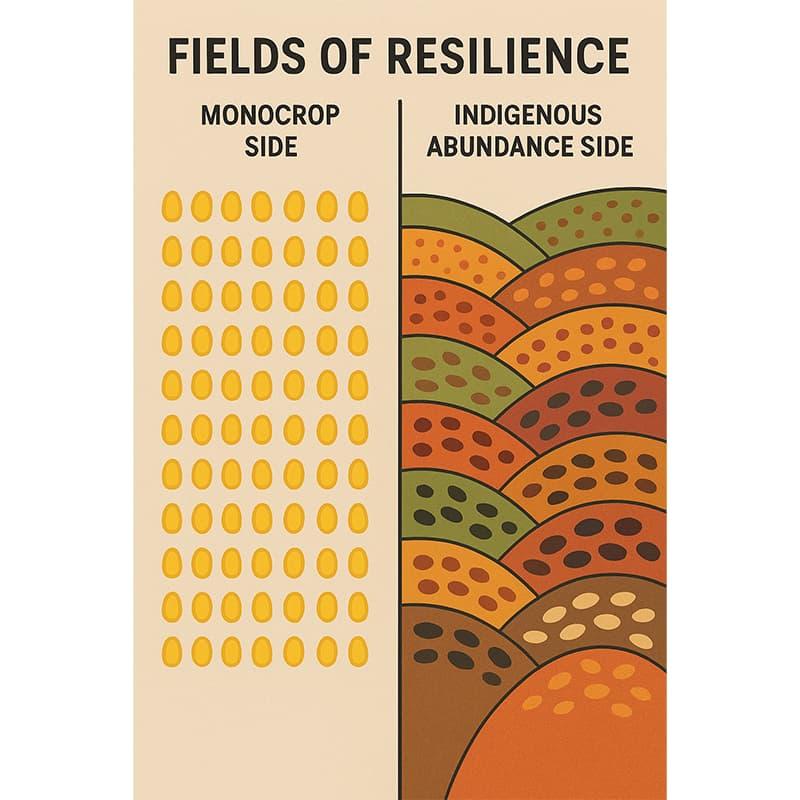
First Place: Beauty and Abundance
Kirsty Yates (Agriculture Co-Op)
Beauty and Abundance is a seed‑based artwork that contrasts modern monoculture agriculture with Indigenous polycultural food systems within a divided shadow‑box frame. One half uses a single seed arranged in uniform rows to represent biodiversity loss, while the other forms a flowing landscape of diverse seeds, such as millet, amaranth, beans, squash, and wild rice, reflecting regenerative intercropping practices across Africa and the Americas. Together, the piece invites viewers to reconsider dominant ideas of modern agriculture by visualizing abundance through biodiversity, cultural knowledge and ecological resilience.
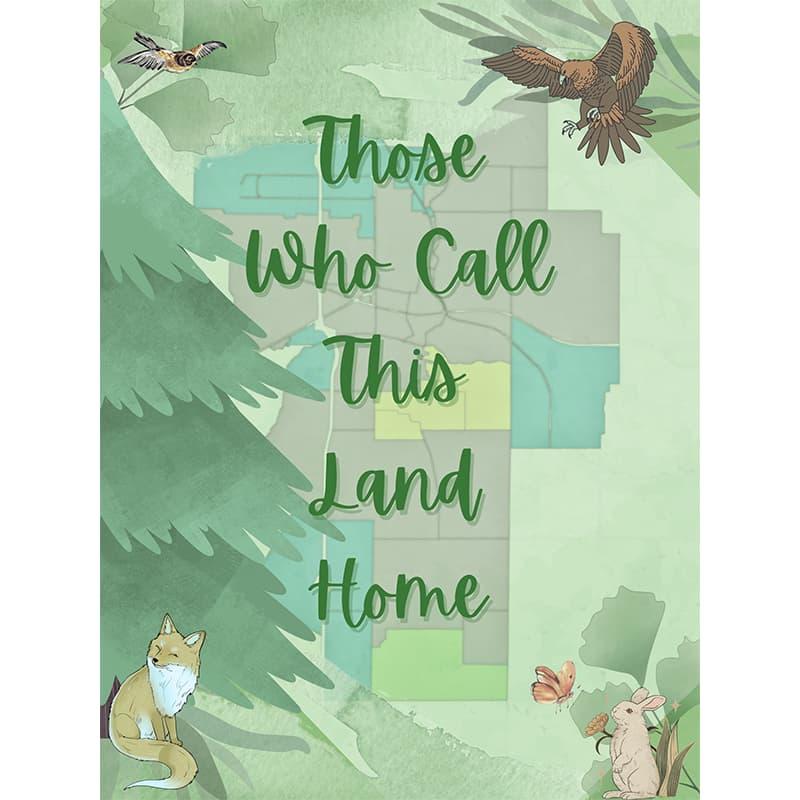
Second Place: Those Who Call This Land Home
Isabel Schryer (Equine Care and Management)
Those Who Call This Land Home is a poem that celebrates the native biodiversity of the Guelph region, with each couplet highlighting a local plant or animal and its role within a shared ecosystem. By weaving together species such as trout lilies, red‑tailed hawks, foxes and chickadees, the work emphasizes interconnectedness, respect for native flora and fauna, and the importance of listening to Indigenous knowledge. Shaped visually like the Guelph area itself, the poem reinforces a sense of place and invites reflection on coexistence within the landscapes we call home.
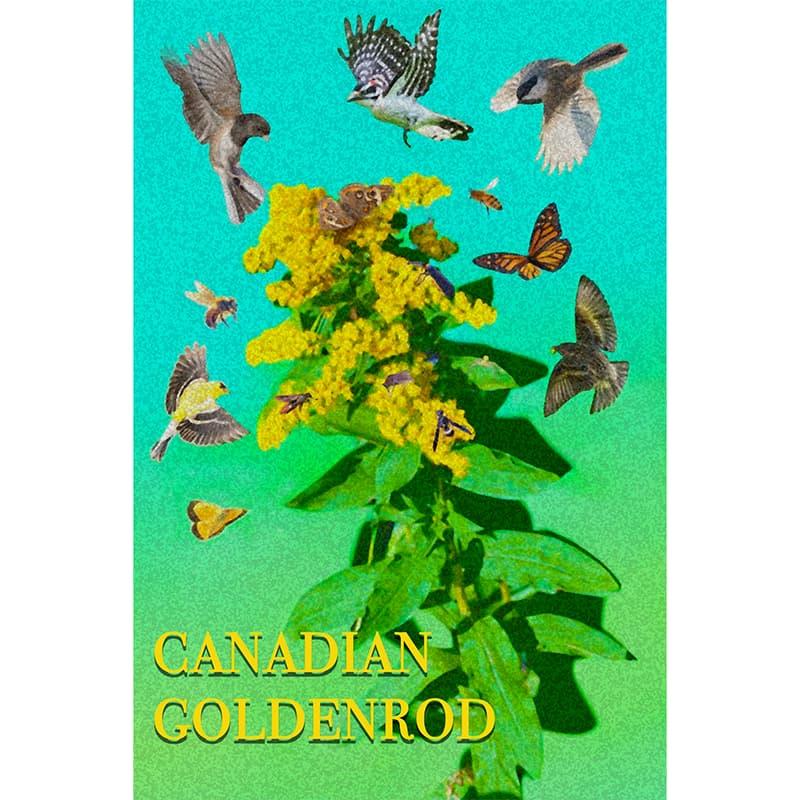
Third Place: The Glorious Goldenrod's Journey
Allison Tait (Studio Art)
The Glorious Goldenrod’s Journey is a creative educational project that highlights the ecological importance of Solidago canadensis, a native plant often misunderstood and removed as a weed. By showcasing goldenrod’s role in supporting pollinators, insects, and birds, and correcting misconceptions about its pollen, the project reframes the plant as a foundational species. Through a hands‑on children’s toolkit, including illustrated materials, seeds, biodegradable seed‑bomb molds, and an original song, the work fosters early appreciation for native plants and encourages families to support local biodiversity through play and learning.
Recognized Creative Submissions
| Proposal | Students | Description |
|---|---|---|
| The EcoStories Little Library Project | Jessica Detweiler (International Development Studies) | EcoStories Little Library Project invites local youth to explore endangered species through short stories and artwork that reflect each species’ ecological role. Selected submissions are transformed into custom Little Free Libraries made from reclaimed materials, turning youth creativity into public art that promotes biodiversity awareness and community learning. |
| Symphony of Life: The Architecture of Biodiversity | Jared Shaftoe (PhD Integrative Biology) Lokesh Kumar Karuppaiya Muthiah (MA Computer Science) Spandanna Chereddy (PhD Computer Science) | Symphony of Life – The Architecture of Biodiversity is a multisensory installation made from recycled materials that immerses visitors in five elemental environments, using light, texture, and sound to express how biodiversity functions as a unified system. |
Thank You
We extend our sincere thanks to the 2026 Project SOY Plus judges for their time, expertise and thoughtful evaluation of an outstanding and diverse set of submissions. Their insights and commitment were essential in recognizing projects that exemplify innovation, creativity and meaningful impact.
We also gratefully acknowledge Food from Thought for their generous funding and continued support of Project SOY Plus. Their investment makes it possible to empower students to explore bold ideas, advance sustainability and biodiversity initiatives, and bring impactful projects to life across disciplines.
Finally, thank you to all students and teams who participated in Project SOY Plus 2026. Your creativity, dedication and willingness to imagine more regenerative futures continue to shape a vibrant and inspiring community.