Primitive Droplets May Have Helped Spark Life
How Early Molecules Found Each Other
Before cells existed, the chemistry of life still needed a way to concentrate and organize itself. Many origin-of-life researchers focus on RNA (ribonucleic acid), a molecule that can both store information and, in some cases, speed up chemical reactions.
The question has been how RNA could work alongside simple peptides, short chains of amino acids, in the prebiotic environment.
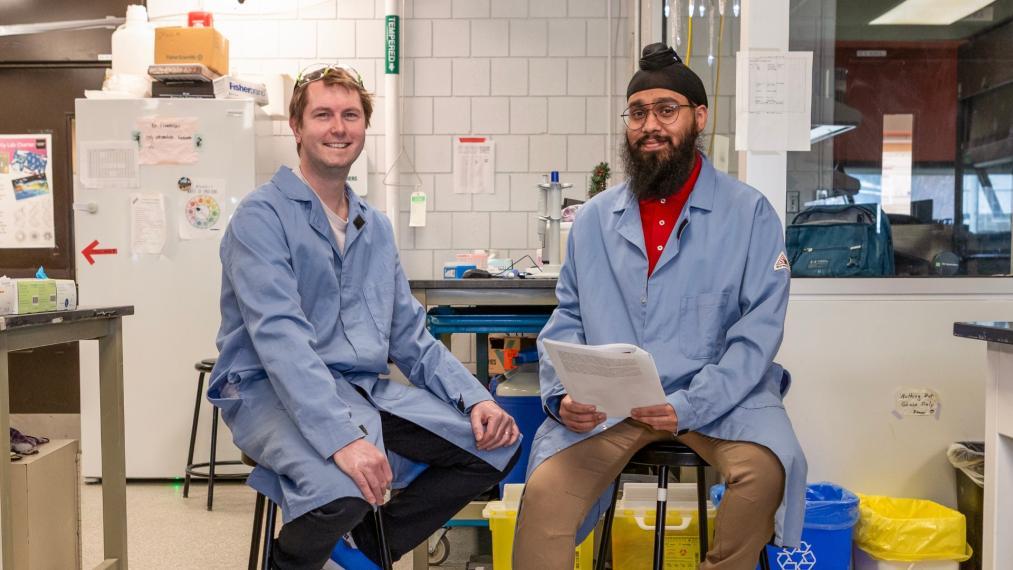
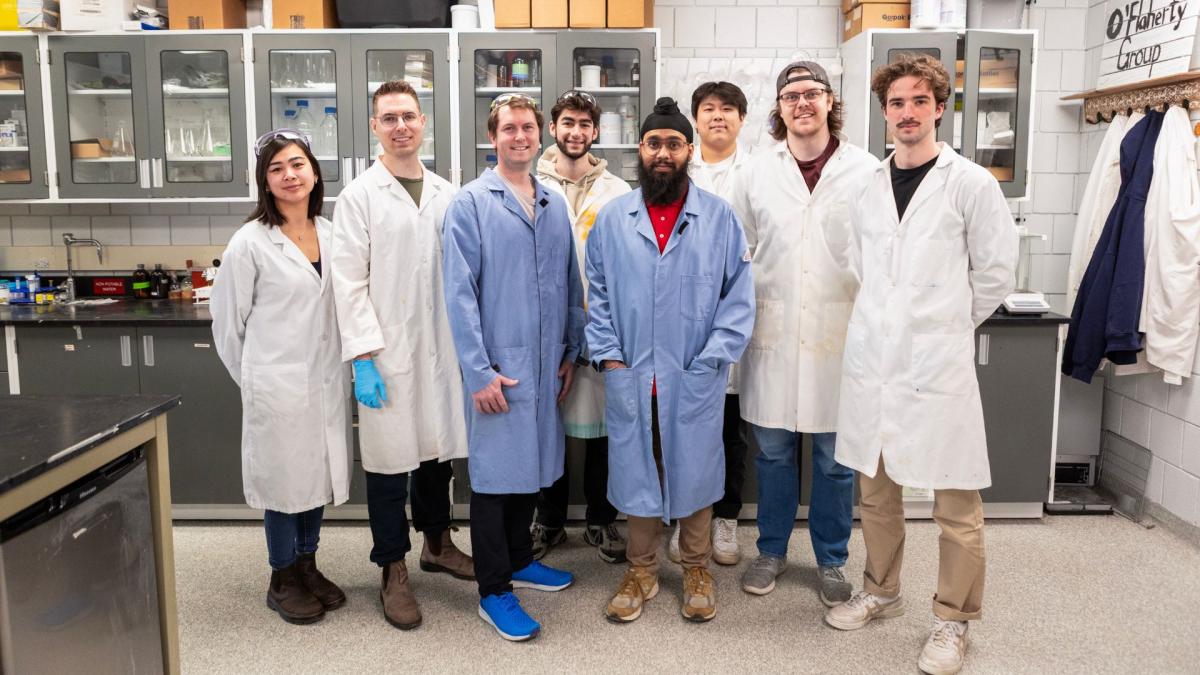
A Nature Communications study co-led by Dr. Derek K. O’Flaherty and Jagandeep S. Saraya in the University of Guelph’s Department of Chemistry, along with collaborators Drs. Rosana Collepardo-Guevara and Claudia Bonfio at the University of Cambridge, United Kingdom, and the University of Strasbourg, France, investigated how early molecules may have organized themselves.
Understanding how simple molecules formed compartments matters because early chemical reactions likely depended on confined spaces that kept molecules close enough to interact.
The researchers tested whether simple mixtures of nucleic acids and peptides could form compartments without membranes.
Coacervates Form Simple Compartments
The team studied coacervates, which are liquid droplets that form when molecules with different electrical charges separate into a dense droplet surrounded by a watery solution – similar to how oil forms droplets in water. This process is called liquid-liquid phase separation (when liquids separate into droplets).
Using short peptides (two amino acids long), and short strands of RNA and DNA strands (eight building blocks long), the researchers showed that these simple ingredients can come together to form their own coacervates.
This result suggests that coacervation could have occurred early on, without requiring long, complex biological molecules.
RNA Stability and DNA Fluidity
The researchers found a striking contrast between RNA-based and DNA-based coacervates.
RNA-based droplets were more stable. They resisted higher salt concentrations and higher temperatures than DNA-based droplets. Computational simulations helped explain why; RNA formed more interactions with peptides, including hydrogen bonds and stacking interactions, which strengthened the droplet structure.
“Turns out, coacervates are coacer-GREATS,” said Saraya, referring to their ability to form stable droplets while still allowing molecules to move freely inside.
In contrast, DNA-based droplets were less stable, but they were far more fluid.
Molecules moved through them nearly six times faster than in RNA-based droplets. That higher mobility matters because reactions depend on molecules diffusing and meeting efficiently.
When the team combined DNA and RNA in the same droplets, they observed a balance of coacervates that remained stable, while allowing faster molecular movement.
Primitive Droplets Support RNA Copying
The researchers then tested a key reaction thought to occur before life began: nonenzymatic RNA copying, a chemical form of RNA copying that happens without the help of enzymes (the process of building longer RNA strands).
“We were surprised to see the pronounced differences observed in RNA copying chemistry within coacervates assembled from DNA, compared to those formed from RNA,” said O’Flaherty.
In DNA-based coacervates, RNA copying worked well. In RNA-based coacervates, the reaction slowed down, consistent with molecules moving more slowly inside those droplets.
Why This Matters for the Origins of Life
This study challenges the assumption that compartment-like environments required late-stage biological complexity.
Instead, mixed combinations of short RNA and DNA strands and short peptides can self-assemble into droplets with distinct and useful properties.
The findings also suggest that DNA may have played an earlier role than scientists once thought. Before DNA became biology’s main information storage molecule, it may have helped create droplet environments that allowed RNA to take shape and make copies of itself.
Funding sources:
This work was supported by the NWO (Dutch Research Council) via a Rubicon Fellowship (019.222EN.011 to K.K.N.); the Human Frontier Science Program Organization (HFSPO) via an Early Career Research Grant (RGY00062/2022 to C.B. and D.K.O.); and the ERC (Starting Grant) under the European Union’s Horizon Europe research and innovation programme (GA 101162933 to C.B.).
Additional funding was provided by the Federation of European Biochemical Societies via a FEBS Excellence Award (to C.B.); the Agence Nationale de la Recherche via an ANR AAPG JCJC 2022 (to C.B.); and the CSC Graduate School funded by the Agence Nationale de la Recherche (CSC-IGS ANR-17-EURE-0016 for doctoral funding to F.R.).
Support also came from the University of Strasbourg Institute for Advanced Study (USIAS) via a USIAS Fellowship (to C.B.); the Foundation Jean-Marie Lehn; the Biotechnology and Biological Sciences Research Council via a BBSRC Discovery Fellowship (BB/X010228/1 to R.R.S.); and the UKRI EPSRC under the UK Government’s guarantee scheme (EP/Z002028/1 to R.C.G.), following funding by the ERC (Consolidator Grant) under the European Union’s Horizon Europe research and innovation programme.
Further contributions were made by the Winton Programme for Physics of Sustainability (for doctoral funding to M.J.M.); NSERC via a Discovery Grant (RGPIN 2020-05043 to D.K.O.) and an Alliance Catalyst Grant (ALLRP 57555822 to D.K.O.). This project utilized HPC resources granted by the UK High-End Computing Consortium for Biomolecular Simulation (HECBioSim), supported by the EPSRC (EP/R029407/1 to R.C.G.).
Reference: Nakashima KK, Mihoubi FZ, Saraya JS, Russell KO, Rahmatova F, Robinson JD, Maristany MJ, Huertas J, Rubio-Sánchez R, Collepardo-Guevara R, O’Flaherty DK and Bonfio C. Differential stability and dynamics of DNA-based and RNA-based coacervates affect nonenzymatic RNA chemistry. Nature Communications. 2025;16:9296. doi: 10.1038/s41467-025-64335-9.
This story was written by Mojtaba Safdari as part of the Science Communicators: Research @ CEPS initiative. Mojtaba is a PhD candidate in the School of Engineering under Dr. Amir A. Aliabadi.