ACS - Archived Newsletters - Issue 7
November 2025
Index
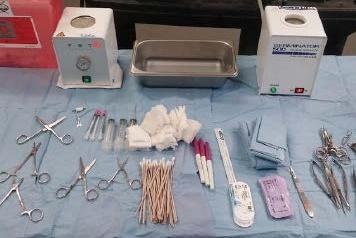
ACC Lunch & Learn - Implementing SOP.ACC.818 Asepsis for Rodent Survival Surgery
The Animal Care Committee invites all research personnel and facility staff to attend an upcoming Lunch & Learn focused on the implementation of SOP.ACC.818 – Asepsis for Rodent Survival Surgery.
The session, led by ACS veterinarians, will start with an overview of the SOP, followed by an opportunity for attendees to ask questions, and share experiences. Several research groups have identified challenges in meeting the updated requirements, and this session is intended to support implementation by researchers.
Date: December 11, 2025
Time: 12:30 - 1:30 PM
Location: PAHL 1810
Bring your lunch and your questions!
ACS Highlights
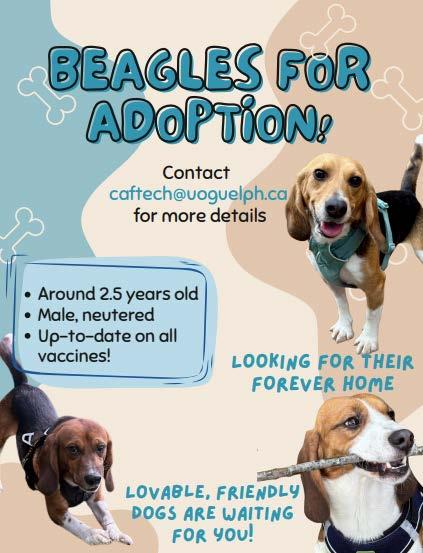
Currently Up for Adoption
- Around 2.5 years old
- Male, neutered
- Up-to-date on all vaccines
- Well socialized and used to being handled
For more information, please contact caftech@uoguelph.ca
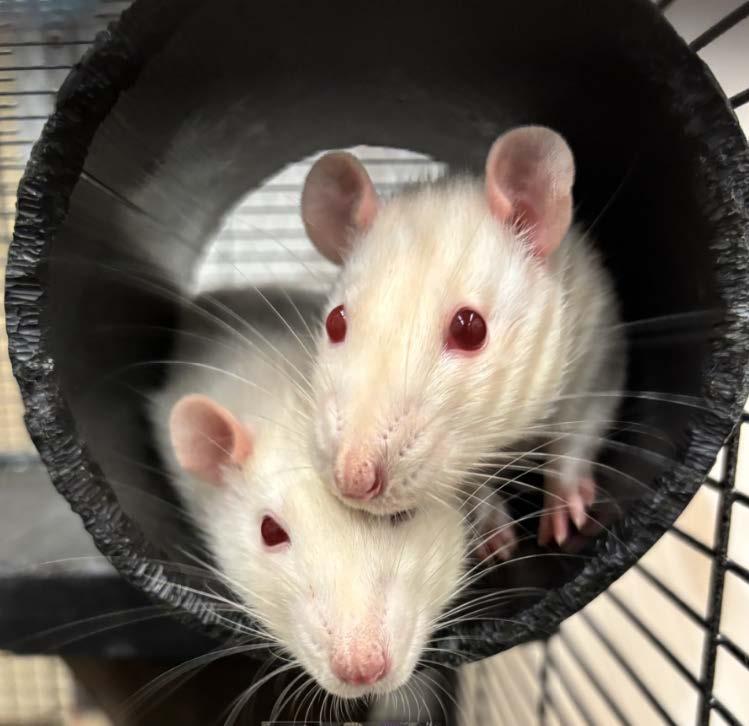
5 retired training rats looking for homes
- All females
- ~1 year old
- Well socialized, used to people and being handled
- Must be adopted in pairs (or more)
For more information, please contact Michaela at mranda02@uoguelph.ca
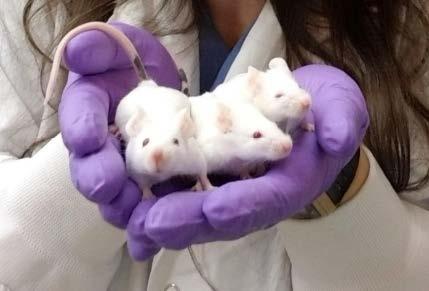
15 retired training mice looking for homes
- All female
- ~1 year old
- Well socialized, used to people and being handled
- Must be adopted in pairs (or more)
For more information, please contact Theresa at tmarti05@uoguelph.ca
General News
Ensuring Safe Substance Use in Animal Research
For research projects, pharmaceutical-grade products should be used when treating animals. However, this is not always possible when researchers are inducing disease, manipulating signaling systems, or testing the impact of novel agents. When researchers must develop their own products for administration to animals, specifics of the product and the vehicle should be provided in the AUP for ACC understanding and safeguarding of animal welfare.
A key document for researchers to review is the CCAC Guidelines on Administration of Substances and Biological Sampling, which provides information on review of substances and dosing vehicles. Agents given by injections must be prepared to be sterile except for specific microbial agents that are being dosed and ideally in a pharmaceutical-grade vehicle suitable for the route of administration. Drugs for anesthesia and analgesia must be pharmaceutical grade products but may also require dilution for feasibility of dosing. The route of administration and the purpose of the agent will impact on the potential welfare of the animals and should be considered when planning a project.
The ACS Veterinarians are available for consultation on appropriate preparation and composition of agents and vehicles.
ACC
New Members Needed! If you believe that you or someone you know could bring valuable insights to the committee, click to find out more!
Compliance and Facilities
Annual Facility Manager's Meeting
Animal Care Services hosted the Annual Facility Manager’s Meeting last month at the Ontario Beef Research Centre, with 18 managers, supervisors, and support staff in attendance. The event included a tour of both the Beef and Dairy facilities and provided a valuable opportunity for facility personnel to connect, share ideas, and collaborate on problem-solving. It also allowed ACS to deliver important updates and gather feedback to support continuous improvement across all facilities. We would like to thank all facility staff for their continued hard work and dedication to supporting high standards of animal care.
Animal Facility Site Visit Series
The ACC Site Visit is a cornerstone of the facility oversight process and a CCAC requirement. Each year, the ACC must complete at least one scheduled visit to every University of Guelph owned location where live animals are used. Guided by CCAC standards and the provincial
Animals for Research Act (Subsection 17), these visits ensure that animal care and facilities meet regulatory expectations. They also provide ACC members with valuable insight into the daily operations and animal use at the institution.
Site visits are organized and led by the ACS Compliance and Facility Coordinator. Site visit participants include an ACS veterinarian and at least two other ACC members. The team meets with facility management, staff and available researcher personnel and tours all animal-use areas, to assess animal condition, facility standards, and management practices. A report is generated for each visit outlining observations, recommendations, and commendations.
Training
Winter 2026 Training Schedule
Please refer to the Facility Orientation and Workshop Schedule page on the Animal User Training Program website for all training schedules. For specific guidance on what training you require to work with or care for animals at UofG, contact us at training@uoguelph.ca.
When reaching out to training please ensure the following information is included in your email:
- Names of personnel who require hands-on training and/or facility orientation
- AUP number personnel will work under
- Role of personnel or level of participation in the project (e.g., volunteer, assistant)
If the posted schedule does not meet the training needs of your research team, please contact training@uoguelph.ca. We are happy to work with you to accommodate your training requirements by coordinating mentor-facilitated training (MFT). Please be reminded that all personnel working with animals at the University of Guelph must complete the online Core Modules prior to commencement of animal-based work and prior to being added onto an AUP. Self-registration for core modules can be found on Eventlink.
Animal Utilization Protocols
AUP help drop-in sessions held every Wednesday from 1:00-2:30pm in-person with ACS or virtually on Teams. Check out the Interactive Support Sessions for Researchers page for more information.
ACC.SOP.315 AUPs for Breeding Colony Maintenance was approved in March 2025 by the Animal Care Committee. This SOP formalizes a practice of the ACC from January 2024, reconfirmed in January 2025, requiring separate AUPs to capture animal use related to colony management from AUPs describing educational and research use. This short SOP provides the rationale for the separation, considerations for planning a breeding colony and reporting requirements. Existing AUPs that contain both colony management and research or teaching activities can remain until replacement at the end of their 4-year lifespan, at which time they must be separated into two AUPs. ACS is happy to provide administrative aid in separating your AUPs. Reach out to acc@uoguelph.ca if you have any questions.
Dissecting an AUP Series
Plan Ahead for AUP Success
Thoughtful project planning is an essential step before submitting an AUP. Researchers are encouraged to meet with facility personnel to confirm that their proposed work is feasible within the space, equipment, and resources available. Planning should also account for animal availability, student training, and project timelines to avoid unnecessary delays. Animal Care Services staff and veterinarians are also available to support you throughout the AUP development process, whether through AUP help drop-in sessions or by booking a dedicated meeting. Engaging with your facility team early helps ensure a smooth review process and promotes both research efficiency and animal welfare.
Community Spotlight

The Animal Care Committee is pleased to recognize Dr. Clara Cho and her research team in the Department of Human Health Sciences for their refinement of the glucose tolerance test in rats. Traditionally performed via oral gavage, this procedure has now been successfully adapted by Dr. Cho’s team to use voluntary oral administration, significantly improving animal welfare while maintaining scientific integrity.
This refinement challenges long-standing assumptions in the field and sets a new benchmark for humane research practices. The commendation has been formally shared with Dr. Cho and her team, and we encourage them to present this important work to the external research community.
Congratulations to Dr. Cho and her team for leading the way in refinement!
To have your work or a fun photo of your animals highlighted, share it with us. Each issue will include one submission as we champion our community and the amazing animals that make our work possible.
Upcoming Events

November 2025 Wellness@Work Calendar
CCAC Virtual Learning Series - Making the Most of Your Animal Welfare Assessment Data
- November 19, 2025
1-2:30pm
$60 + tax
Register Here
ACC Lunch and Learn - Implementing SOP.ACC.818 Asepsis for Rodent Survival Surgery
- December 11, 2025
12:30-1:30pm
PAHL 1810
Resource Corner

Contact Us
- Newsletter - acc@uoguelph.ca
- AUP - acc@uoguelph.ca
- Training - training@uoguelph.ca
- Post-Approval Review - accpost@uoguelph.ca
- ACS Veterinarians - acsvets@uoguelph.ca
- Chair of the ACC - chairacc@uoguelph.ca