ACS - Archived Newsletters - Issue 8
January 2026
Index
- RAIMS Program Update
- ACS Office Hours
- CCAC Strategic Plan 2026-2031
- Canadian Equine Code of Practice - Open for Public Feedback
- Update on Bill 75 and UofG's Response
- Training Documentation on AUPs
- ACC Lunch and Learn Recording - SOP.ACC.818 Implementation
- AUP Replacement Reminders
- Animal Utilization Protocols
- The Veterinary Professionals Act - Open for Pubic Feedback
- Ridgetown Campus Swine Enrichment Program
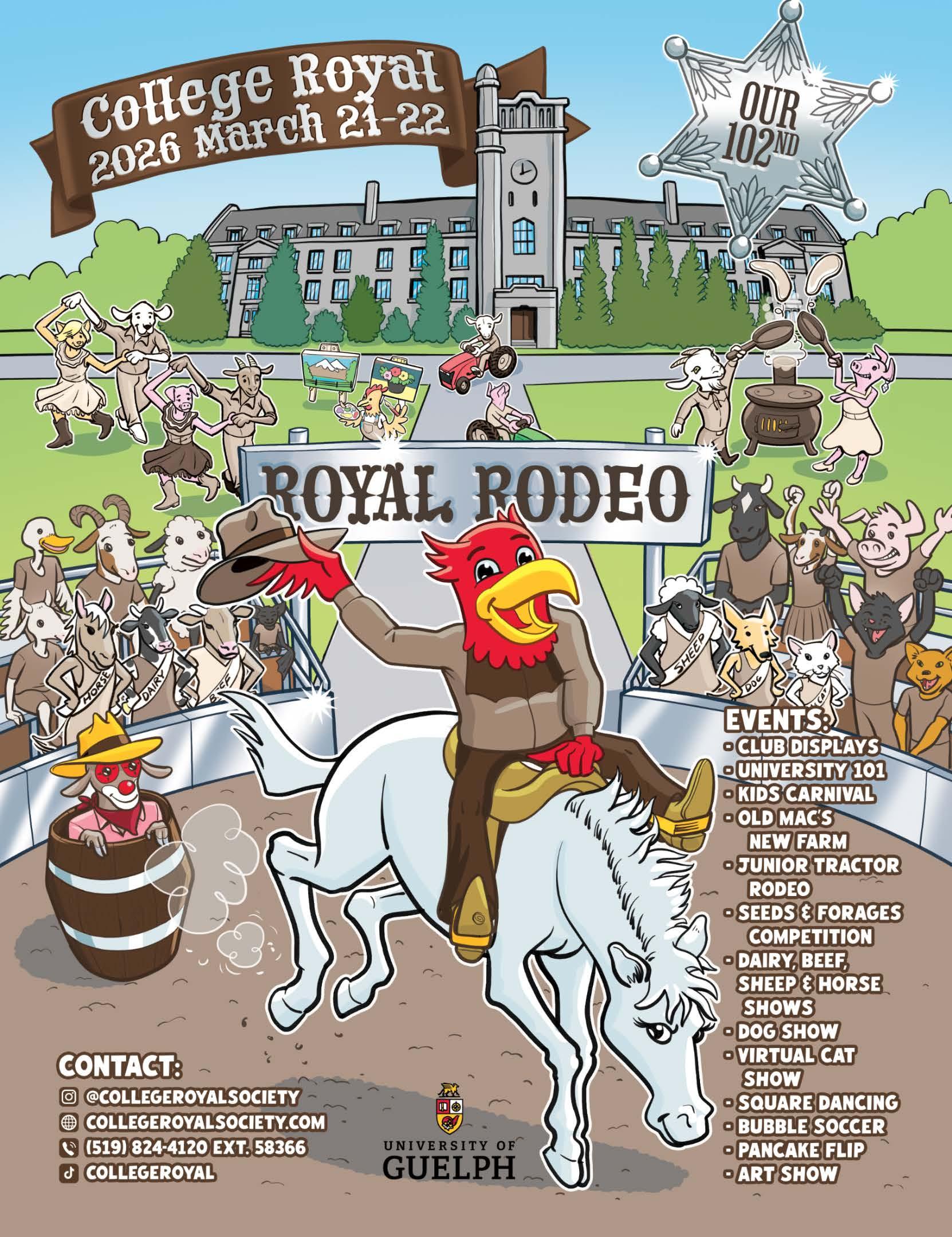
Celebrating 102 years of College Royal
Gather your family, round up your friends, and get ready for the Annual College Royal Open House Weekend at the University of Guelph! This year, they're turning up the excitement and fun with their theme College Royal Rodeo, celebrating 102 years of tradition, community, and unforgettable fun.
Step into action with the free barn tours, livestock shows, dance and dog competition, art show, club displays, and more. Enjoy delicious food, hands-on activities, and tons of fun across campus. Whether you’re a first-time visitor or a lifelong College Royal fan, there is something for everyone to enjoy.
It is on March 21 and 22 from 8:00 am to 5:00 pm at the University of Guelph Campus. All locations are fully accessible for wheelchairs.
Dust off your boots, grab your friends and family and join us for a rootin’-tootin' celebration you won’t want to miss. Follow the excitement on Facebook and Instagram @collegeroyalsociety or visit collegeroyalsociety.com for updates and details.
RAIMS Program Update: eAUP Replacement Moving Forward
We’re excited to share that the Research Administration Information Management System (RAIMS) program will proceed with a plan to replace the current Electronic Animal Use Protocol(eAUP) system within Animal Care Services. This upgrade is part of the broader RAIMS roadmap, which includes the earlier implementation of EthOS and future solutions for Animal Research Facilities, Biosafety, and Grants and Contracts management.
A new Request for Proposal (RFP) will be issued in the coming weeks to identify a best-in-class technology vendor and implementation partner for the eAUP system. This revised RFP follows an extended pause and offers fresh opportunities for interested parties to participate.
The Animal Care Services project team previously made significant progress preparing necessary documentation that projects like this typically need at the outset. We are well positioned to hit the ground running and recruitment activities are currently underway to fill key implementation roles. These roles and the RFP process are expected to progress sufficiently such that additional project activities can commence as of Spring 2026.
At this time, we are unable to confirm an anticipated launch date until the vendor is selected, and detailed implementation plans are finalized. Stay tuned for ongoing updates as this exciting project progresses!
General
ACC
New Members Needed! If you believe that you or someone you know could bring valuable insights to the committee, click to find out more!
ACS Office Hours
Animal Care Services office hours are Monday to Friday, 8:30 a.m. to 4:30 p.m. Please contact us during these hours for support; requests received outside of office hours will be addressed upon staff return. For urgent animal health concerns outside of office hours, please contact the on-call veterinarian at acsvets@uoguelph.ca.
CCAC Strategic Plan 2026-2031
The CCAC is sharing its Strategic Plan 2026–2031, Building a Strong Future for Ethical Animal Care and Use in Canadian Science, developed through extensive input from program participants and stakeholders. This plan reflects the CCAC’s commitment to listening, evolving, and supporting ethical, effective animal care and use in Canadian science.
Canadian Equine Code of Practice
We encourage our community to participate in the public comment period for the updated Canadian Equine Code of Practice, running for 60 days starting January 12, 2026. Led by the National Farm Animal Care Council (NFACC), this review is an important opportunity to provide input that will help shape national standards for equine care, management, and welfare.
Update on Bill 75 and UofG's Response
Bill 75, which proposes amendments to Ontario’s Animals for Research Act, is currently moving through the legislative process. The proposed changes aim to restrict the use of dogs and cats in invasive medical research, prohibit their breeding for research in Ontario, and encourage post-research adoption. Exceptions are included for veterinary purposes and educational programs.
The University of Guelph participated in the recent public consultation, supporting amendments that enable the University to continue activities that are benign, non-invasive, and/or directly beneficial to animal health. This includes research that advances veterinary medicine and programs of study in veterinary medicine and technology. The University's submission also addressed the unintended consequences of a complete ban, including negative impacts on both animal and human health. U of G looks forward to continued collaboration with the province to ensure practical, effective regulations aligned with best practices and remains committed to ethical, high-quality research and clinical training that benefits animals, people, and society.
Bill 75 will proceed through the normal legislative process including committee review anddebate before becoming law.
How Many Animals Did You Use in 2025?
On Monday, January 19, 2026, all PIs with active AUPs within the last year, should have received an email from Sascha Tuuha, requesting submission of annual animal use numbers for Jan 1 -Dec 31, 2025. Please note that there was an issue with the link to the animal numbers summary within this email and the issue has now been resolved. If you did not received this email from Sascha, please check your junk folder before reaching out to acc@uoguelph.ca for support.
Please respond by Monday February 2, 2026, with your 2025 animal use numbers by replying to the email you received.
Questions about animal numbers can be address to Sascha at acc@uoguelph.ca.
Training
Please refer to the Facility Orientation and Workshop Schedule page on the
Animal User Training Program website for all training schedules. For specific guidance on what training you require to work with or care for animals at UofG, contact us at training@uoguelph.ca.
Training Documentation on AUPs
All training records are now captured electronically within each individual’s e-profile in the AUP system. To see your profile, click on your hyperlinked name within an AUP. Training sheets are no longer a part of the AUP approval process. Any previously created training sheets are considered outdated and will be removed by ACS. The e-profile provides a centralized and accessible record of all completed training, ensuring transparency and compliance for all personnel. If you have any questions, or require any updates to your training profile, contact training@uoguelph.ca.
ACC Lunch and Learn Recording
Thank you to everyone who joined the recent ACC Lunch & Learn on implementing SOP.ACC.818 Asepsis for Rodent Survival Surgery. The session, led by the ACS veterinarians, included an overview of the SOP and a valuable discussion on common challenges and best practices.
If you weren’t able to attend, or would like to revisit the content, you can now access the full recording at this link. Feel free to share with colleagues who may find it valuable.
Animal Utilization Protocols
AUP help drop-in sessions held every Wednesday from 1:00-2:30pm in-person with ACS or virtually on Teams. Check out the Interactive Support Sessions for Researchers page for more information.
AUP Replacement Reminders
At the time of your third and final AUP renewal the ACS office is now sending an email highlighting that no further renewals are available for this AUP. A replacement (new) AUP is required before the expiry date to avoid any interruption in your research activities. PIs are encouraged to plan ahead and submit the replacement AUP 90 days before the AUP expiry date to support all aspects of committee review and approval.
Reach out to acc@uoguelph.ca if you have any questions.
Ridgetown Campus has multiple agricultural facilities that support research and educational activities. The Swine Facility, led by Mark Monden and Norm Tosh, demonstrates a creative and cost-effective approach to animal enrichment through the innovative reuse of facility supplies. Broken or worn rubber boots are repurposed as durable toys for pigs, while shredded burlap sacks (pictured above) are provided to farrowing sows to support natural nest-building behaviors. The ACC commends the facility team for their thoughtful and innovative approach to providing cost-effective meaningful enrichment.
To have your work or a fun photo of your animals highlighted, share it with us. Each issue will include one submission as we champion our community and the amazing animals that make our work possible.
Open for Public Feedback - The Veterinary Professionals Act
In May of 2024, the Ontario government passed the Veterinary Professionals Act, the most significant update to veterinary regulatory law in over 30 years. This new legislation modernizes how the profession is governed by recognizing team-based care, licensing both veterinarians and veterinary technicians under a single regulatory framework, and strengthening public protection and quality assurance. It also empowers the Transition Council to develop the regulations and by-laws that will bring this new model into effect. Implementation of the new by-laws
is expected in the next few years.
Now, the College is seeking public feedback on the proposed by-laws. By participating in the consultation, you can help ensure they reflect the realities of veterinary team-based care, are fair, transparent, responsive and support both the profession and the public.
The consultation is open from January 19 to March 20, 2026.
Community Spotlight
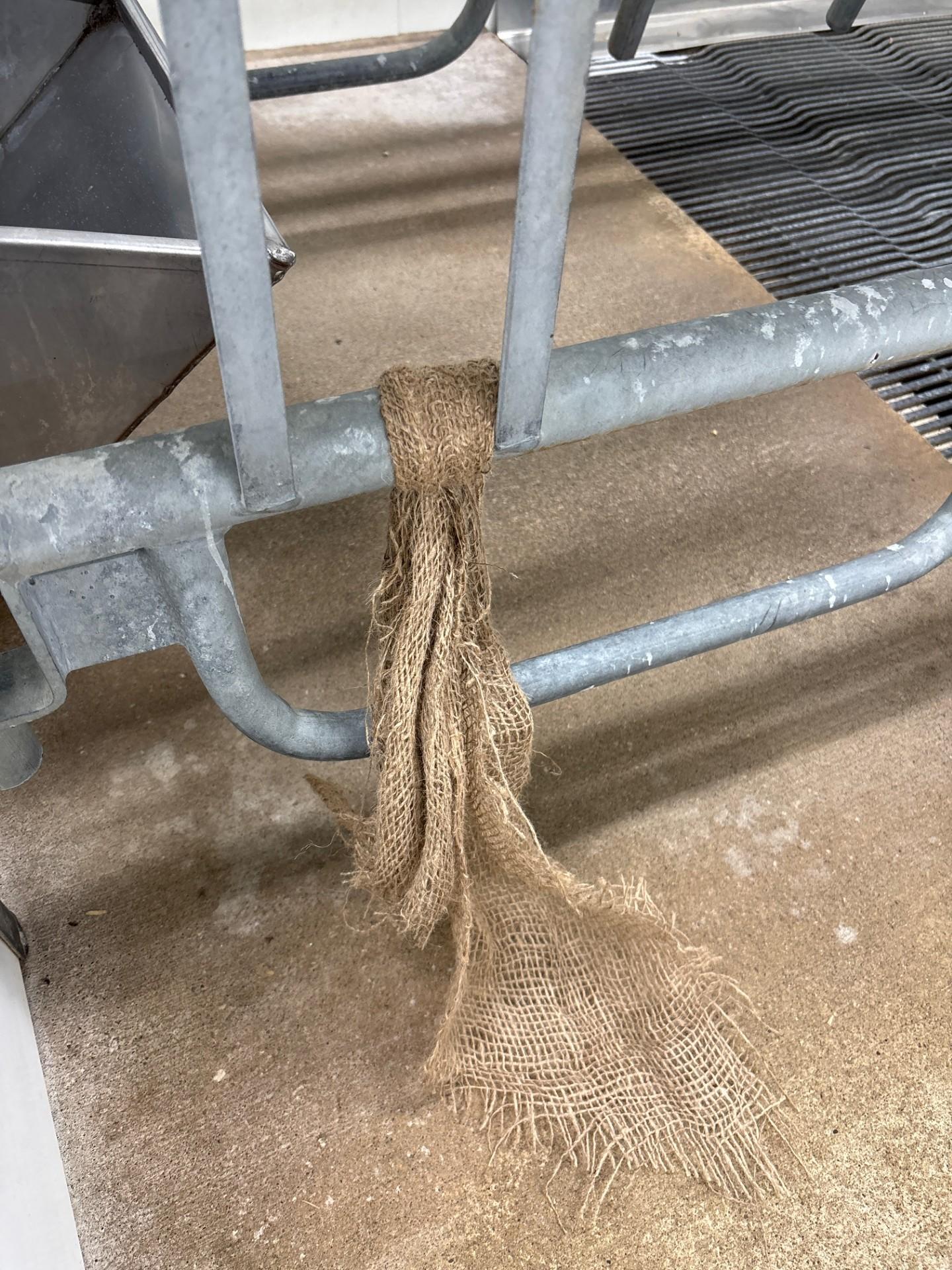
Ridgetown Campus has multiple agricultural facilities that support research and educational activities .The Swine Facility, led by Mark Monden and Norm Tosh, demonstrates a creative and cost-effective approach to animal enrichment through the innovative reuse of facility supplies. Broken or worn rubber boots are repurposed as durable toys for pigs, while shredded burlap sacks (pictured above) are provided to farrowing sows to support natural nest-building behaviors. The ACC commends the facility team for their thoughtful and innovative approach to providing cost-effective meaningful enrichment.
To have your work or a fun photo of your animals highlighted, share it with us. Each issue will include one submission as we champion our community and the amazing animals that make our work possible.
Upcoming Events

January 2026 Wellness@Work Calendar
AALAE 2nd Annual Behavior & Enrichment Symposium
- Feb 9-11, 2026
- Virtual
- Registration
- March 21-22, 2026
- Free
- UofG Campus
- More information
CALAS - Making the Most of Your Mortalities: A Guide to Rodent Necropsies with Dr. Janet Sunohara-Neilson
- Jan 28, 206
- 3-4 PM EST
- Registration
ISES - From Instinct to Evidence: Facial Expressions, Pain, and Emotion in Horses
- Jan 29, 2026
- 10am EST
- Registration
Resource Corner

Contact Us
- Newsletter - acc@uoguelph.ca
- AUP - acc@uoguelph.ca
- Training - training@uoguelph.ca
- Post-Approval Review - accpost@uoguelph.ca
- ACS Veterinarians - acsvets@uoguelph.ca
- Chair of the ACC - chairacc@uoguelph.ca