Dr. Kim Martin: Demonstrating Intelligence, Innovation and Intuitiveness
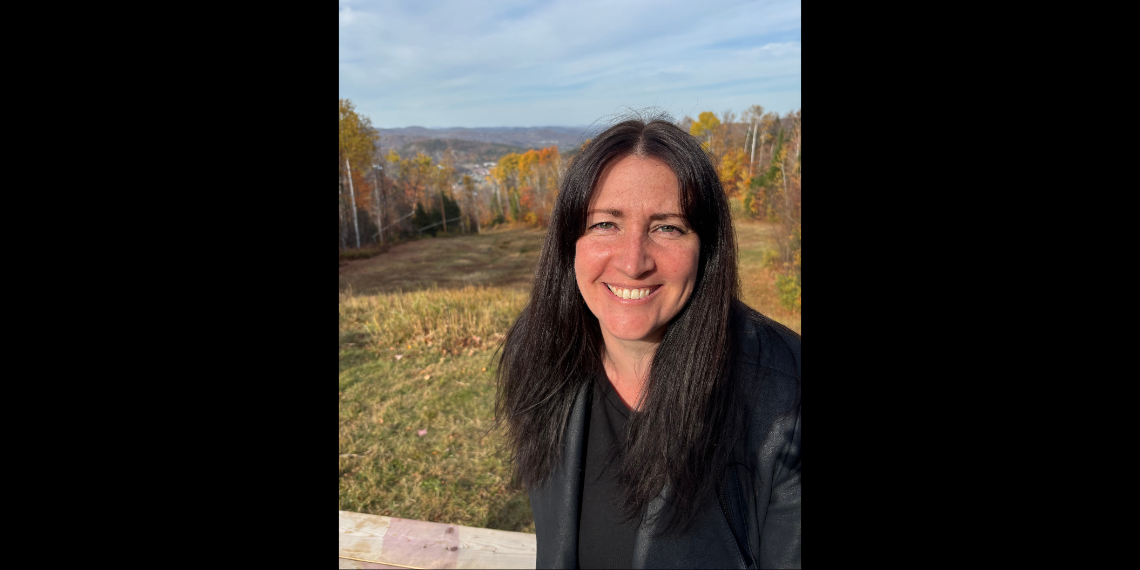
“I have witnessed firsthand [Dr. Martin’s] exceptional dedication to teaching and outstanding commitment to fostering a positive, innovative, and inclusive learning environment for students.” This is one of many positive thoughts that Amelia Flynn, graduate of the Culture and Technology Studies (CTS) and English programs in the College of Arts (COA) at the University of Guelph, expressed about Dr. Kim Martin, Flynn’s former professor, recipient of the COA Faculty Teaching Excellence Award in summer 2025 and most recently, recipient of the University of Guelph Faculty Association Distinguished Professor Award for Excellence in Teaching.
Flynn, whose idea it was to nominate Martin for the COA Faculty Teaching Excellence award, went on to say that Martin’s “commitment to inclusion and undergraduate education also shines through outside the classroom” and shared that this commitment inspired her to lead the creation of a CTS student society of which Martin is the faculty advisor.
Martin, an associate professor in History and CTS, is admired and respected by her students and colleagues alike. She has unwavering faith in her students and believes in encouraging them to take initiative – in fact, one of her teaching principles is to “let students lead the way.” In the midst of the U of G Arboretum Hear, Here project that one of her classes was working on, its long-awaited launch that they were responsible for executing drawing near, Martin became ill and was unable to teach for a few weeks. Knowing she wouldn’t be able to attend the launch, Martin considered the unfavourable option of postponing it. Fortunately, that didn’t prove to be necessary because her students “worked together and launched the project on the expected day, complete with tours, maps, signage, and promotional materials. They even spoke to the local press!” she recalls.
When Martin recovered, she asked the students how and why they continued so eagerly. One student’s response that stands out to her was, “this project felt bigger than many others because we all had a role to play in seeing it come to life.”
Changing the College of Arts for the Better
Martin’s list of achievements during her time at the U of G is impressive. On this list is playing a key role in developing the CTS program which has seen exponential growth and success since its soft launch during the COVID-19 pandemic, its second cohort slated to graduate this summer. “Student enthusiasm for the [CTS] program and their studies is in large part thanks to Kim’s indefatigable leadership and belief in the importance of this area of inquiry,” commented Dr. Kimberly Francis, director of the COA’s School of Fine Art and Music and former director of Interdisciplinary Programs in the COA (which houses the CTS program).
During the pandemic, Martin taught the HIST*4170: Digital Humanities course, deftly navigating unanticipated hurdles of remote teaching and learning. At a time fraught with uncertainty and unease, Martin went to great lengths to ensure students were engaged in learning and taught in ways that were relatable to them while having opportunities to make some friends along the way.
Shehroze Saharan, a former student of Martin’s in the HIST*4170: Digital Humanities course and an educational technology developer in the Office of Teaching and Learning at the U of G, recalls Martin using a Slack channel as a supplemental communication tool for the class during this time. “This space fostered not only academic engagement but also a sense of community—something that was difficult to achieve in a virtual learning environment. Through this platform, we shared insights, exchanged ideas, and even participated in casual, fun interactions that strengthened our learning experience.”
Dr. Martin’s Classroom: A Space where Exploration is Limitless and Learnings Apply to the World
Another one of Martin’s teaching principles is to “Demonstrate the applicability of each course to the world outside academia” and it is ever-present in the courses she teaches.
During their time as a student in Martin's in the HIST*4170: Digital Humanities course, Saharan created The Matilda Project, which they describe as “an initiative aimed at raising awareness of gender bias in science.” Martin believes “the university classroom is [instrumental] to understand the world and one’s place in it.” A reflection of Martin’s investment in mobilizing individuals and initiatives that better the world and her self-proclaimed fondness for seeing students pursue their passions, Saharan shared, “When I submitted my project, Dr. Martin not only provided insightful feedback but also expressed a sentiment that I had never heard from a professor before—she encouraged me to bring the project to life.” Thanks to Martin’s support, The Matilda Project is thriving, gaining more traction each day.
Martin also conveys to her students the importance of being informed about the world we live in. “The CTS program is designed to get students thinking critically about both the technologies they use every day (the internet, computers, social media, artificial intelligence) and how these technologies impact our understanding of culture,” she explains.
“My favourite class to teach is CTS*2010: Digital Approaches to Culture. Students in this class each choose a technology (which can range from the pencil or a set of dice to the camera or the microwave) and research it deeply over the course of a semester,” she continues.
From Martin’s perspective, “learning about the role of technology in society allows students to engage in discussions about ethics, privacy and equity, some of the most pressing issues today.”