LANG school wins Bronze at Olympics HQ in Lausanne
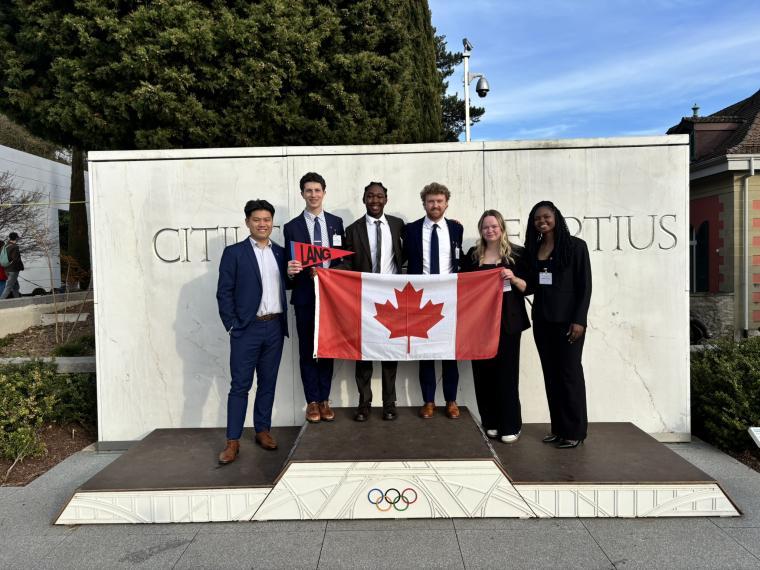
A team of undergraduate students from the University of Guelph’s Gordon S. Lang School of Business and Economics earned international recognition with a bronze medal finish at the International Olympic Case Study Competition in Lausanne. Hosted at the headquarters of the International Olympic Committee (IOC), the competition brought together 16 top university teams from around the world to tackle real challenges facing the global sport system.
The LANG team - Kovar Yu, Evan Hughes, Charlie Van Dam, Hadassah Myers, Kate Donaldson and Samba Traore - traveled to Switzerland to take part in a three-day immersive program hosted by the IOC through the Olympic Studies Centre. They explored Olympic House, walked through the Olympic Museum, and connected directly with international sport leaders. A visit to the headquarters of the FIVB (International Volleyball Federation) offered rare insight into how international sport organizations operate, collaborate, and evolve in a complex global landscape.
As they soaked in the experience of this prestigious opportunity, they also reflected on the theme of this year’s case competition: developing innovative strategies to better support young elite athletes navigating the pressures of high-performance sport.
While many teams focused on structural or policy-based solutions, the LANG students provided a different approach, asking whether the root issue was not just systems, but culture itself.
Taking inspiration from indigenous listening circles, the team proposed a global initiative designed to create safe spaces for young athletes to openly share and normalize key challenges including competition pressure, injury, homesickness, and experiences of not making teams. Grounded in the belief that meaningful change starts with understanding, their idea challenged sport organizations to rethink how support is built and delivered. As the team put it, “Rules don’t change culture, understanding does.”
For fourth-year student Evan Hughes, the idea stemmed from recognizing a critical gap in the athlete experience, “we realized that many of the hardest moments in sport are also the least talked about and that’s where connection and retention can break down.” By prioritizing community, empathy, and psychological safety, the team’s proposal encouraged international sport federations to move beyond top-down systems and instead empower athletes through shared experience and dialogue.
Faculty Lead, Katie Lebel, takes pride in how LANG’s education sets students apart, “this result reflects our students’ ability to lead with both innovation and empathy, they didn’t just solve a problem, they reframed how the sport system thinks about supporting athletes.”
The exclusive competition brings together top sport management students from across the world to tackle real-world challenges facing the Olympic Movement, with finalists invited to Lausanne for an intensive learning and networking experience.
For the University of Guelph’s Lang School, this bronze medal finish also highlights the strength of its Sport and Event Management program, where students are equipped with the industry knowledge, hands-on experience, and global perspective needed to lead in the evolving sport landscape. From Guelph to Lausanne, LANG students are not only studying the future of sport, but they are actively shaping it.