Peat Potential: The Benefits of Peat in Renewing Soil and Vegetation at Mining Sites
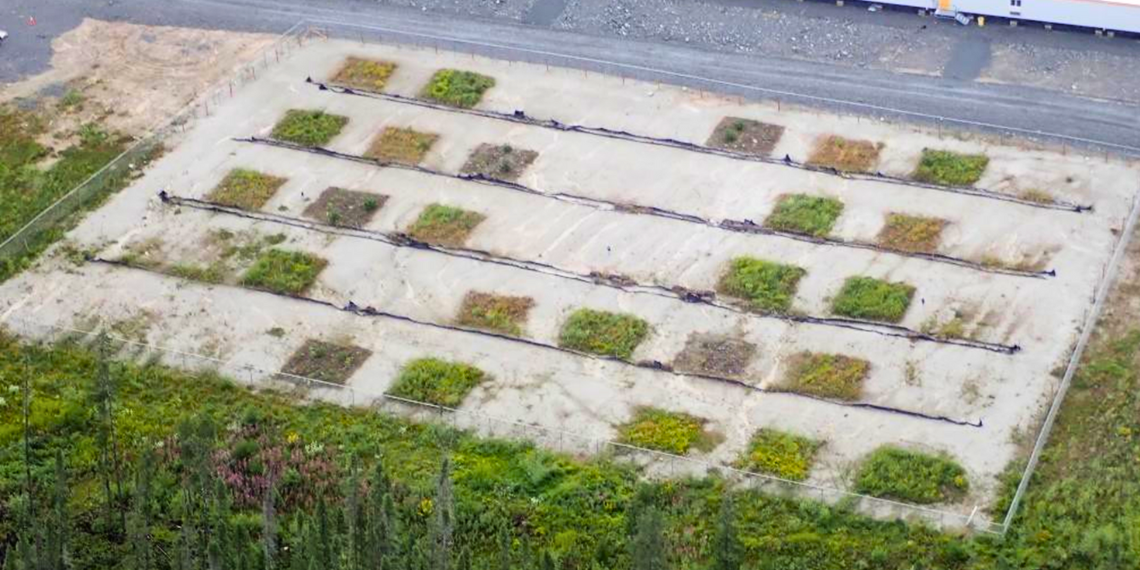
Resource extraction activities like mining can degrade large portions of the landscape, cause vegetation loss and reduce soil quality. New research from the Department of Integrative Biology has shown that these effects don’t have to be long-term. With targeted restoration treatments that get to the root of the problem, the negative impacts of mining can actually be reversed and ecosystems revived.
Led by Dr. Robert Hanner, a professor of biodiversity, and post-doctoral researcher Dr. Jiaojiao Diao, the study investigated how different soil treatments or amendments influence vegetation recovery at a mine site in the boreal forest of northern Ontario.
“After the closure of a mine in Canada, companies are legally required to make an intentional effort to restore the site,” explains Hanner.
In this particular case, the mining company, Agnico Eagle, was particularly interested in how ecological restoration could ultimately support the local caribou population after the mine closes — a process that starts with restoring native plants and shrubs.
“Mining activities cause soil to become nutrient-depleted, with altered organic matter content and elevated pH levels. Because these conditions may limit vegetation regrowth, the company wanted to see if we could ‘jumpstart’ restoration by supplementing the soil.”
Previous research has shown that simply replanting vegetation is not enough, so this project aimed to determine what else could be done to support plant growth in the challenging post-mine environment. Over an eight-year period (2016 to 2023), Hanner and Diao tested eight different soil treatments to see which were most effective at supporting plant growth over multiple years. These treatments included organic and inorganic components — such as fertilizer, oats, peat, biosolids (sewage sludge) — alone and in combination.
The team predicted that the peat-based amendments would have the greatest impact on restoring vegetation due to the ability of peat to both enhance water retention and supply organic nutrients that promote plant growth. Their prediction proved correct.
“All of the soil treatments containing peat, either in isolation or in combination with other materials, performed well. They led to greater species richness and tree growth, and enhanced overall biodiversity recovery,” says Hanner.
According to Hanner, peat is already commonly used as an amendment to enhance soil moisture retention, nutrient levels, and organic matter content to facilitate plant establishment. But there’s a catch: peat is a critical carbon sink and removing it from ecosystems can cause its own harmful environmental impacts.
“That’s why we don’t advocate for extensive peat extraction,” explains Hanner.
However, when peat or peat-like materials are already available through site development processes, its use in soil recovery can yield highly positive results, supporting biodiversity and faster site recovery. It may also be possible to identify other soil amendments that can replicate the beneficial effects of peat, avoiding the risk of “adding insult to injury” that comes with removing peat from one location in order to restore soil in another.
In a global economy that seems increasingly volatile, mining activities will continue to be a critical driver of economic growth in Canada and beyond.
“This research helps improve the science of ecological restoration to ensure mined landscapes can be responsibly reclaimed,” notes Hanner.
This study would not have been possible without the support of Agnico Eagle at their Detour Lake site.
Read the full study in the journal Restoration Ecology.
Read about other CBS Research Highlights.