Change of heart? How exposure to low-oxygen conditions can cause cardiac remodeling in fish
Could a fish from the Ganges River help us understand how fish in the Great Lakes cope with environmental stress? The science points to yes.
The zebrafish, Danio rerio, is a small fish native to India’s Ganges and Brahmaputra rivers that commonly serves as a lab animal. This unassuming fish may provide important insight into how fish native to Ontario can survive environmental stressors, which increasingly include low oxygen conditions known as hypoxia. As climate change and agricultural runoff continue to create more hypoxic zones, understanding how aquatic animals cope with low oxygen stress is becoming more critical.
Dr. Todd Gillis, professor of comparative physiology, and MSc student Elizabeth Manchester in the Department of Integrative Biology set out to do just that. Gillis explains, “We wanted to see how zebrafish are able to deal with hypoxia. If we can begin to understand their physiological capacities, that can help us predict how local fish might respond.”
Their recently published study dives into the difference that being acclimatized to hypoxia over time — compared to sudden exposure — can make to a zebrafish’s response. While most research thus far has focused on the respiratory system, Manchester and Gillis looked more closely at the zebrafish heart and cardiovascular system.
What they found may be a source of hope for our Great Lakes ecosystems. While fish faced with rapid exposure to hypoxic conditions experienced a decrease in heart function, fish that were acclimated over several weeks were able to maintain their normal heart function. How did the fish do this? They had a literal change of heart.

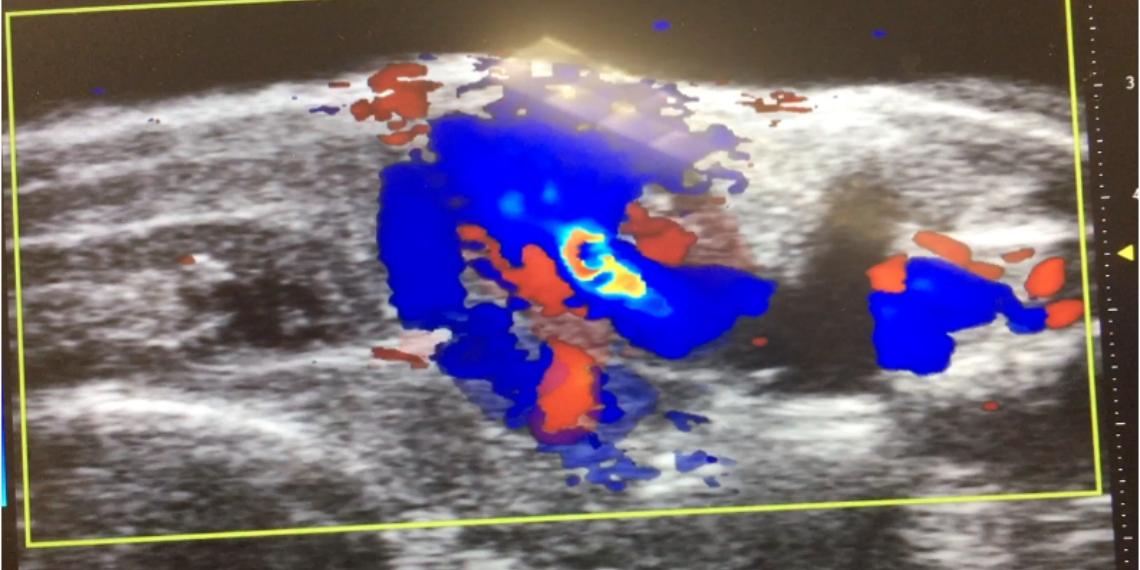
Manchester and Gillis discovered that zebrafish acclimated to hypoxia had larger heart chambers, allowing each heartbeat to pump more blood through their body. Ultrasound imaging found that these bigger hearts filled with more blood during each heartbeat. This capacity to move more blood increases oxygen delivery to the tissues there by giving the fish an advantage when oxygen is limited.
Not only that, but their gills — which is where oxygen exchange occurs — had an increased surface area and their blood contained more red blood cells. Together, these modifications support an increased ability for oxygen uptake and delivery throughout the whole body, leading to a higher tolerance for hypoxic conditions and subsequent survival in oxygen-limited environments.
At the molecular level, the hypoxia-acclimated fish showed increased expression of two genes associated with oxygen stress — hif-1αa and vegfaa. hif-1αa acts as a regulator and an alarm system: it activates other genes that in turn lead to increased red blood cell production and adjust metabolic processes. One of these downstream genes is vegfaa; when vegfaa expression increases, so does blood vessel growth. Collectively, these increases in gene expression reflect a coordinated response to the hypoxia challenge.
If we zoom back out and look at this from a broader perspective, what can the zebrafish tell us about the Great Lakes? Ultimately, the study suggests that there are fish species out there that can survive hypoxic environments in unexpected ways. As Gillis explains, “even though we’re only looking at one individual species, we can gain valuable insight into what other fish species may be able to do.”
The findings point to an encouraging level of environmental resilience in fish in the face of increasingly challenging conditions, but they come with a note of caution, says Gillis.
“Fish that can ‘remodel’ their heart in response to oxygen stress benefit in the moment, but it likely comes with an energetic cost that impacts the fish in ways we don’t yet understand.”
As aquatic ecosystems face increasingly frequent hypoxic events, understanding the mechanisms by which animals are able to deal with stressors — or not — will be paramount. But if a small fish from the Ganges River is any indication, nature may have some untold tricks up its sleeve when it comes to adapting to an ever-changing environment.
Read the full study in the Journal of Experimental Biology.
Read about other CBS Research Highlights.