The Conservation Conversation: Can We Replace Nature with Technology?
Can ecosystem services be meaningfully replaced by technology?
As the global environmental crisis continues to threaten the ecological processes that sustain life on Earth, the idea that we can use technology to replace essential processes, such as climate regulation and the production of food and fibre, is an appealing one. In 2013, British ecologist Alistair Fitter was the first to assess the viability of this strategy. His conclusion was bleak: most ecosystem services are either simply irreplaceable, or prohibitively expensive to do so.
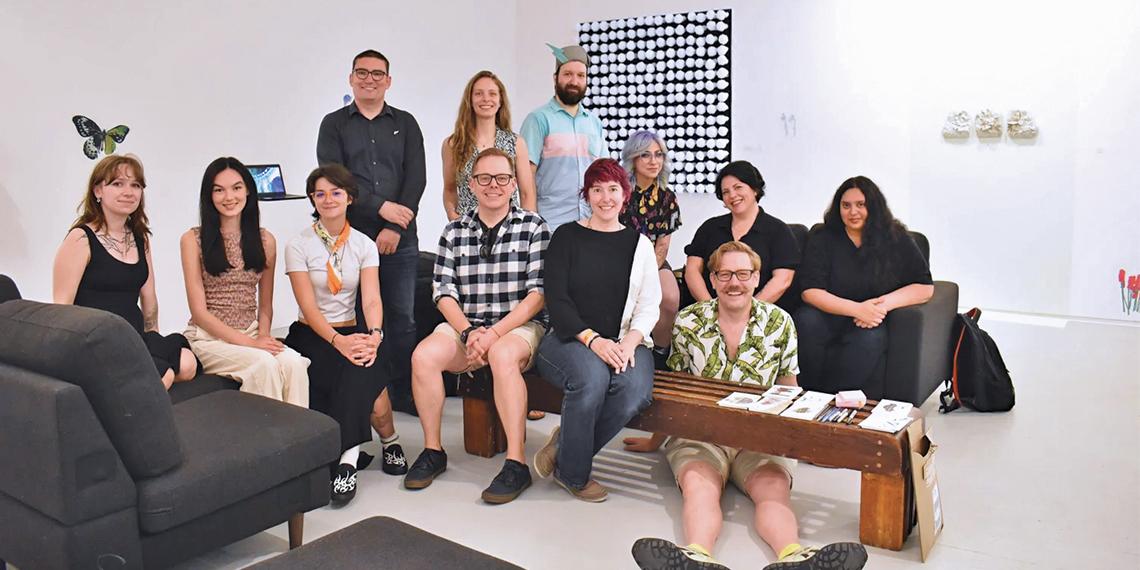
 Now, over a decade later, an international team of engineers, biologists, designers, writers and artists is revisiting the same question. The team, which includes several researchers at the University of Guelph, has a particular interest in the concept of “biomimetic design,” which aims to develop solutions to pressing ecological problems by mimicking processes that have evolved naturally over millions of years.
Led by Dr. Shoshanah Jacobs in the Department of Integrative Biology, the team undertook a massive analysis of nearly 35,000 biomimetic-focused articles to determine if nature-inspired tech has meaningfully advanced our ability to enhance or replace core ecosystem services.
“When we first dove in, we had to accept that it would require a new way of thinking. After all, we were re-considering the natural processes that have occurred for millennia,” explains Jacobs. “It goes against our humanity to consider mechanizing these.”
The team soon realized just how important it was to have expertise from different disciplines on the project. As they searched through tens of thousands of articles, it became clear just how differently language is used across disciplines — and where critical gaps in our approach to the problem may lie.
For example, the cultural services provided by ecosystems — such as spiritual, recreational and identity-based benefits — have been given scant attention. Jacobs and colleagues pushed back on this trend as their study included a far more comprehensive concept of cultural services.
The team’s diverse perspectives and backgrounds created an innovative framework to assess the current status of nature-inspired design, bringing a more holistic lens to what is typically considered a scientific conversation.
“It became so fundamentally clear how important the humanities and social sciences are to initiatives such as this one. These fields are where the bulk of human imagination and creativity, as well as a core understanding of humans, are found,” says Jacobs.
Over 75 per cent of the papers analyzed focused on just five “marketable” services — things like producing biofuels and bioactive compounds, manufacturing fibres, and treating waste. “This concentration of effort suggests that the field has primarily targeted services that not only can be most easily replicated in laboratory or industrial settings, but also have the most direct commercial potential,” explains Jacobs.
In contrast, ecological services such as climate and water regulation, pollination, soil formation and nutrient cycling remain poorly represented in the biomimetic literature, highlighting the immense challenge of imitating larger-scale and complex processes with current technology.
Says Jacobs, “These services accounted for less than three per cent of papers, despite their absolutely critical role in food security and ecosystem functioning.”
Spiritual and cultural identity services were largely absent from the papers analyzed, underscoring a wider need to embed cultural dimensions into future biomimetic design strategies.
In 2013, Fitter determined that most ecosystem services could not be replaced. Now? Jacobs and colleagues conclude that the answer is “partially, and not without risk.”
That’s because most current efforts are too focused on simply “replacing” ecosystem functions, rather than supporting or enhancing them. Replacement technologies such as “RoboBees” used to pollinate crops may successfully mimic the transfer of pollen but are unlikely to support the interdependence and resilience of the natural system. They simply fail to replace all of the services provided by bees.
This is why — despite the ever-advancing technology available to support ecosystem function — the team stresses that conservation needs to remain at the heart of the conversation.
“A shift toward supporting and enhancing all living systems — not simply replacing some of them — should be viewed as essential to tackling the unprecedented challenges we face today,” says Jacobs.
So, what are the next steps for the team? Having successfully launched a related art exhibition entitled Manufactured Ecosystems and completed a soon-to-be published anthology on ecosystem service replacement, they are planning to further explore possibilities by examining the past and envisioning a healthy future. With funding from a SSHRC Insight Grant called “Farming the Future” led by Dr. Andria Jones in the Ontario Veterinary College, Jacobs and colleagues will create plausible climate scenario models to help understand what Canadian farmers are doing now and will do in the future to adapt to changing agricultural conditions.
By creatively bridging disciplines, the team continues to reshape the conversation on our changing environment, offering new ways to understand — and respond to — the ecological realities ahead.
Read the full study in the journal Biomimetics.
Read about other CBS Research Highlights.