The Butterfly Effect: The Science Behind a Successful Reintroduction of the Mottled Duskywing
Human effects on natural habitats are widely felt, even for the smallest of creatures.
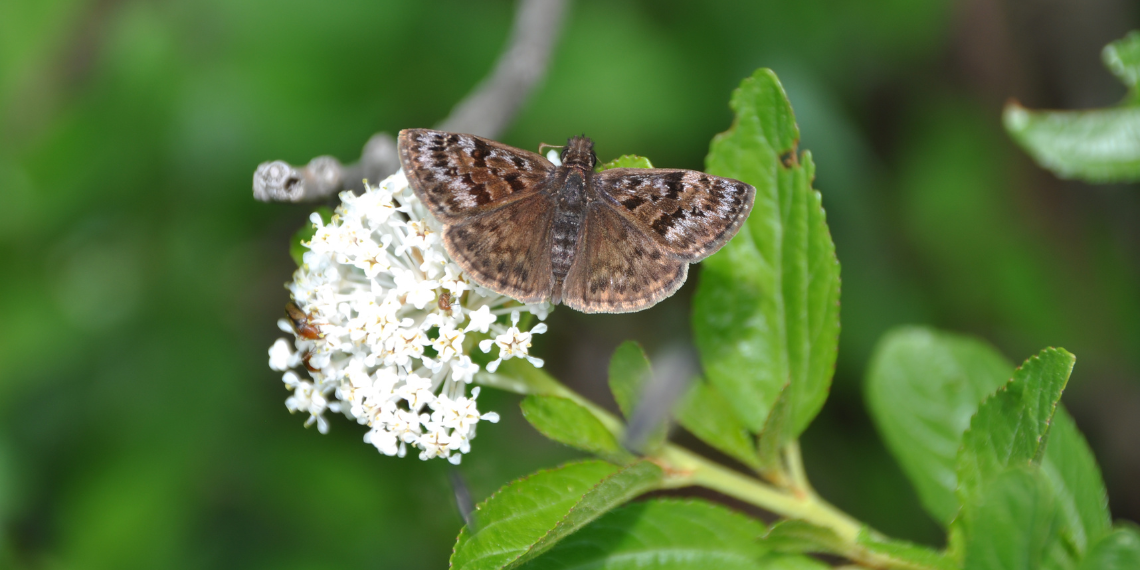
The mottled duskywing, a species of endangered butterfly in Canada, is one of these creatures facing many threats to their habitat. Fire suppression, overgrazing by deer and other human disturbances have shrunk the amount of prairie and oak savanna, two types of open habitats that this species needs to survive – driving many local populations to extinction.
But what if it were possible to bolster their numbers by “reintroducing” individuals back into restored areas where they were once abundant?
A research team led Dr. Ryan Norris, Department of Integrative Biology, has led the first reintroduction of the mottled duskywing. It also happens to be the first successful reintroduction of a butterfly in Ontario.
 “Reintroductions have great potential to enhance the long-term viability of many at-risk species,” says Norris. “But many reintroductions fail. With this project, we wanted to determine what factors determine the most effective reintroduction strategy for this species.”
Norris and collaborators aimed to investigate two key challenges common with insect reintroductions: which life stage is most effective for release, and what habitat conditions are required for success.
To address the first question, the research team took different life stages of mottled duskywing – larvae (caterpillars), pupae, and adults – that were raised in captivity at the Cambridge Butterfly Conservatory and released them at three separate sites over the course of four years in Pinery Provincial Park in southwestern Ontario.
Pinery Provincial Park was once home to a healthy mottled duskywing population, but land use changes in the park led to their local extinction in the early 1990s. Recent restoration efforts, however, created an opportunity to try and bring the species back.
Two hypotheses were examined with the release. The first was that larvae would be the most effective life stage to release because they would have more time to adjust to the environment as they developed, increasing their likelihood of reproduction.
However, this turned out not to be the case because the survival rate of larvae after release was relatively low.
A second hypothesis – and the one supported by the results – was that pupae and adult butterflies would be the most effective life stage to release because they’re closer to the age of reproduction at the time of release, which makes them more likely to survive long enough to reproduce.
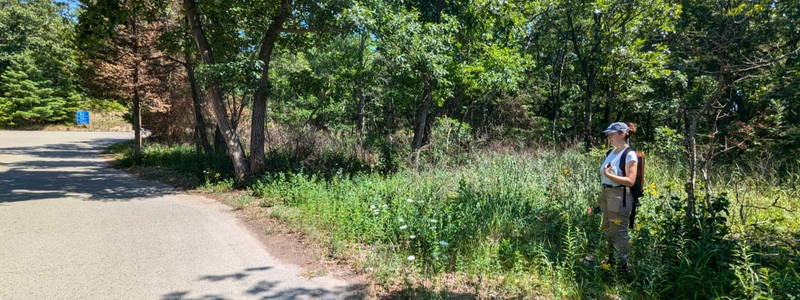
Habitat quality also proved critical. In the first year of study, some of the restored sites were less hospitable than expected. “The quality of the habitat at these sites, and specifically the health of the host plants, was not ideal for releasing butterflies,” Norris explains.
Luckily, the largest of the release sites had no such issues, with enough host plants present in good health to easily support the introduced butterflies.
“The most surprising aspect was how successful the reintroduction was in such a short time. After only four years, we had a large population and were finding butterflies in areas where they hadn’t been introduced within the park,” says Norris.
In a complementary study, Norris and his collaborators also examined what it really means for a habitat to be successfully restored for a butterfly reintroduction. Beyond simply having enough of the right resources present, they must also be properly distributed as well.
 In Ontario, the mottled duskywing survives on just two native host plants: New Jersey tea and prairie redroot. Because butterflies often choose their host plants based on patch size, the researchers wanted to know what size of patch the butterfly preferred – and ultimately found that large patches were consistently chosen over small or medium patches.
This finding mirrors the butterfly’s success at each site: where large patches of host plants were available, the population thrived. In contrast, butterflies fared less well at sites with only small or medium patches.
Together, these findings provide critical knowledge for future butterfly reintroductions.
“Mottled duskywing are an endangered species throughout Canada. Our study provides a valuable blueprint for future reintroductions of this embattled species and potentially others as well,” says Norris.
As these small, vulnerable butterflies continue to flourish at Pinery, the project offers compelling hope that science-guided conservation can help restore what was once considered lost.
Read the full studies in Animal Conservation and the Journal of Insect Conservation.
Read about other CBS Research Highlights.