Running on Science: How Research is Shaping the Future of Canadian Soccer
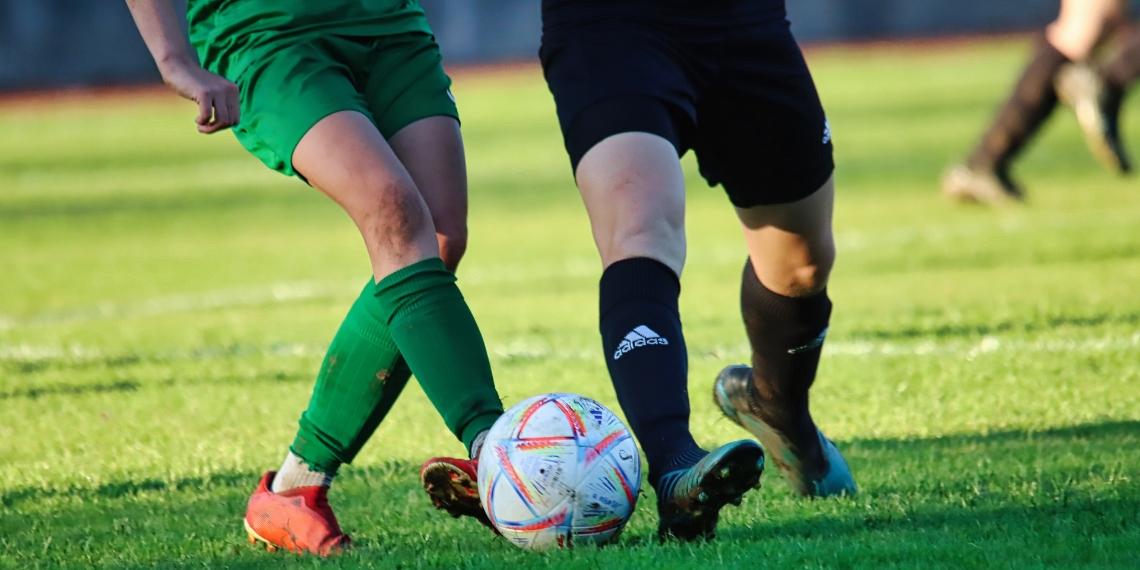
With the FIFA World Cup coming to North America in just a few months, and 13 matches set to be played in Canada, all eyes are on Canadian soccer players and their chance to make an impact on the world’s biggest sports stage.
In recent years, professional soccer has been gaining momentum in Canada. The Canadian Premier League (CPL) kicked off its seventh season this year. Compared to Europe’s Premier League, Spain’s La Liga, or even the United States’ Major League Soccer, the CPL is still quite young — but that means there is plenty of room to grow and innovate.
This is where research takes the lead. Recent Human Health and Nutritional Science PhD graduate, Dr. Richard Bucciarelli, alongside advisor Dr. John Srbely, are the first to study exercise science and physical performance during gameplay in the Canadian league.
“Sports research of any kind is minimal in Canada in comparison to other countries,” explains Bucciarelli. He notes that the addition of sports and exercise scientists to the coaching teams is a relatively new development in Canada, with much room to improve. In fact, when Dr. Bucciarelli began his career as a fitness coach over 20 years ago, it was common practice for Canadian professional clubs and National Teams to utilize Athletic Therapists in a dual role as Strength and Conditioning Coaches. “You can’t simply ask athletic therapists to perform the job of a strength and conditioning coach – they’re two separate full-time jobs with different knowledge backgrounds,” he says.
This gap in knowledge is especially important when it comes to soccer because the CPL differs from other leagues: It has a shorter playing season, and a very different climate from other leagues.
In soccer, one tool used by exercise scientists to determine a player’s game-ready fitness is the Yo-Yo Intermittent Recovery Test, or YYIRT. It’s similar to the beep test many of us remember from gym class, but is designed to better capture the stop-start – or intermittent – nature of sports like soccer. Players run back and forth over a 2 x 20 metre distance, with a brief 10-second recovery period before running again. Over time, the players are required to complete the running portion at a faster and faster pace.
There are two types of the test. Level 1 (YYIRTL1) starts slower and better measures endurance, while Level 2 (YYIRTL2) starts at a fast pace and tests athletes’ abilities at higher speeds. Both skills are vital to optimizing performance in a soccer match, but they rely on the body’s energy systems in different ways. Level 1 prioritizes “aerobic” energy, using oxygen to fuel recovery between bursts of effort, while Level 2 uses the “anaerobic” system, in which muscles burn glucose; this system kicks in when your body needs to move quickly at a higher intensity.
But do these test results really correlate with in-game performance?
Bucciarelli and colleagues assessed CPL players with both tests, then compared the results to real game data collected through GPS tracking. The GPS devices track distances covered, player speed, and how their pace changes as the game progresses. They found that success in the endurance-based YYIRTL1 is correlated with both higher speed and higher intensity running, while the speed-based YYIRTL2 aligned with high speed.
However, neither test could accurately predict sprinting ability in the players, a reminder of how complex athletic performance really is.
The study is an intriguing step towards our ability to test and predict the success of a player. Understanding a player’s capabilities and tracking their improvement is deeply valuable for professional clubs, Bucciarelli hopes to expand this research to focus on specific player positions and even specific goal-scoring moments within a game.
“Everyone wants to see sports get to a higher calibre,” he notes. “Narrowing the gap in sports science research between Canada and places like Europe and South America could be the key to success for Canadian athletes in every sport.”
Read the full article in the journal Sports.
Read about other CBS Research Highlights.