Inspired by Undergraduate Research, Bio-Medical Science Student Heads to Medical School
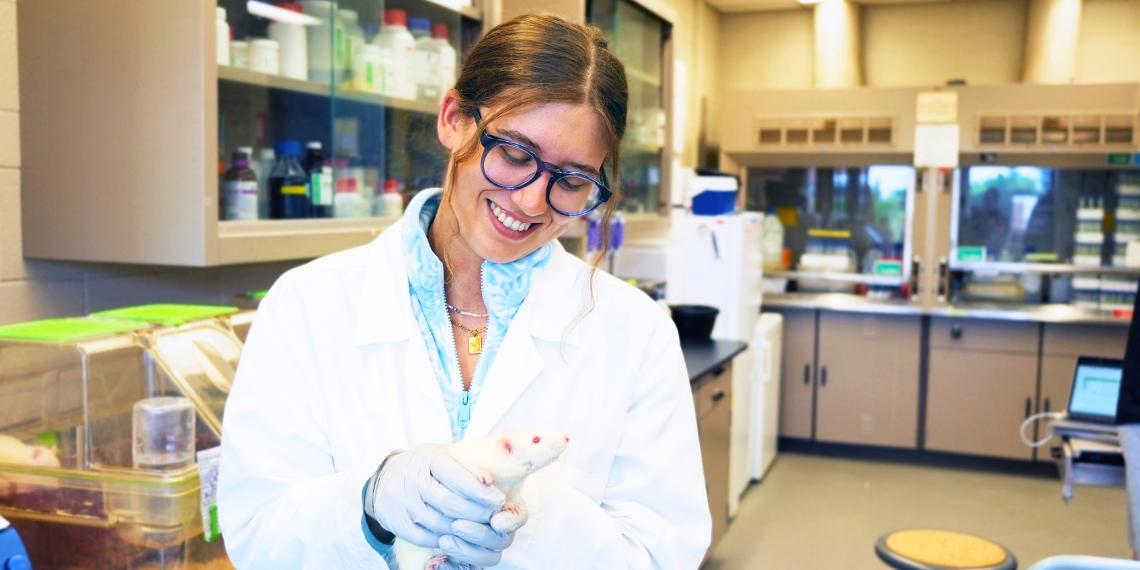
After more than a year conducting research on muscle function, hormones and aging in Dr. Geoffrey Powers' lab in Human Health Sciences, Alex Kirkup, a recent Bio-Medical Science graduate, is heading to medical school at McMaster University with hopes of one day specializing in obstetrics and gynecology.
Kirkup has known she’s wanted to be a doctor since high school. She became involved in research soon after arriving at U of G, spending her first two years in a dairy nutrition lab, where she learned how immune cells in colostrum are transferred from cows to their calves. The experience inspired a greater interest in pregnancy, hormones and women’s health.
 In her third year, she applied for an undergraduate student research award position in Powers’ lab. There, she developed and ran her own study, looking at how estrogen deficiency affects muscle loss and recovery in rat models.
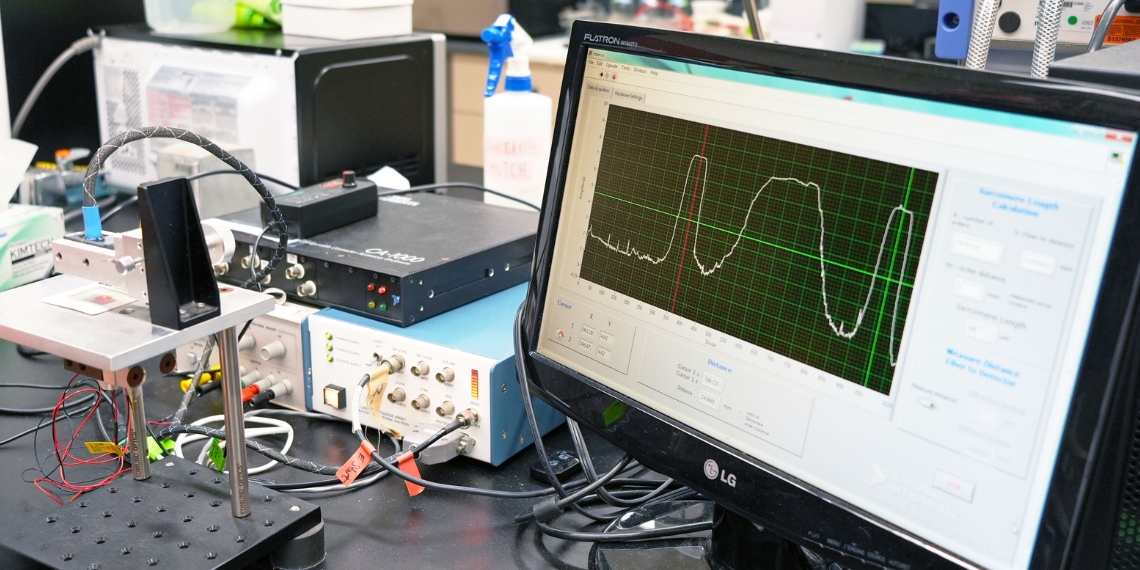
One group of rats had their ovaries removed, stopping the production of estrogen, while a control group kept their ovaries. Rats in both groups had one of their legs bound in a cast for a two-week period, before the cast was removed. Kirkup and her team then measured how the presence or absence of estrogen affected muscle atrophy and recovery after the casts were removed. Later, the researchers examined the muscles using laser diffraction, a tool used to measure the length and number of sarcomeres, the fundamental unit of muscle fibres that initiate movement.
“What I’ve loved most about my time in the lab was that, even as an undergrad, I’ve had a lot of autonomy,” she says. “For the casting study, I designed it and I oversaw it. I knew everything that needed to happen and what was going on. It’s not often undergraduates get that kind of experience.”
Since the research was conducted on young rats, the findings can’t be directly extended to older women. However, they help lay the foundation for future research on the impacts of menopause on women’s muscle health.
 Kirkup’s study continued after her first summer in the lab and was the subject of her fourth-year independent research project in both fall and winter terms. Upon graduating this spring, she received the Pari Basrur Prize, which recognizes a graduating Bio-Medical Science student who achieves a minimum of 90% in the course.
Her estrogen deficiency research was recently published in Experimental Physiology, with Kirkup as first author. She also presented her findings at the Ontario Exercise Physiology Conference and was awarded the Undergraduate Physiological Reports Award for her presentation.
This summer, she returned to Powers’ Neuromechanical Performance Research Lab through a College of Biological Science Student Research Assistantship, supporting several projects related to muscle function, fatigue, aging and hormones. Her work ranges from studies on muscle gains from different types of exercise to muscle fatigue in pre-, peri- and postmenopausal women.
Depending on the day, Kirkup might be training rats on treadmills, drafting or reviewing manuscripts, performing dissections, using laser diffraction techniques or assisting with the menopause study.
“Doing this work, learning from other researchers in the field here or at conferences, as well as working with menopausal women and hearing what they’re going through has really reinforced the importance of OB/GYN work for me,” she says. “I also love how varied every day is in research and it sounds like practicing as an OB/GYN has that same kind of variety, which is something I could see being a great fit for me.”