Master of Biotechnology Student Contributes to Search for New Anti-Inflammatory Compounds
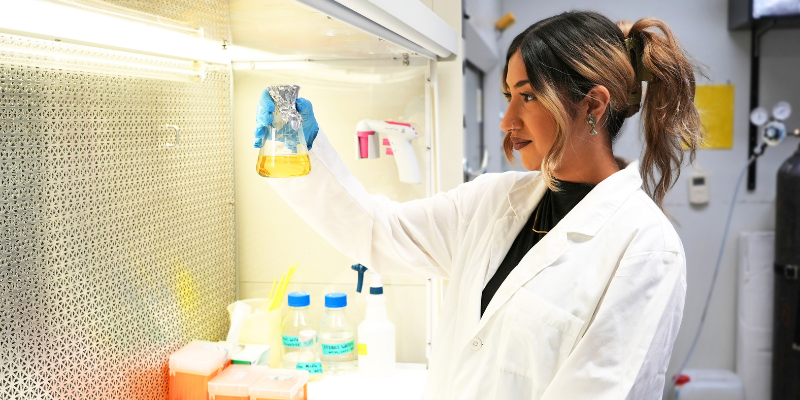
This summer, Master of Biotechnology student Simran Kaur is working with Canurta Therapeutics to identify promising new plant-derived anti-inflammatory compounds and make them easier to produce at scale.
Since 2021, the company has been developing botanical therapeutics and natural products for both inflammatory and neurodegenerative disorders. One therapeutic is currently in preclinical testing for amyotrophic lateral sclerosis (ALS), with the potential to expand into other neurodegenerative disorders. The research could also provide safer alternatives to anti-inflammatory drugs, such as ibuprofen. Some of the company’s drug candidates have shown anti-inflammatory activity up to 30 times greater than aspirin in preclinical testing.
“We need more options for inflammation,” says Kaur. “Inflammation is at the root of many chronic diseases and is associated with nearly every illness. Treating inflammation and pain will help people with major diseases, but also everyday pain management.”
 Working in Dr. Tariq Akhtar’s lab at U of G with research associates Dr. Kelly Boddington and Dr. Eric Soubeyrand, Simran is helping expand the company's pipeline of potential therapeutics while finding ways to scale up their production. Plants use enzymes to make these compounds, but since they produce them in small amounts, they aren't practical for large-scale manufacturing. The research team is using directed evolution to create more efficient versions of those enzymes.
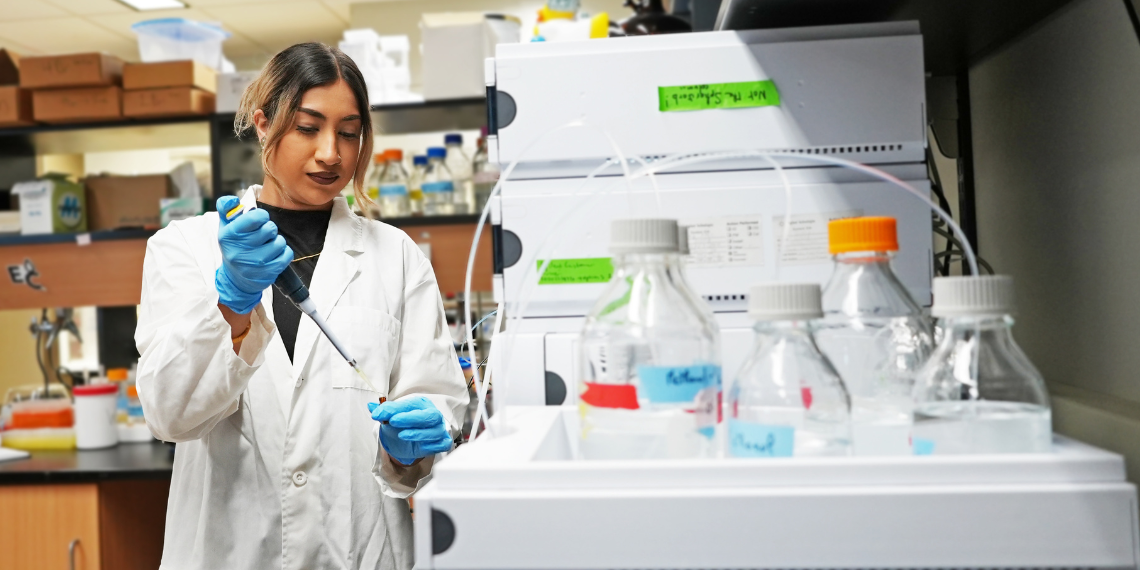
By growing hundreds of yeast colonies, each carrying a different version of the enzyme, researchers can identify which mutation is the most active using a biosensor. They then analyze the products of those enzymes using techniques such as chromatography and mass spectrometry before testing their anti-inflammatory activity. Simran is focusing on an understudied enzyme, and has identified two previously unstudied compounds that could expand Canurta's therapeutic pipeline.
During her placement, Simran has had the opportunity to learn new lab techniques and use sophisticated tools, including chromatography, protein purification, nuclear magnetic resonance (NMR) spectroscopy and mass spectrometry.
"I love how applicable the work is," says Kaur. "A lot of research is really interesting, but so much of it gets shelved because there's not enough funding or it's just done on such a small scale. At Canurta, we're doing discovery work at a smaller scale but also scaling that work up to make sure it can be put to use. It's not just putting new ideas out into the world but making sure they're useful too."
Simran has always been fascinated by plants. During her undergraduate degree at Toronto Metropolitan University, she spent two years working in a plant agriculture lab, working on ways to reduce water and fertilizer waste, extend the shelf life of fruits, and increase yield.
Her interest is also personal. Growing up in a Punjabi family, plant-based products were used often.
“There’s so much you can do with plants,” she says. "Natural products are a big part of my culture, so it's been exciting to combine that interest with biochemistry and medicine."
Simran was drawn to the Master of Biotechnology program for its combination of skill-building and research, as well as its focus on business, offering hands-on industry experience without requiring a traditional two-year thesis.
“The program explains the business side of science, not just business alone,” she says. “It allows you to develop as a scientist while also gaining the skills needed to join the industry or even start your own business with a scientific idea.”