Don’t Judge a Book by Its Cover: Study Highlights New Role for Underrated Immune Cells in the Fight Against Antimicrobial-Resistant Pathogens
Have you decided not to read a book based solely on the cover? How do you think the book feels? Overlooked, neglected, discounted?
If cells had feelings, that’s how a certain group of immune cells called ‘mast cells’ might feel, too. Mast cells are best known for their role in inflammation during allergic reactions, but like many literary gems with unassuming covers, they have much more to offer than appearances first suggest. In fact, they may even help save your life in the face of a growing public health crisis.
Infections once easily treated with antibiotics are now returning at an alarming rate, as pathogens become resistant to existing treatments. According to the U.S. Centers for Disease Control, antimicrobial resistance (AMR) could cause an estimated 10 million deaths worldwide by 2050, outpacing cancer as the leading cause of death.
One such pathogen is Staphylococcus aureus, a common cause of skin infections and—in severe cases—sepsis, pneumonia or endocarditis. Between 35-50% of S. aureus strains are resistant to methicillin, the primary antibiotic used to treat staph infections.
As current therapeutics become obsolete, the need for new treatments becomes increasingly urgent. But most new antibiotics can only go so far; it is only a matter of time before bacteria become resistant to them, too.
What if there was a better way to provide long-term protection against these pathogens?
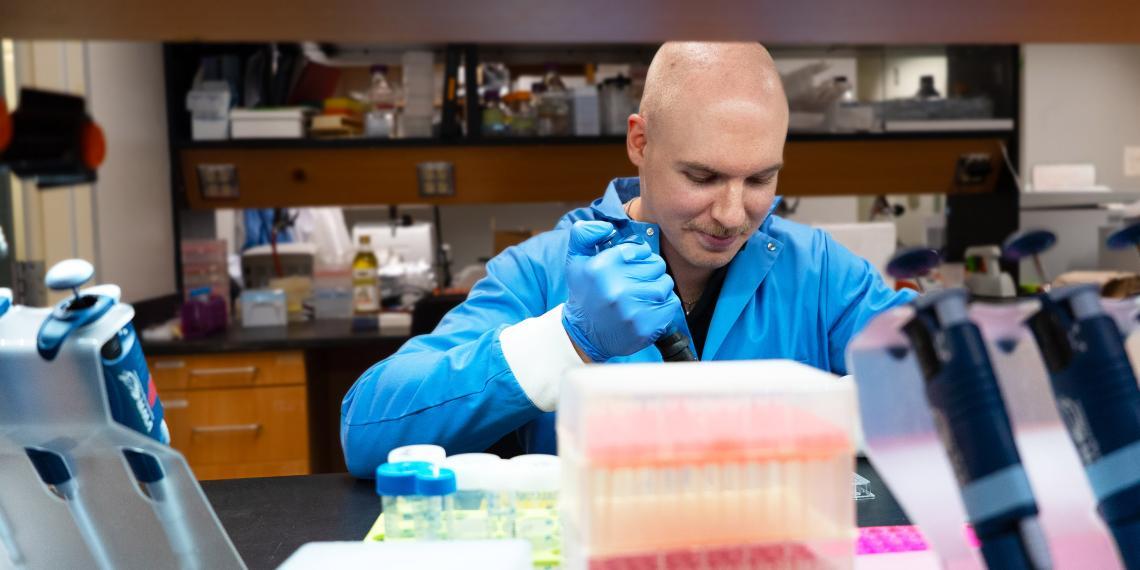
 A research group from the Department of Molecular and Cellular Biology, led by Dr. Priyanka Pundir and PhD candidate Colin Guth, have identified a way to boost the body's own defences against these pathogens, thanks to an overlooked group of immune cells known as mast cells.
“Mast cells tend to get a bad rap; most people only associate mast cells with the inflammation caused by an allergic reaction. We wanted to show that they are much more than that,” says Guth.
The Pundir lab studies these underestimated immune cells, continuing research that began when Pundir was a postdoctoral scholar at Johns Hopkins University. That’s where she first discovered that mast cells can be activated by a naturally occurring molecule called catestatin, which is secreted by the neuroendocrine system.
The researchers wanted to explore the untapped potential of catestatin to protect against AMR skin infections.
“There were two questions we set out to answer with this study. First, can catestatin activate mast cell receptors in living tissue, and to what effect? Second, is this a physiologically relevant interaction, and can we leverage it therapeutically?” explains Guth.
Using a mouse model, the team found that catestatin accelerated the healing and clearance of bacteria from wounds infected with methicillin-resistant S. aureus (MRSA) by binding to a particular receptor in mast cells. Given the pro-inflammatory effects of mast cells, the team expected to see that this was due to an increase in the number of immune cells present in these wounds. Surprisingly, they saw the opposite.
It turns out that mast cells do not increase the migration of other immune cells to an infected site. Instead, they stimulate the surrounding skin cells to secrete additional small molecules with antimicrobial properties.
The results offer a new take not only on mast cells, but skin cells as well.
“In my opinion, skin cells are immune cells. They have the same receptors and play an active role in recognizing potential threats, just like immune cells do. They also secrete these antimicrobial peptides,” explains Guth.
These findings offer an immunotherapy-based approach to combatting AMR: using catestatin to leverage our own natural defences against pathogens. Importantly, because it triggers a multi-faceted defence involving many cells and compounds, it is that much more difficult for pathogens to overcome.
“This study lies at the intersection between basic and translational science,” highlights Guth. “From the basic science standpoint, we show that mast cells play a positive role in wound healing, rather than just promoting inflammation. On the translational side, we provide a way to reduce inflammation and clear out pathogens, two very important outcomes in wound healing and AMR.”
Read the full study in Mucosal Immunology.
Read about other CBS Research Highlights.