Postdoctoral Fellow and instructor for RPD*6030 - F26
Email:
benalcap@uoguelph.ca
Phone number:
+1 647 801 6727
Office:
Landscape Architecture, Room 131
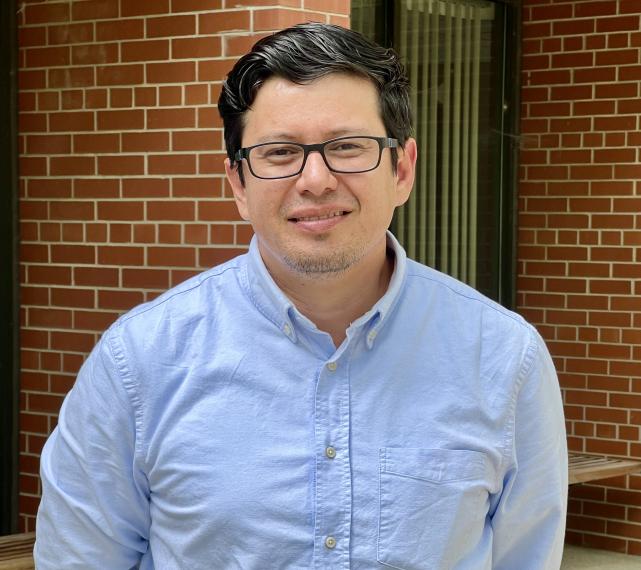
Dr. Paul Benalcazar is an interdisciplinary scholar with over a decade of experience across public, private, and international sectors in food production, project planning, soil–water interactions, and rural development. His early experiences in rural Ecuador shaped his commitment to land stewardship and sustainable agriculture.
He holds a bachelor’s degree in agriculture from the “Universidad Politécnica de Chimborazo” in Ecuador and a Master’s degree in Geomatics Science from the University of Salzburg, Austria. He concluded his PhD in Forest Science in the Department of Natural Resources Management at Lakehead University, Canada. His doctoral research was supported by the Queen Elizabeth II Diamond Jubilee Advanced Scholars Program, the Canadian Agri-Food Policy Institute, and the Ontario Ministry of Agriculture, Food and Agribusiness. It examined “Soil Health Indicators and Their Transformation Following Land-Use Change from Boreal Forest to Agricultural Systems” in Northwestern Ontario.
Dr. Benalcazar’s international research experience includes advanced training in adaptive management in Australia and visiting scholar appointments at leading institutions. At San Diego State University’s Department of Environmental Engineering (Visual-Lab), he applied the cybernetic hydrologic balance framework to watershed basins in California. At Cornell University’s College of Agriculture and Life Sciences, he evaluated soil health indicators using the Comprehensive Assessment of Soil Health (CASH) framework in the context of regenerative agriculture.
Prior to his doctoral studies, he worked at Ecuador’s Irrigation Research Center, where he developed projects focused on soil–water use efficiency, project management and rural development initiatives.
Dr. Benalcazar is currently a Postdoctoral Fellow in the School of Environmental Design and Rural Development. He contributes to the research initiative “Braiding Food Systems: Bringing Together Indigenous Seed Systems in Northern Ontario for Food Sovereignty, Food Security, and Climate Adaptation.” His work bridges natural and social sciences, integrating technical soil health metrics with community-based participatory action research to support resilient food systems within First Nations communities. Internationally, through collaboration with international scholars and multidisciplinary teams in the USA, Canada and Ecuador, his research addresses socio-ecological vulnerabilities for a more inclusive, adaptive, and resilient food system.
Dr. Benalcazar’s research focuses on the intersection of Socio-Ecological Systems and biophysical science seeking to optimize the nexus among energy use, soil health, and Traditional Indigenous systems through the co-creation of sustainable practices. By centring Community-Led Participatory Action Research, he aims to bridge technical dynamic systems with lived experiences and traditional knowledge to enhance food production, sovereignty, and preserve cultural heritage. Beyond biophysical measurements, Paul’s work evaluates the vital link between Food Security and Soil Security, water quality, and community well-being, examining how ecological functions and socio-cultural identities underpin the rural identity of rural landscapes
Dr. Benalcazar’s role is supported by a comprehensive professional development strategy at the University of Guelph and within his research team:
Paul operates under a strategic plan designed to cultivate skills for future leadership positions, supported by quality supervision and career mentoring from Dr. Silvia Sarapura-Escobar. He actively strengthens soft skills through engagement with interdisciplinary scholars and representatives from various sectors. Paul’s development includes training in preparing grant proposals, high-impact publications, knowledge translation and mobilization. He actively engages in teaching opportunities and guest lectures at the graduate level within SEDRD.
Working closely with Dr. Silvia Sarapura-Escobar, Dr. Benalcazar is responsible for the research and execution of a three-year Participatory Action Research and community engagement strategy project. A research project funded by the Ontario Agri-Food Alliance.
Paul provides scientific evidence of soil health/security status to define degradation or contamination levels to understand how soil functions have changed in new areas for food production. In addition, he evaluates the social implications of adopting various food production practices in First Nations communities through community-based participatory action research, network analysis, and socio-ecological frameworks. He uses data from soil, water, plant ecosystems, geospatial observations, and citizen scientists to address environmental issues and develop resilient food systems.
His current work is grounded in a commitment to community engagement. He facilitates participatory mapping and actor network analysis to decode complex traditional food systems, ensuring that research remains relevant to community roles and needs. By spearheading, he leads comprehensive soil analyses to identify contaminants and nutrient deficiencies. This technical oversight enables community partners to pinpoint specific community vulnerabilities and propose data-driven research initiatives to improve environmental conditions. Beyond data collection, Paul prioritizes capacity building by mentoring youth and students in optimized farm management practices and empowering community members through shared expertise. He maintains and coordinates the selection and testing of high-quality, disease-free traditional seeds, ensuring that agricultural interventions are aligned with community preferences and cultural heritage
A core pillar of his postdoctoral work at the University of Guelph involves knowledge mobilization—the strategic translation of research into practical, community-led outcomes. I facilitate interactive workshops and field days in collaboration with community partners and Indigenous knowledge keepers, creating a space to exchange expertise in garden management, seed saving, and seed collection. This collaborative approach is central to the "Braiding Food Systems" project, where he works alongside communities like Netmizaaggamig Nishnaabeg, Thessalon First Nation, the Red Rock Indian Band to integrate traditional knowledge with agricultural research.
To ensure these initiatives remain self-sustaining, he oversees the development of culturally appropriate resources, including drafting technical toolkits, infographics, and briefs tailored to Northern Ontario communities food production practices and realities. The material is designed for accessibility and plain language, ensuring that knowledge remains within the community. Through consistent communication with partners, he focuses on building localized capacity and long-term interest in communities to maintain and grow their food production initiatives independently after the project’s conclusion.