GenAI Panel: A SEDRD Student Discussion
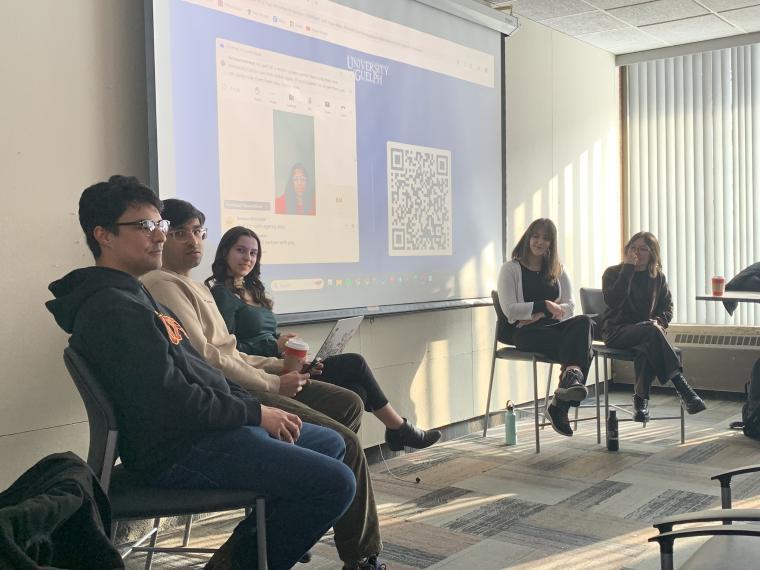
On Tuesday, January 27, 2026, the School of Environmental Design and Rural Development held a student-led discussion panel in the landscape architecture building. The event was organized by Breanna McDonald and moderated by Emily Pham. The organizers would also like to acknowledge the support of Director Ryan Gibson and former Interim Director Lieth Deacon, as well as the guidance and encouragement of Professor Steven Clarke in developing the panel concept and bringing the event to fruition. The topic was Generative AI in Education, and five student panelists from varied programs and backgrounds shared their insights into how the fifth industrial revolution is shaping their respective fields. This event encouraged students to play an active role in shaping and understanding new technologies through open discussion and anonymous polls. The students shared a mix of enthusiasm and skepticism about the productivity benefits and ethical challenges brought on by the intelligence age. By encouraging students to talk openly about how generative AI is impacting their educational experiences, educators can better incorporate their concerns and feedback into curriculums and AI integration frameworks. These kinds of events also improve interdisciplinary communication and allow students to openly discuss challenging topics that are not reviewed in normal educational settings.
Many of the panelists shared valuable insights into the opportunities that new technologies bring. Kamshajini Raveenthiran, a PhD candidate in Rural Development and Extension, highlighted the accessibility benefits that generative AI can provide for students in rural settings who struggle to access conventional academic resources or are experiencing language barriers. Krish Jain, a Bachelor of Landscape Architecture (BLA) candidate, discussed the opportunities for AI to speed up mundane or repetitive tasks, gather spatial data that is not available through conventional mapping tools, and visualize ideas rapidly and effectively. Panelists also shared their unique insights into the challenges associated with generative AI overuse. Jayden Cote, a Master's of Rural Planning and Development candidate, noted that AI assistance often leads to a decrease in the originality of student work due to algorithms that are optimized to produce similar results. Jacqueline Argier, a BLA candidate, shared insights into the privacy risks of inputting data into generative AI models. Ashley Legge, who conducted her BLA thesis research on ethical AI use, encouraged educators to collaborate with one another to develop responsible integration frameworks.
Students in the audience also shared their experiences anonymously. Some of the audience members commented that generative AI can speed up research and visualization. A few audience members noted that generative AI use could harm placemaking and personalization through mechanized workflows. Another audience member cited concerns that the environmental impacts of generative AI conflict with the values of their educational program. These anonymous comments underscore the need for educational departments to address the ethical component of generative AI. This event also demonstrated the importance of fostering student-led discussions and pressure-free feedback collection. Such events can improve the resilience and communication of educational departments while contributing to a healthy learning environment.