Visiting Research Student Lucy Chioma Aniagolu Connects Agricultural Research with Practical Learning at SEDRD
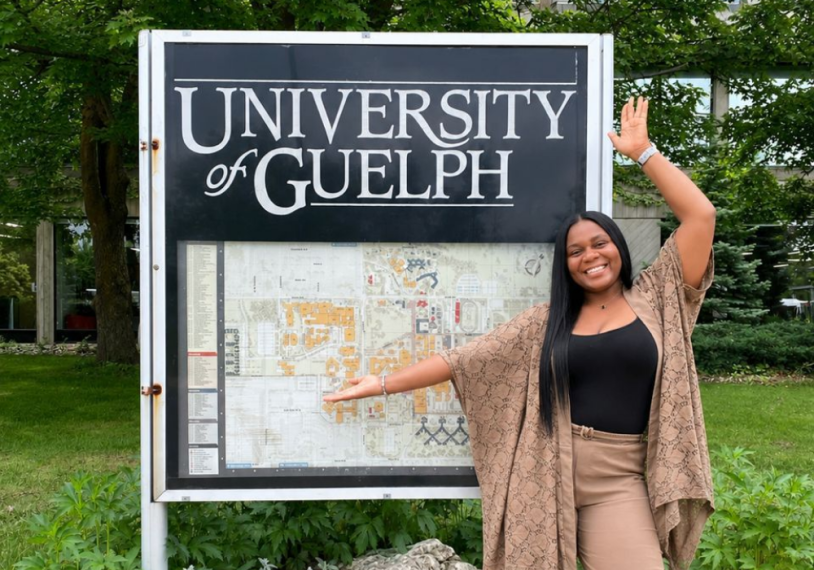
Lucy Chioma Aniagolu, a Nigerian Mastercard Foundation Scholar pursuing a Master’s degree in Learning Design and Technologies at Arizona State University, recently completed a three-month Visiting Research Student placement in the School of Environmental Design and Rural Development (SEDRD) at the University of Guelph. Working under the supervision of Associate Professor Ataharul Chowdhury, Lucy explored how agricultural research, changing workforce needs, and farmers’ experiences can be translated into practical learning opportunities. Her visit combined academic research with field-based learning through agricultural and extension events, farm activities, volunteering, and conversations with farmers, researchers, practitioners, and young people.
During her time at SEDRD, Lucy developed several practice-oriented research outputs focused on agricultural workforce development, learning pathways, extension curriculum, family farming, and agricultural education. She also contributed to ongoing research on the use of large language models in agricultural advisory services, helping develop a streamlined usability instrument for gathering feedback from potential users. Drawing on these experiences, she developed agricultural course and curriculum concepts for farmers, youth interested in agricultural careers, agribusiness entrepreneurs, and other agricultural professionals. Lucy also participated in the University of Guelph’s 2026 Instructional Skills Workshop, strengthening her teaching, facilitation, and reflective practice skills.
Lucy’s visiting research experience helped further shape her interests at the intersection of agricultural extension, workforce development, digital technology, and learning design. A key lesson from her time at Guelph was that agricultural research should extend beyond publication by considering how knowledge can be made accessible and useful to farmers, young people, professionals, and communities. She leaves SEDRD with research and publications to continue developing, new ideas for agricultural learning initiatives, strengthened facilitation skills, and professional relationships that she hopes to build through future publications, webinars, educational activities, and research collaborations.