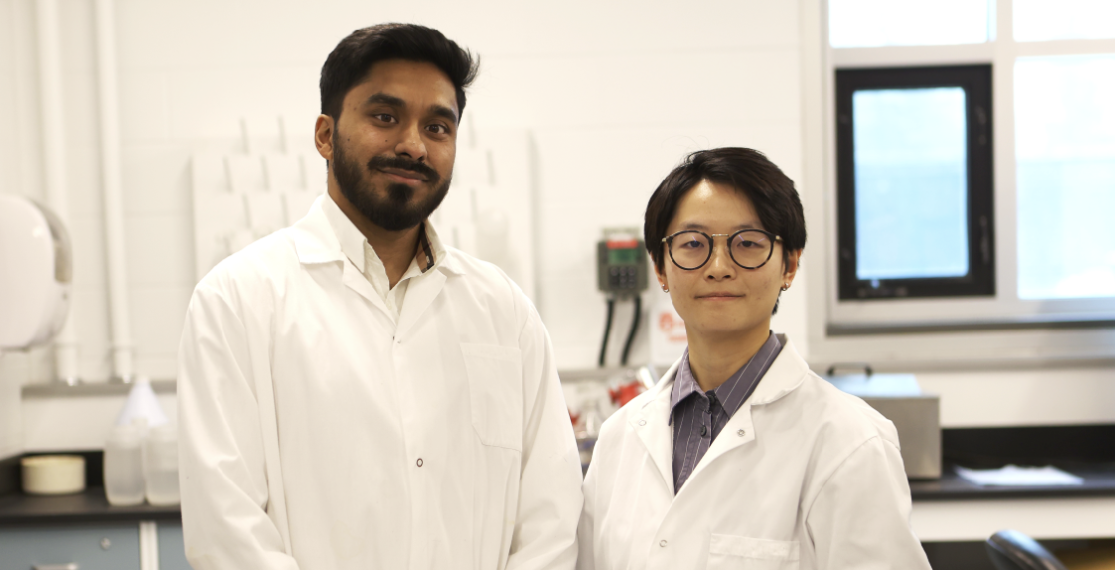
The Ontario Agricultural College (OAC) is elevating its leadership in water safety and health with the addition of two new faculty members in the School of Environmental Sciences. Drs. Shadman Khan and Wenxi Liao will join the research program of Dr. David McCarthy, the Canada Excellence Research Chair (CERC) in Waterborne Pathogens: Surveillance, Prediction and Mitigation. The researchers will help build one of North America’s most advanced teams focused on protecting communities from waterborne pathogens.
Waterborne pathogens remain a persistent challenge for public health. Climate change, population growth, aging infrastructure, and extreme weather increase risks to drinking water, stormwater, and recreational water systems. Protecting our water requires coordinated research efforts that can detect threats, model and predict movement, and develop systems to remove contaminants before they cause harm.
With Khan and Liao now part of the program, McCarthy’s CERC team is poised to become an international hub for research, innovation, and training in waterborne pathogen surveillance and mitigation.
New technologies to detect contaminants
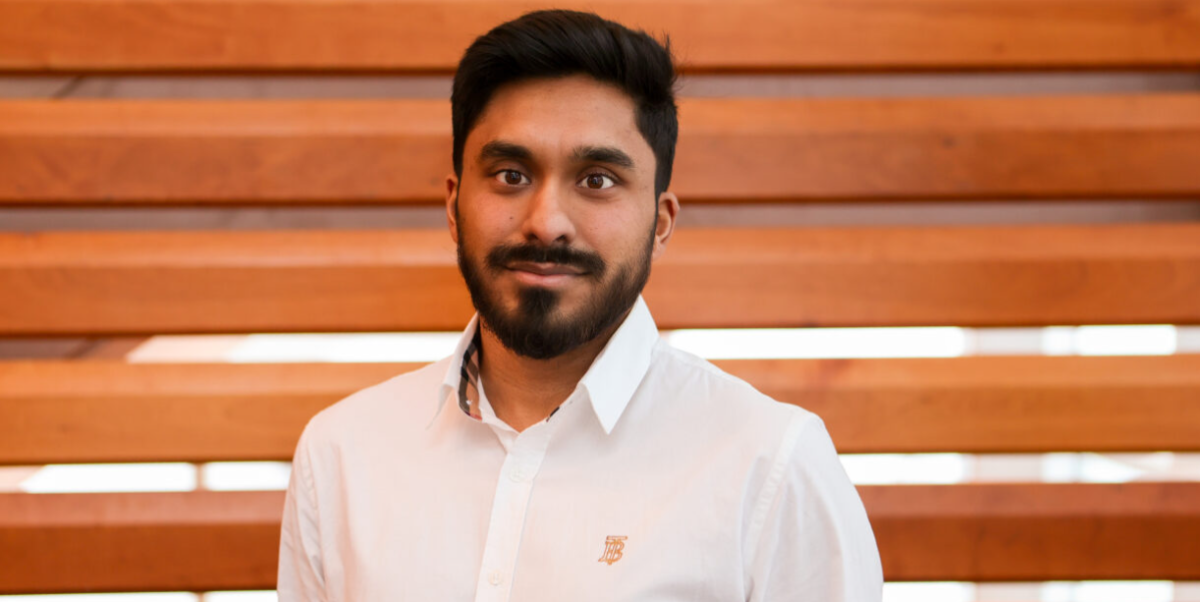
Dr. Shadman Khan
Dr. Shadman Khan’s expertise focuses on next-generation sensing technologies for waterborne pathogens. His research blends biochemistry, materials science, and engineering to develop systems that detect contaminants in both water and the broader environment. These systems will be field-deployable, enabling their use outside traditional laboratory settings without the need for expensive equipment or complex user training. His work is guided by a One Health approach, recognizing that human, animal, and environmental health are linked.
The University of Guelph has a global reputation in environmental science, and its commitment to One Health is unmatched. My work focuses on cross-disciplinary collaboration, and U of G provides great opportunities to collaborate with researchers across a wide range of disciplines. In addition, the university’s expansive industry partner network provides a robust pipeline for us to translate our innovative technologies into the real world.
Khan grew up in Toronto and completed his undergraduate and PhD degrees at McMaster University. He subsequently completed a postdoctoral fellowship at Caltech. His research supports government and regulatory agencies, public-health bodies, and consumers, creating devices and tools tailored to different stages of public health. These tools are designed to enable earlier detection of contamination events, increase monitoring capacity, and support decision-making by regulators, utilities, and communities.
He says joining McCarthy’s CERC program was a major draw.
“David has built a genuinely collaborative environment with engineers, scientists, modelers, and public health experts all tackling the same challenge of keeping water safe,” says Khan. “The Khan Research Group will work to amplify and expand the capabilities of the CERC team, as we build a global hub for water safety innovation.”
Creating Smart, Nature-Based Treatments
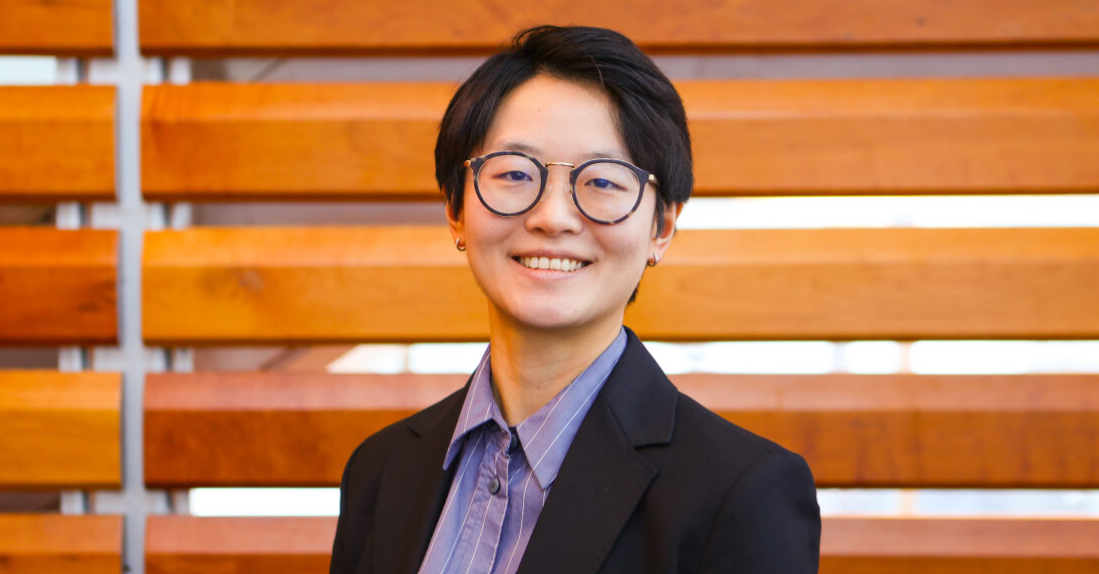
Dr. Wenxi Liao
Dr. Wenxi Liao’s research focuses on smart, nature-based systems for treating water and mitigating climate impacts. She studies how soil, water, vegetation, and human-built systems interact, and how those relationships can be leveraged to design natural, resilient methods of removing pathogens and improving water health.
“I’m passionate about water and environmental challenges, and I’ve always loved nature,” Liao said. “Joining the University of Guelph allows me to contribute to research and teaching in a community that values environmental stewardship.”
Her work integrates interdisciplinary approaches, including experiments, modeling, and data science, to understand and enhance nature-based water treatment systems. The goal is to provide practical guidance to municipalities and practitioners, inform policy development, and help communities adapt to climate impacts.
These systems benefit a wide range of people—from local communities that need practical tools to improve water quality, to policymakers working on climate adaptation. Ultimately, they help create more livable communities.
Liao obtained her HBSc and PhD degrees at the University of Toronto and recently completed a post-doctoral fellowship at McGill University. She said that joining McCarthy’s CERC team offers a unique and valuable opportunity for collaborative and cross-disciplinary research and teaching.
“This team Dr. McCarthy is building is unique in the world,” she said. “I see tremendous potential to make meaningful contributions that improve society and support communities.”