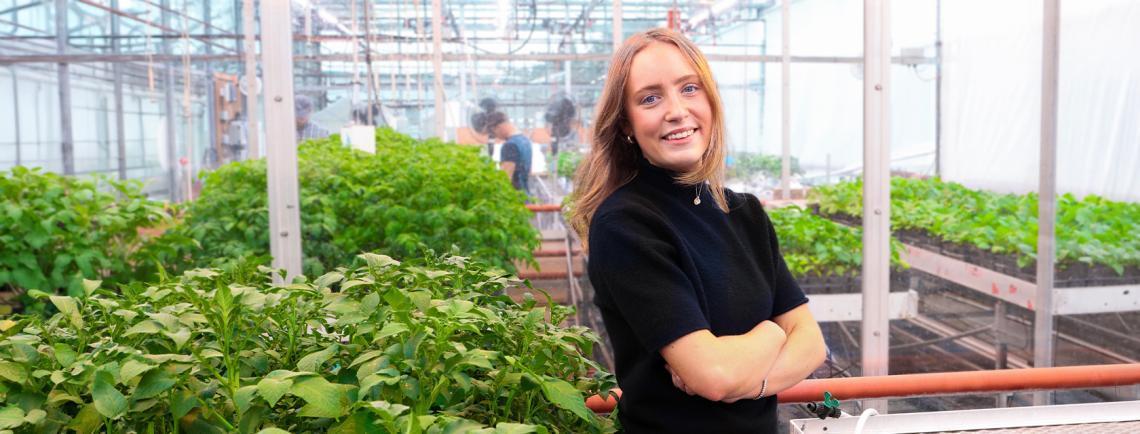
Through a unique research project, an OAC undergraduate is contributing new insights into soybean health and productivity.
Micronutrients, like zinc and copper, are essential for soybeans to complete their lifecycle, and detecting the crops’ deficiencies is a key challenge for growers. OAC undergraduate student Peyton Nailor has uncovered a new approach to improve crop health through her work in Dr. Hugh Earl’s lab.
“Plant micronutrients are hard to study because they’re needed in such small amounts,” says Earl. “Most growing materials already contain enough—even without added fertilizer.”
Researching micronutrient deficiencies in crops is important to study to help growers identify healthy crops in the field. Using a novel growing medium, Nailor found a new way to induce micronutrient deficiencies in the crop, which can help growers diagnose crops with less than desired micronutrient levels. Her experiment used a form of “glass sand” (tiny spherical and uniform glass beads) which she thought might supply lower levels of micronutrients than other materials that are typically used in such experiments.
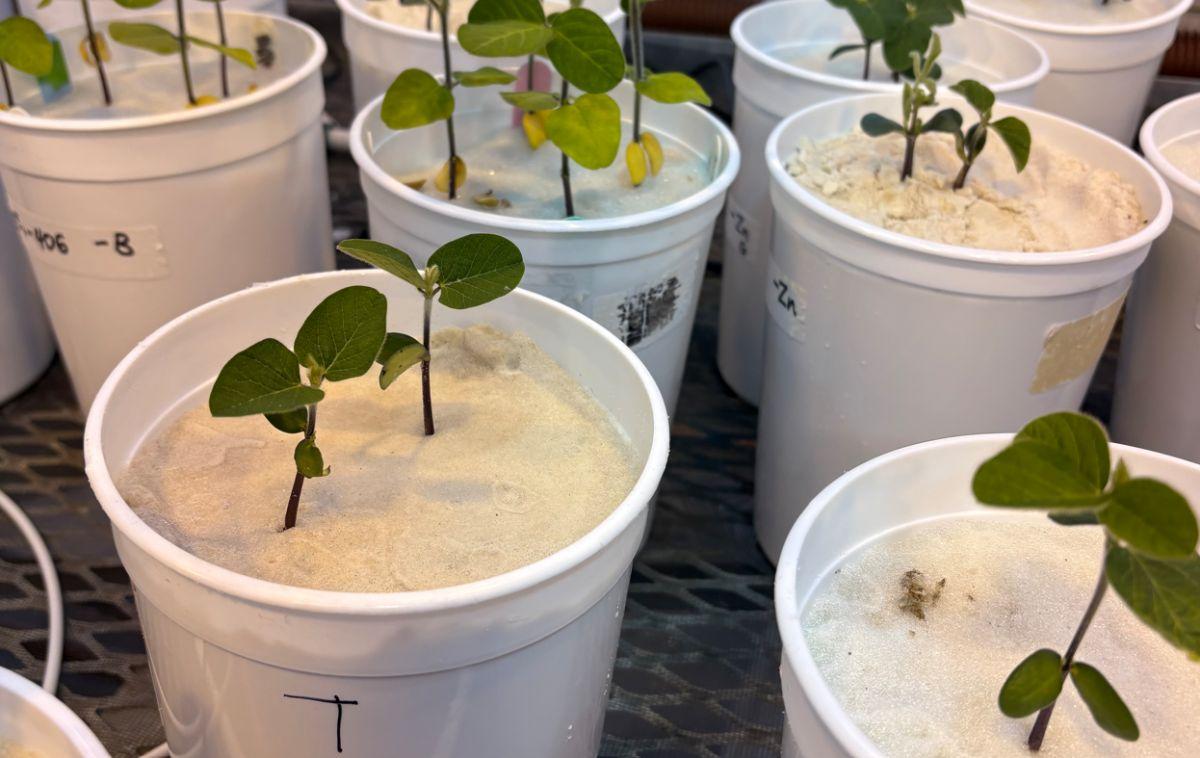
Soybeans growing in glass sand
Her hypothesis was correct - soybean plants grown in the glass sand showed deficiencies for iron, zinc, manganese, boron and molybdenum. Previous work in Earl’s lab (which used silica sand) was only successful in inducing boron and zinc deficiency. Nailor’s results are a major step forward.
By doing this research, we can more precisely characterize deficiency responses, link visual and physiological symptoms to specific nutrients, and improve diagnostic accuracy in field settings. That knowledge can ultimately support better recommendations for farmers.
Nailor’s work represents a major advance for soybean research, says Earl.
“We have gone from having tools to properly study only two micronutrients in soybean, to now being able to effectively investigate five,” says Earl. “This is a big breakthrough, and we are excited to apply these results to the benefit of Ontario soybean growers.”
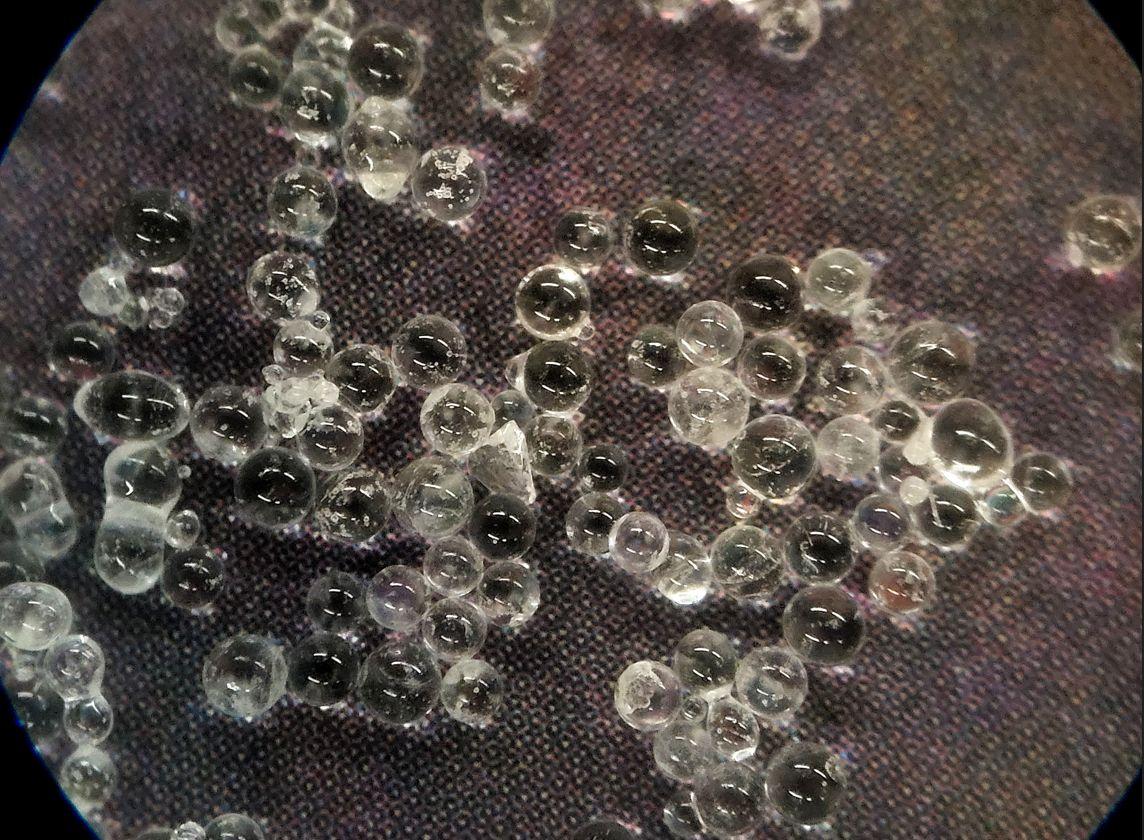
Glass sand under a microsope
Her research also incorporated imaging techniques to document plant responses, with the long-term goal of contributing to an AI tool that could help identify nutrient deficiencies through visual analysis.
“We essentially took several hundred photos of the plants so that an AI tool could be programed in the future” says Nailor.
The research was funded by Grain Farmers of Ontario and the Ontario Ministry of Agriculture, Food and Agribusiness (OMAFA), and aims to provide practical, evidence-based tools that growers can use to make more informed nutrient management decisions.
Future phases of the project will expand into outdoor trials and refine fertilization thresholds for field application.
Finding her spot in agriculture.
Nailor’s path in agriculture was not a traditional one. She did not grow up around agriculture but was drawn to it through an interest in environmental science and solving global challenges such as soil health and food security.
“I was looking for a way to make a tangible impact,” she says. “Agriculture offered an applied path where I could contribute to solutions, whether that’s improving crop production or supporting growers directly.”
Nailor acknowledges that entering the field without an agriculture background came with a learning curve, including moments of imposter syndrome. Over time, that perspective became a strength.
Agriculture benefits from a range of viewpoints and ideas. People coming in from different backgrounds can ask new questions and approach problems in different ways.
That diversity of thought is important as the sector continues to evolve, especially with advances in technology and data-driven decision-making.
Career-focused, hands-on learning in agriculture.
Her experience at OAC has included an internship with Syngenta in sales, as well as other research opportunities, professional development and scholarships. She also points to the strength of OAC’s alumni network as a key support system for students entering the industry.
Nailor will continue her studies in OAC, where she’ll soon begin her master’s program in plant agriculture under the supervision of Dr. Adrian Correndo. She hopes to focus her graduate research on improving corn production systems, building on her interest in nutrient management and crop performance.
Across both her undergraduate and future graduate work, Nailor’s goal remains consistent: to support Canadian farmers and strengthen local food production.
“I want to help farmers grow healthy, productive crops and protect the sustainability of agriculture in Ontario,” she says. “Research is one way to contribute to that, and being able to see the impact of that work is what motivates me.”