Features | Page 32 | Ontario Agricultural College

Features

Design rendering of a room with a large cut out of the ceiling and a large honey bee hanging from the opening. People looking up at the bee.

Building a new hive

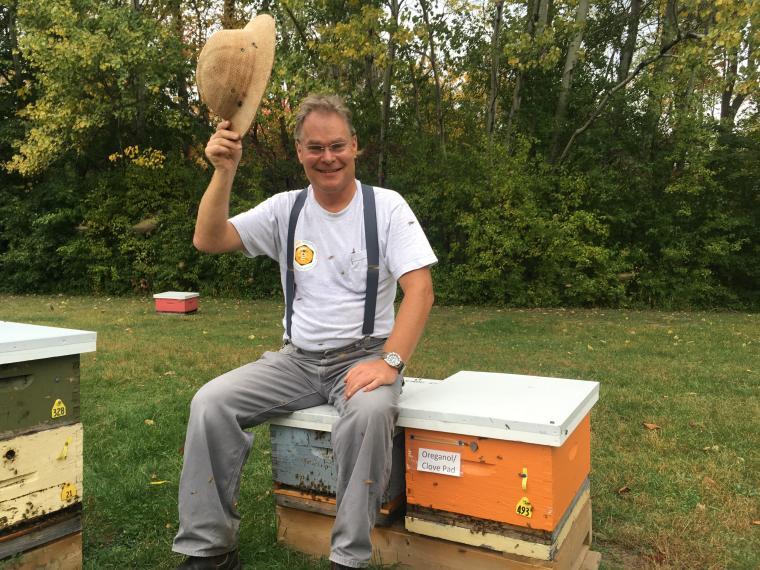
The University of Guelph’s Honey Bee Research Centre (HBRC) delivers some of the world’s most impactful honey bee research and outreach, and it does so out of a living room.

The world-renowned centre operates out of a residential bungalow built in the 1970s. What was a living room is now a meeting and teaching space, the kitchen is a sales room, and the former bedrooms are offices. The bee yard is scattered across the residential-style lawns. The labs are nearly 2km away.

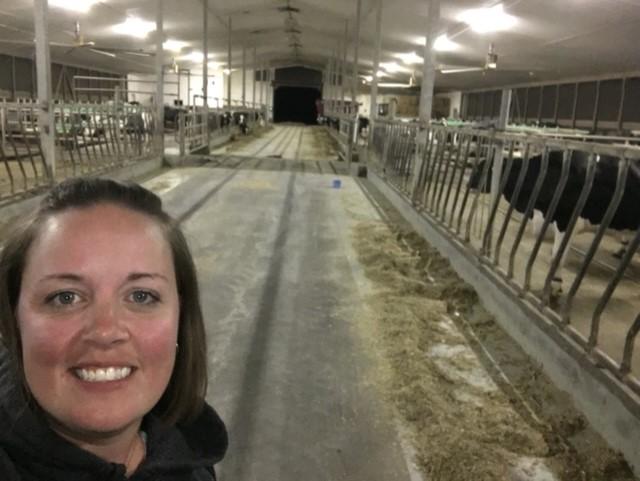
Head shot of Shannon.

Q&A with an Indigenous community planner

Shannon Labelle recently graduated in October 2019 with an M.Sc. in Rural Planning and Development, but she landed her dream job four months before graduation! She recently sat down with us to chat about her role, Indigenous planning and her transition into the workplace.

Headshot of Christopher Naese

Q&A with a food industry expert

Christopher Naese graduated with a B.Sc. Agr. in Dairy Science in ’85. He was one of rare co-op students at the time, but his work experience helped him land a job that set him on a prosperous and exciting career trajectory. Today he’s the Vice President of Business Development for Florida Food Products and took some time to share insights on food industry business trends.   

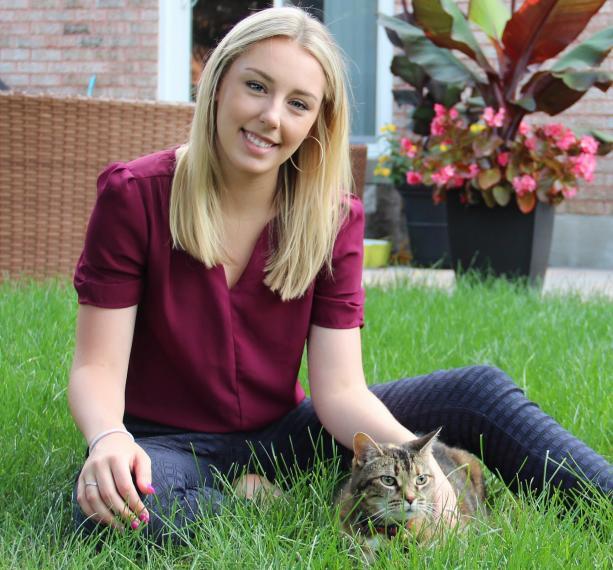
Ashley Knapton outside wearing green shirt

The pursuit of career happiness

So what do you want to do after school?” It’s a question that every university student is asked, and probably more times than they’d like.

For Ashley Knapton, B.Sc. (Agr.) ’13, the answer was simple: become a dairy classifier.

Classifiers, an unbiased thirdparty group of trained people, score dairy cows based on industry-outlined criteria. They travel from farm to farm to evaluate the physical structure of the cow. It’s a service that helps producers make informed decisions and is often used as a pride point for dairy breeders.

Wyatt McWilliams snd Josh Moran lean on a farm fence post

You reap what you sow

When I returned home to Eastern Ontario after completing my first year at U of G, I was so excited to share the stories of my experiences at Guelph. One day, I told a farmer about my friend Clayton McWilliams, whom I had met at Guelph. The farmer immediately asked if Clayton was related to Wyatt McWilliams. I didn’t know. Wyatt was a new name to me. But it was clear that Wyatt was a well-known person in agriculture, and his story was one I wanted to hear.

So, I began asking questions. And the more I learned about Wyatt, the more I wanted to know.

Head shot of Tyler.

Q&A with an associate advisor

Growing up on a farm in Goderich, Ontario combined with an interest in business led Tyler Durst to the University of Guelph. Durst studied in the food and agricultural business (co-op) program, where he worked at RBC Dominion Securities (DS) for one of his placements. Today, Durst continues to work with RBC DS as an associate advisor. We chatted with Durst to learn more about his role and to recap some highlights from his time on campus.

Expert Offers Tips to Feeding Your Dog a Nutritious Diet

Many dog owners and lovers are confused about what to feed their dogs following the U.S. Food and Drug Administration identifying a possible linkbetween 16 brands of dog food and a potentially deadly canine heart condition.

U of G Study Pinpoints Reasons for Egg Farm Feather Pecking

As Canadian egg farmers transition their flocks from conventional cages to more spacious “furnished” cages, University of Guelph researchers have conducted a first-ever study on factors contributing to feather pecking in this new housing system and ways to prevent it.

The study revealed that 22 per cent of the birds  in the new cages exhibited moderate or severe feather damage that was likely due to feather pecking.

Dave Little standing behnd a red tractor and in front of a log shed

Alumnus brings together a community to restore agricultural history

Logically, we know stepping back in time isn’t possible. But at the O’Hara Mill Homestead in Madoc, Ontario, it seems like it just might be.

When walking through the rural setting of the homestead visitors can see a fully restored sawmill with a dam and covered bridge, a log house, school, carpenter and blacksmith shops, and much more. Visitors step back into the 1800’s and experience agriculture as it was.

Four students stand behind their project.

Students Improving Life: Inventors of Wapples

Food science students, Karine Desrochers, Ellery Geddes and Loritta Lin alongside business student Peter Cline, were grouped together in their fourth-year capstone course, Food Product Development, where they were tasked to utilize pomace, an apple by-product, to create a consumer ready product.

News Archive